

The panel discussed the risk-benefit profile of the Galleri multicancer early detection test, which was evaluated in the NHS-Galleri and PATHFINDER 2 studies.
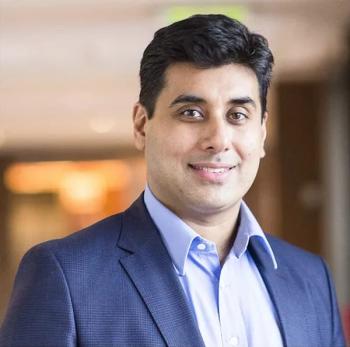
City of Hope’s national clinical trials model can activate a study across a network of 40 sites in 4 states within 90 days, according to Edward Kim, MD, MBA.
In September 2025, City of Hope
CancerNetwork® spoke with Edward Kim, MD, MBA, FACP, FASCO, about how City of Hope is operationalizing that model. He discussed the logistical and regulatory work behind deploying trials across a 5-campus, 4-state network; how the organization is broadening eligibility criteria to better reflect real-world patients; how in-house manufacturing capabilities shorten the path from lab to clinic; how an internally built AI tool is helping match patients and sites to trials; and where he sees the model shaping treatment paradigms going forward.
Kim is vice physician-in-chief at City of Hope National Medical Center and system director of clinical trials at City of Hope.
CancerNetwork: How has City of Hope overcome the logistical and regulatory hurdles of expanding early-phase and complex clinical trials into regional and community-based settings without compromising trial integrity from an operational standpoint?
Kim: At City of Hope, we believe that every patient deserves the opportunity to enroll in a clinical trial. That is our north star. We are the only academic center in the country with a 5-campus, 4-state, 40-site connected network: our Los Angeles-area campus, which has served that community for over 100 years and includes our GMP [good manufacturing practice] facilities and a strong translational science research engine as well as cancer centers in Los Angeles and Orange County, the Chicago area, Atlanta, and Phoenix, plus more than 30 additional regional sites in Southern California. This lets us deploy a study at any one of these sites simultaneously across the country, and our goal is to do that within a 90-day window; now we are averaging 88 days, and sometimes we can do it in as little as 45.
That gives people around these major metropolitan areas access to trials, and we know clinical trials are the future of our next generation of therapies. There are real regulatory hurdles and complexities in building something like this, and we push against those boundaries while staying compliant and doing things the right way. It can be difficult when you are the first to do something, but if we can help set the standard, other institutions can follow, and in the end, patients are the ones who win.
How is City of Hope operationalizing broader eligibility standards, such as including patients with controlled brain metastases or organ dysfunction, to ensure trial cohorts reflect real-world patient populations?
Enrollment in clinical trials is a big problem. The latest data show that only about 7% of patients, roughly 1 in 20, enroll in a clinical trial, and that rate tends to be higher at academic centers, but it is still not representative of the real-world population. The geographic breadth that City of Hope brings across 4 states allows us to enroll a more real-world population, and it is something I have been passionate about. I worked with many other stakeholders to help lead an American Society of Clinical Oncology [ASCO] and Friends of Cancer Research work group focused on modernizing eligibility criteria. We believe eligibility criteria are not always as scientific as they should be, and we need to allow more patients to enroll.
When drugs were being tested 2 decades ago, we did not have molecular biomarkers or targeted agents, and treatment was not personalized, so there was a lot of emphasis on studying a very homogeneous, fit, and balanced population, which showed only small gains for these drugs. Now we know that with biomarker prediction and agents that target specific pathways, we can see much bigger strides in outcomes, so it is time we all focus on allowing more people into clinical trials. This creates less paperwork and less work for our staff, and it speeds up enrollment and potentially regulatory approval; there are a lot of wins here.
City of Hope supports this strongly. We encourage our investigator-initiated trials to have fewer eligibility criteria, or if a criterion is listed, that we can scientifically back it up.2 We have launched investigator-initiated trials through our national network, so a City of Hope investigator can have an idea, write a clinical trial, and deploy it beyond a single campus. Being able to put a trial in 4 states, 5 campuses, and up to 40 sites is empowering for investigators to test their ideas, and it gives more opportunity to our patients.
City of Hope maintains significant in-house therapeutic manufacturing capabilities. How does this internal ecosystem accelerate trial activation times compared with traditional academic-industry partnerships, and what novel modalities are currently benefiting most from this pipeline?
Fighting cancer is a team sport, let’s start there. We need as much help as we can get, and I tell people the more brains we bring into the room, the better. We rely on our industry partners quite a bit to bring forward new drugs and to give us avenues to test them. One thing that is unique about City of Hope, and I do not know if many people are aware of this, is that we have GMP facilities on-site. In fact, synthetic human insulin was discovered at City of Hope by Arthur Riggs.
We have a history of developing drugs, antibody platforms, and CAR T-cell therapies, and having all of this under one roof, in one system, allows us to accelerate the work. We can take basic science knowledge and discoveries, produce them in our GMP facilities, and deploy them straight into our clinical trials network. When you can streamline all those steps, which, if you had to go step by step through many different agencies and areas, could take years, we can condense that down to months. That is powerful. We do not always find our greatest discoveries in our own labs, but we can test them, and that is what science is supposed to allow us to do. By translating basic science directly into testing in the clinic, that gives patients an opportunity, and it gives our scientists a chance to validate their preclinical discoveries. It is something that is unique to City of Hope, and we are proud of it.
Expanding trial access across a broad geographic footprint requires close multidisciplinary alignment, as well as alignment with community practice partners. What workflow or care coordination strategies have proven most effective for identifying trial-eligible patients in community clinics and connecting them with multidisciplinary research protocols?
When we work at academic systems, and I have worked at both academic and non-academic systems, we tend to believe the world revolves around a specialist. I am a specialist in lung cancer, and that is something I value, and I know patients value it. The truth is, more than 80% of our patients are seen in non-academic, community-based practices, and that is where we have to focus our communication, our clinical trials, and our expertise.
With our City of Hope network, we have a heterogeneous mix of embedded community practices and academic campuses, and we need to support the physicians and providers in community-based practices who are not surrounded by disease experts and are now being asked to offer clinical trials. In a specialist's clinic, say, a lung cancer specialist's, the first 5 patients of the day might all have lung cancer, so it is easy to keep track of the relevant trials. In a community practice, the first patient might have colon cancer, the second breast cancer, the third head and neck cancer, the fourth pancreatic cancer, and the fifth lymphoma. How many trials cover those 5 different cancer types? We are working to make that easier.
One clear area is artificial intelligence [AI]. We are internally building what we call HopeLLM, which has several components. One is clinical trial matching: whether you are on a campus or at a community site, you can use this program to match our clinical trials against what is in a patient’s records, and that will be a real game changer for our providers who are not on our academic campuses. We also use another part of HopeLLM for feasibility; before we open a given trial, it lets us search our entire electronic health record database to see where patients may be located geographically, so we can give our providers objective information about which sites to focus on. If a patient at one of our regional or community sites has a rare mutation and the trial they need is not open at a nearby location, we can activate that study at that center in about 10 business days, which we sometimes describe as almost “just in time”. That lets patients stay close to home and still get access to cutting-edge clinical trial opportunities. It is not just about having a trial-matching program or having sites in a network, it is about connecting all those elements to empower our providers to care for patients and give them the opportunity they deserve.
Looking ahead, how do you see City of Hope’s national clinical research framework shaping future treatment paradigms and establishing new evidence-based strategies across community and academic oncology settings, to avoid a reliance on “yesterday’s medicine”?
I challenge our providers and scientists every day, and I have had the privilege of recruiting many of them, with one bar: we do not want to be content with the standard of care. The standard of care is what people say, “I'm glad I got”. I challenge our physicians, scientists, and providers to reimagine the standard of care, reset it, and keep pushing the bar higher until we cure cancer, at which point we will be focusing on prevention and screening instead. I believe we get there through clinical trials, through research, through testing ideas. We have made a lot of progress, and I am proud of the 25 years I have spent in oncology witnessing these breakthroughs. I have been at City of Hope for almost 6 years and have seen some fantastic scientific discoveries and the translation of diagnostics and therapies into the standard of care. Setting new standards is what we will continue to strive for.
We need to make clinical trials part of our standard practice, not an option we consider only after we have exhausted standard of care. To continue resetting the standard of care, we have to make clinical trials and enrollment part of our daily workflow. Everything we have discussed, making trials available at multiple sites across our network and using AI to identify both the right sites and the patients who may match a given trial, starts to build that into the workflow. That is best for our providers, who get to offer those treatments, and best for patients, who at least get the opportunity to consider them.


![“[E]ven if patients relapse following an allogeneic transplant, donor lymphocyte infusions can be incredibly helpful,” said Mary Jo Lechowicz, MD.](https://cdn.sanity.io/images/0vv8moc6/cancernetwork/06df696db42b151710c58727b1333ee098de6453-1200x800.jpg?w=350&fit=crop&auto=format)
!["Patients [with cancer] and physicians would rather have a fixed-duration treatment, if possible," said Julie M. Vose, MD, MBA, at SOHO 2026.](https://cdn.sanity.io/images/0vv8moc6/cancernetwork/1cfb57db416943d8f8690afb0bc0d13aa3d90683-400x400.jpg?w=350&fit=crop&auto=format)