
Opinion|Videos|January 19, 2024
Navigating High-Risk Disease in Multiple Myeloma: Treatment Strategies and the Role of ASCT
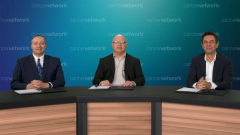
Experts dive into the complexities of defining and treating high-risk Multiple Myeloma (MM) and discuss the role of ASCT in newly diagnosed MM and weigh the considerations for recommending transplants, including insights on the selection criteria for tandem transplantations.
Advertisement
Episodes in this series
Advertisement
Related to this article
C. Ola Landgren, MD, PhD, discusses the FDA’s endorsement of MRD as an accelerated approval end point in multiple myeloma.

Hans C. Lee, MD, discussed how community oncologists with limited access to MRD testing can think about the new IMS/IMWG definition of cure in myeloma.

Hans C. Lee, MD, discussed how he monitors patients with multiple myeloma who achieve deep, sustained MRD negativity after coming off therapy.
![“[W]e should strive to increase the [number] of patients…who enjoy long-term disease-free survival and possibly cure,” said Meletios Dimopoulos, MD.](https://cdn.sanity.io/images/0vv8moc6/cancernetwork/c7abebf9344f9b1be9aee80d9879d139c1655bcc-1200x1197.jpg?w=350&fit=crop&auto=format)
“We should strive to increase the [number] of patients…who enjoy long-term disease-free survival and possibly cure,” said Meletios Dimopoulos, MD.
Pieter Sonneveld, MD, PhD, explained how sustained MRD negativity with DVRd in the PERSEUS trial may guide long-term outcome counseling in multiple myeloma.

Hematologic specialists discussed where ciltacabtagene autoleucel fits in the treatment paradigm at first relapse and beyond in multiple myeloma.
Advertisement
Advertisement
Trending on CancerNetwork
1
What Does TALAPRO-3 Mean for Frontline Treatment of HRR-Altered mHSPC?
2
Aglatimagene Combo Shows Sustained Immune Remodeling in Prostate Cancer
3
CARTITUDE-2 Cohort A Follow-Up Data and Preparing Patients for CAR TCell Therapy
4
Referral Barriers to Chimeric Antigen Receptor T-Cell Therapy in Multiple Myeloma
5