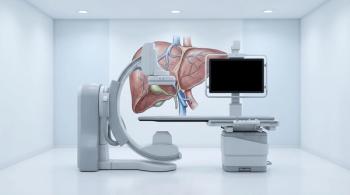
Zachary L. Bercu, MD, RPVI, FSIR, explains how the Liberty endovascular robotic system works from the operator’s perspective and what went into becoming its first adopting site.
Chirag Jain, MBBS, discussed onco-anxiology, a proposed framework for identifying and managing anxiety at each stage of the cancer journey.
CancerNetwork® spoke with Chirag Jain, MBBS, a researcher in onco-anxiology, about his recently published perspective in Frontiers in Psychology proposing onco-anxiology, an anxiety-focused, longitudinal framework within cancer care.1 Jain discussed why general distress screening falls short of capturing anxiety as it changes across the disease trajectory, how fear of cancer recurrence differs from primary anxiety disorders, and how care teams can distinguish psychological anxiety from treatment-related adverse effects such as steroid-associated palpitations and insomnia. He also addressed conditioned anticipatory symptoms like chemotherapy-induced anticipatory nausea, ways practices can support patients during high-risk transitional windows such as treatment completion and surveillance imaging, and the research needed to validate the framework, including the role of physiological measures such as heart rate variability (HRV).
In the paper, Jain outlined 3 core commitments of the framework: treating anxiety as a distinct clinical target separate from depression and undifferentiated distress, assessing it longitudinally across the full cancer timeline, and treating cancer-specific mechanisms such as conditioned symptoms, overlap between anxiety and treatment-related physical symptoms, and the two-way relationship between anxiety and symptom burden as explicit clinical targets.
Jain: There are a lot of things that present distress screening and psycho-oncology are addressing, including identifying cancer-related anxiety. When it comes to the psychiatric disease associated with oncology, psycho-oncology has been doing that, and doing a lot. With onco-anxiology, the framework I have proposed, I’m not trying to replace it, and I’m not saying it should be replaced or that it’s redundant at this stage. It needs to be more meaningful, and it needs to be addressed in a more structured framework. An anxiety-focused, longitudinal framework within cancer care is what the entire proposal is about.
Onco-anxiety needs to be addressed in a certain way because anxiety for a patient with cancer changes at every level. Let me give an example. If you’re diagnosed with cancer, the anxiety you go through is something different. Once you’re diagnosed, you may go for surgery, or you may start treatment. When you start chemotherapy after surgery, the first cycle itself brings a completely different form of anxiety. It’s no longer the unknown; it’s the known. You’ve heard people say that chemotherapy has a lot of [adverse] effects. Once you go through the first cycle and move to the second, you already have a conditioned response. You know nausea is real. You know weakness is real. You know these [adverse] effects are very real. Even before the drug is administered, you already have anxiety that may be causing nausea. The smell of the hospital, or almost anything, could trigger it.
The third phenomenon comes once you finish treatment. Even if you’re lucky enough to be completely cancer-free, with the disease entirely out of your body, the anxiety doesn’t go away. That’s the fear of recurrence. Every time you go for a scan or an investigation, scan anxiety comes up. The anxiety just changes form; it doesn’t stay the same.
Present distress screening is too generic. It doesn’t address the problem in depth, and it isn’t structured in a way that lets us address each problem at each stage and determine how much support to give. The goal of this entire framework is to give the right kind of treatment after asking the right questions, so that we get the right result. General distress screening does not address the complicated journey of a patient who is going through cancer treatment.
When we talk about fear of recurrence, we’re talking about the cancer coming back, and especially if you have stage III disease, that is a very realistic concern. When the doctor talks to you about the reality, it may be that yes, there is a very high chance. Fear of recurrence becomes a problem specifically when it’s debilitating. You may check yourself again. It starts affecting your quality of life. You keep thinking about it. You have sleepless nights. These are exactly the problems we need to address, and this is very specific to patients with cancer and their journey. This is where typical cognitive behavioral therapy may not be enough, or where we need to dive much deeper to address the problem.
One of the biggest problems I have seen in my patients is that they are told by relatives, friends, and sometimes even medical professionals to be strong. “Be strong. Things are gone. Things are not going to come back.” It may come from a place of love and care, which is how we tend to talk to family members, but it has a completely reverse effect on the patient. It tells the patient that they need to be strong and don’t need to share what they’re going through. They have already gone through so much in this journey. Their lives have been disrupted, there is already so much disruption happening because of the disease, and they start blaming themselves. They do not share, and this grows.
How does this show? It shows up as sleepless nights. When they come in for their follow-ups, you’ll notice they’re tired. You’ll ask them a simple question, “How are you?” and they’ll just say, “I’m fine.” But behind that ‘fine,’ there is sleeplessness and there is tiredness.
Fear of recurrence is something we need to dive deep into, and it needs to be addressed much earlier by the doctor or a team of doctors. This is where I would suggest oncologists and psycho-oncologists come together to determine whether the problem is real: whether the sleepless nights the patient describes are due to a drug adverse effect, or whether the patient is simply ruminating and thinking a lot.
Most therapies and treatments in oncology have adverse effects, often multiple adverse effects. Most of the time, patients are aware of this, but as they go through treatment, they may be taken by surprise at the magnitude of the problems they face. This is a very realistic issue. Like I said, when you go for the first treatment or first cycle, you’re always surprised. Maybe you’ve heard about the adverse effects, and the anxiety is at a minimal level. Once you go through it, it becomes a conditioned response.
This is where the oncologist and psycho-oncologist need to intervene together. As I proposed, the questions are: What was the timing of the symptoms? When did the palpitations happen? With some drugs, like dexamethasone or other steroids, you are going to see adverse effects such as palpitations or insomnia. To separate the 2, you need to look at the timing. You need to dive deep into exactly when it happened, how the patient relieved it, and whether it was happening beforehand.
Patients need to be educated well beforehand, so they understand what is going to happen after the first cycle and as they progress through the next cycles. The differentiation comes from the medical oncologist and psycho-oncologist working together, knowing exactly how the patient was before treatment started and what happened after the first treatment, and determining whether it is a drug adverse effect or whether it’s happening because of anxiety.
For example, some patients will start having palpitations just before a chemotherapy session. “God knows what will happen today. Last time I fainted,” or, “Last time I was feeling uneasy. I was feeling extremely dizzy. Can it happen again?” These are the symptoms we should dive deep into. We should specifically ask patients to come and tell us about them and let them know that this is very normal. If we do that, we can address it much earlier.
Nausea with chemotherapy is very real. It is a very real phenomenon. After the first cycle is over, you will see many patients anticipating nausea. They’ll eat light food, and at times they won’t eat at all, just from thinking about it the night before. I had a patient who came in and said, “I have not eaten since last night because I believe I’ll have nausea.” That’s not right. You’re going in for chemotherapy, and you’ve not eaten. We do suggest that patients take something, such as juices. This is exactly where we need to dive deep into these symptoms and help patients understand that this is going to happen, but it’s not going to happen every time.
The patient should be aware of what’s going to happen to them. They should not be taken by surprise with the second or third cycle, thinking, “I didn’t expect this to happen.” They should expect it: “Yes, I will feel nauseous. When I go into the hospital, I’m going to feel like that.” This is where guidelines would make it much easier for the patient to address this problem, rather than not eating, eating light, or anticipating nausea that may not happen. Maybe it doesn’t happen the second time. Maybe the dose is changed, or maybe this time antiemetic doses are higher and given earlier compared to last time. Those are things the medical oncologist will take care of. But if we address this much earlier, it will spare the patient a lot of discomfort, and we would probably be able to complete the treatment.
Onco-anxiety is something that doesn’t go away with the cancer, and that’s a very real factor. When a patient goes for their very first scan or investigation, when they have a probable diagnosis of cancer, this is one of the most difficult times for anyone. This is when patients most commonly ask me, “Why has this happened to me?” The fear of getting cancer is much bigger than getting the cancer itself; it’s the fear of what it would change in their life. They jump straight to the last stage. It might not even be cancer, but they have been thinking about it. This is normal, especially when there’s no history and it’s the first time someone is facing a diagnosis.
Scan anxiety is very much expected. If there’s a lump in the body, the doctor should anticipate it and tell the patient, ‘This is the kind of thing you’re going to go through. It may not be real.’ If we address the problem right at the initial stages, it will make things much easier for the patient. I could give examples of patients who have had sleepless nights until they get their CT scans, and then you find out there’s no cancer at all. It could be some other disease. It could just be a benign lump. You may go for a fine-needle aspiration or a biopsy and find out it is normal. Scan anxiety specifically needs to be addressed much earlier, by a psychologist together with a medical oncologist, so that the patient is well prepared. Keeping the patient prepared and informed is very important.
Again, there cannot be general guidelines. Anxiety that fits you will not necessarily fit me; it’s completely different. Your past experiences, the way you’ve handled anxiety, any chronic anxiety, and your behavior patterns will change the way it presents. This is exactly why it cannot just be referred to somebody. It needs to be worked on together, and there needs to be a guideline or framework that makes it easy for the team to come to a common conclusion about exactly what the patient is going to go through. It should not be too late, and it should not be too early, where we scare the patient by saying, “You’re going to feel this,” and make it seem like something very big. You should not end up doing that. That’s why this needs to be structured, so we can address the problem in a much more organized way.
When we talk about physiological measures, especially HRV and the scores that come into play, using them independently to diagnose anxiety, or to say whether a patient is anxious or not, is not the right way. Much more work needs to be done there, and a lot of research needs to go into exactly how we use them. In my experience, measures like HRV need to be done serially. A single evaluation would not be enough, because every patient is different, and every patient’s reaction to cancer is going to be different. They need to be done in a series so that we see a pattern, and once we make sense of these patterns, we can determine the right treatment, the right kind of solution to provide, whether that would be enough, and if not, what the next steps are.
These guidelines need to be developed, and trials specifically are where I would want people to collaborate and work on this, because the patient is already going through a lot with the disease and the treatment itself. This is where the patient loses themselves. If we can address this entire structure and run the right kinds of clinical trials through collaboration, we will be able to find solutions that make things lighter and simpler for patients. They will be able to cope much better, compared with simply believing that one size fits all, which would not really solve the problem.
One experience I’ll share is that the patients who look the strongest and firmest are often the ones holding things back. They are pretending to be strong, and a lot is going on in their minds…We need to stop pushing patients to be strong and start having them address their problems and speak about them, and doctors need to ask the right questions.
This is where clinical trials should come in: What are the right questions to ask at each stage? Like I said, there will be a different set of questions for the first cycle than for the second cycle. After treatment ends, and with scan anxiety at first diagnosis, the questions are different again. These need to be addressed individually, and trials specifically designed to address this would build a much better, stronger structure for onco-anxiology, one that solves the problem rather than just creating another score or another parameter that sits in the file without solving the problem for the patient.
Jain C. Onco-anxiology: a proposal for an anxiety-focused, longitudinal framework within cancer care. Front Psychol. 2026;17:1939608. doi:10.3389/fpsyg.2026.1939608
![“We want to make sure we are not producing a financial burden for patients in exchange for that convenience [with subcutaneous therapies],” said Thaddeus Beck, MD, FACP.](https://cdn.sanity.io/images/0vv8moc6/cancernetwork/cbb0bc385f194a5dd84702ed02a21020e3a6977b-1200x1800.jpg?w=350&fit=crop&auto=format)