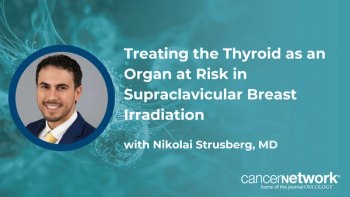
Nikolai Strusberg, MD, discussed other toxicities of proton vs photon breast RT, practice implications, and next steps in capsular contracture research.
Making pancreatic cancer an immunotherapy-receptive disease requires identifying select patient subgroups who may benefit.
The historical "moratorium" on immunotherapy in pancreatic cancer stems from a confluence of biological factors that make the disease exceptionally hostile to immune-mediated attacks, according to Jashodeep Datta, MD.
In a conversation with CancerNetwork® at the 3rd Biennial Miami Precision Medicine Conference, Datta emphasized that even subpopulations with biomarkers typically associated with immunotherapy susceptibility in other solid tumors do not typically respond in the pancreatic microenvironment––a challenge he aptly termed "Mission Impossible."
Datta outlined a strategic pivot toward transforming pancreatic cancer into an immunotherapy-receptive disease. This approach relies on 2 critical pillars:
Addressing these complex interactions remains vital for clinicians focused on mitigating adverse effects while expanding the reach of precision oncology, particularly in the pancreatic cancer space.
Datta is an associate professor of Surgery, a co-leader of the Gastrointestinal Site Disease Group, an associate director of Translational Research, and Sylvester Pancreatic Cancer Research Institute DiMare Family Endowed Chair in Immunotherapy at Sylvester Comprehensive Cancer Center.
[With] pancreatic cancer, there has been a moratorium for immunotherapy drugs. I highlighted this in my talk, but it is a confluence of multiple elements of what makes pancreatic cancer so hostile that immunotherapy has not been successful. The challenge is even [among] subpopulations of patients with pancreas cancer who harbor elements of their genomic markers or biomarkers that are associated with immunotherapy susceptibility in other solid cancers. These patients do not respond, and it seems like an impossible task, which is why I named [my presentation] “Mission Impossible.” What we have done here at Sylvester [Comprehensive Cancer Center along with] like-minded [researchers] around the country is take our understanding of their underlying biology and use it to learn how we can turn pancreas cancer into an immunotherapy-receptive disease.
There are 2 major takeaways [to my talk]. One is that we’re going to have to dissect distinct subpopulations of patients with pancreas cancer that we know respond to immunotherapy. The second piece is a corollary to that, which is to deeply understand the biology of why they are responding. [We are] then using that information [and] knowledge to design the next generation of treatments and biomarkers, including liquid and solid biopsy technologies and multiomics. Also, [we are] taking our understanding beyond pancreas cancer to other solid cancers where similar biology might be at play [and] to open vistas for treatments with immunotherapies in those solid tumors as well.
Datta J. Mission impossible? Strategies for precision immunotherapy in pancreatic cancer. Presented at the 3rd Biennial Miami Precision Medicine Conference; April 11-12, 2026; Fort Lauderdale, FL.