
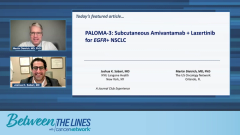
Opinion|Videos|February 4, 2025
PALOMA-3: Key End Points: Pharmacokinetic and Secondary
Panelists discuss how PALOMA-3’s pharmacokinetic and secondary end point analyses demonstrated the clinical benefit of palbociclib through multiple measures, including progression-free survival, objective response rate, and drug concentration levels that inform optimal dosing strategies.
Advertisement
Episodes in this series
Advertisement
Related to this article

Melody Rasouli, MD, MBA, FACOG, explained why male fertility preservation information trails female content online and how cancer centers can fix it.

Zachary L. Bercu, MD, RPVI, FSIR, explains how the Liberty endovascular robotic system works from the operator’s perspective and what went into becoming its first adopting site.

Dan Costin, MD, explains the rationale for testing a personalized mRNA vaccine after resection of high-risk stage I NSCLC.
Paul Rubinstein, MD, discussed how cooperative groups are expanding CAR T and bispecific antibody research for patients with HIV-associated lymphoma.
Data from RAINFOL-01 showed rinatabart sesutecan achieved responses in heavily pretreated platinum-resistant ovarian cancer with low or no FRα expression.

Melody Rasouli, MD, MBA, FACOG, discusses oncofertility gaps at NCI-designated cancer centers and ways to speed fertility referrals for patients.
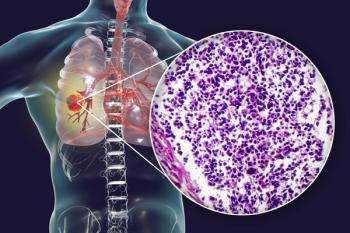
Data from the REZILIENT3 trial support the NDA for zipalertinib plus chemotherapy for those with NSCLC harboring EGFR exon 20 insertion mutations.
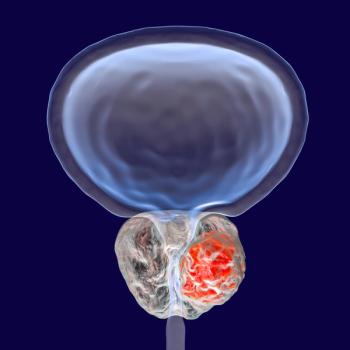
In a phase 2 trial, berzosertib/carboplatin produced a 0% overall response rate vs 15% with docetaxel/carboplatin in heavily pretreated metastatic CRPC.
Advertisement
Advertisement
Trending on CancerNetwork
1
Expanding CAR T and Bispecific Antibody Research in HIV-Associated Lymphoma
2
Why High-Risk Stage I NSCLC Needs a Post-Surgical Vaccine Option
3
How Emory Became the First Adopter of the Liberty Endovascular Robotic System
4
Prioritizing Proton Therapy for Pelvic Nodal Irradiation in Prostate Cancer
5