
Opinion|Videos|February 11, 2025
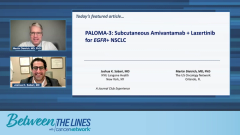
PALOMA-3: Clinical Implications
Panelists discuss how findings from the phase 3 PALOMA-3 trial of subcutaneous amivantamab plus lazertinib may impact clinical practice, in particular the improvement of patient outcomes and how their preferences will play a role in treatment decisions.
Advertisement
Episodes in this series
Advertisement
Related to this article

Anne Chiang, MD, PhD, discusses how community practices can deliver bispecifics, monitor for CRS, and offer trials for patients with SCLC.

“This is the closest we have been to biomarkers replacing ultrasound,” said Amit G. Singal, MD, MS, FAASLD.

ADCs directed towards B7-H3, SEZ, DLL3, and TROP2 appear to be “super exciting,” according to Anne Chiang, MD, PhD.

Neoadjuvant eftilagimod alfa, pembrolizumab, and radiotherapy produced an 81.1% 12-month DFS rate in high-risk, resectable soft tissue sarcoma.
Rezatapopt monotherapy yielded an ORR of 48% in TP53 Y220C-mutated platinum-resistant/refractory ovarian cancer.

Anne Chiang, MD, PhD, discusses DeLLphi-305 and other leaps forward in small cell lung cancer, along with a setback regarding lurbinectedin.

The FDA granted RMAT designation to inzitagene plasmivec for advanced melanoma ahead of a phase 3 trial expected to start in December 2026.
Variation in the mitochondrial genome carries prognostic information about graft-versus-host disease that current clinical risk scores do not capture.
Advertisement
Advertisement
Trending on CancerNetwork
1
Rethinking HCC Surveillance and Treatment Amid a Shifting Risk Landscape
2
Sequencing B7-H3 and SEZ6 ADCs With DLL3 Bispecifics in SCLC
3
Efti Plus Pembrolizumab and RT Yields 81% 12-Month DFS in Soft Tissue Sarcoma
4
Testosterone Therapy Shows No Added Progression Risk in Active Surveillance PCa
5