

Opinion|Videos|April 11, 2025
PSMA PET Imaging in Prostate Cancer Staging: Guiding Initial Diagnosis and Treatment Decisions
Panelists discuss how PSMA PET imaging plays a crucial role in the initial staging of prostate cancer, offering superior accuracy over conventional methods. Medical professionals consider factors such as diagnostic performance, tracer availability, and patient-specific characteristics when selecting appropriate PSMA PET agents. The integration of PSMA PET findings into clinical practice has led to more precise treatment planning, potentially improving patient outcomes. Pivotal trials have demonstrated the efficacy of various PSMA PET tracers in detecting prostate cancer metastases.
Advertisement
Episodes in this series
- Video content above is prompted by the following: Briefly discuss the role of PSMA PET imaging for initial disease staging for patients with prostate cancer, considerations for selecting PSMA PET imaging agents, and how imaging guides treatment decisions in this setting.
- What percentage of your newly diagnosed patients receive PSMA PET imaging, and what is your typical approach when using it in this setting?
- How does PSMA PET imaging guide initial disease staging?
- What do available data from pivotal trials demonstrate, and how do these findings influence your decisions in this setting?
- PSMA-PreRP – Illuccix (gallium Ga68 gozetotide) Hope et al. JAMA. 2021
- OSPREY – Pylarify (piflufolastat F18) Pienta et al. J Urol. 2021
- LIGHTHOUSE – Posluma (flotufolastat F18) Surasi et al. Eur Urol. 2023
Advertisement
Related to this article

“We are not just treating the cancer; we are treating the patient,” said Marcio A. Fagundes, MD.

At 8 years, SBRT and radical prostatectomy had similar disease control in the PACE-A trial, with less urinary incontinence after SBRT.

“When we give the most effective therapy at the time of new diagnosis, we get the most value out of the effort and time that we and our patients are spending,” said Neeraj Agarwal, MD, FASCO.

An aglatimagene besadenovec-based radiotherapy combination increased intratumoral lymphocyte fraction in intermediate- to high-risk localized prostate cancer.

“It should be protocol that 100% of your patients with metastatic prostate cancer get germline testing. Full stop. No exceptions,” said Neal D. Shore, MD, FACS.

In a secondary analysis of the DEPROMP trial, 94.8% of biopsy-naive men had no AEs immediately after multimodal MRI- and PSMA PET/CT–guided prostate biopsy.
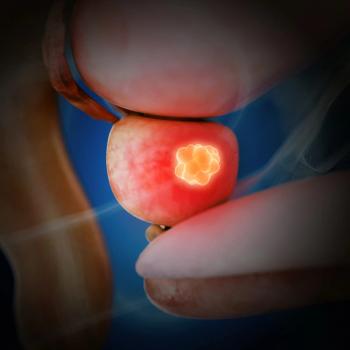
The FDA cleared the SpaceOAR Flex System, a hydrogel spacer used during prostate cancer radiotherapy, in a 510(k) supported by the HYDROSPACE trial.

“Cardiovascular assessment should begin when the patient is being selected for treatment, not after the toxicity emerges,” said Faisal Mehmud, MD, MRCP.
Advertisement
Advertisement
Trending on CancerNetwork
1
Where Does Intensity-Modulated Proton Therapy Fit in Prostate Cancer?
2
FDA Discussion Prompts Voluntary Withdrawal of BLA for I-DXd in ES-SCLC
3
SBRT Matches Disease Control of Prostatectomy in Localized Prostate Cancer
4
Early Clinical Data Show KRAS Inhibitors Can Work in Cholangiocarcinoma
5