
Opinion|Videos|February 4, 2025
Strategic Use of Bispecific Antibodies in R/R MM
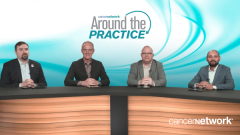
Panelists discuss at what line of therapy bispecific antibodies are considered in treatment decision-making, whether they are used earlier or later in the sequence, and the factors influencing that choice, including weighing bispecifics against other options like chimeric antigen receptor (chimeric antigen receptor) T or standard therapies. They also address the clinical and molecular factors that guide the selection between B-cell maturation antigen (BCMA)– and GPRC5D-targeting bispecifics and comment on the study exploring talquetamab as a bridging strategy before BCMA CAR T therapy, highlighting the potential impact of bispecifics in this treatment paradigm.
Advertisement

Video content above is prompted by the following:
- At what line of therapy do you consider bispecific antibodies in your treatment decision-making? Are you using them earlier or later in the treatment sequence, and what factors influence that decision?
- How do you weigh bispecific antibodies against other treatment options like CAR T or other standard therapies?
- What clinical and molecular factors do you prioritize when choosing between BCMA- and GPRC5D-targeting bispecifics?
- Please comment on this study looking at talquetamab as a bridging strategy before BCMA CAR T-cell therapy, and the potential impact of bispecifics in this treatment paradigm
Advertisement
Related to this article

Peter Forsyth, MD, discusses a first-in-human trial of intrathecal dendritic cell therapy for leptomeningeal disease from breast cancer.

Adding radiotherapy to tislelizumab and chemotherapy also appeared to prolong progression-free survival in a real-world setting.
![“[E]ven if patients relapse following an allogeneic transplant, donor lymphocyte infusions can be incredibly helpful,” said Mary Jo Lechowicz, MD.](https://cdn.sanity.io/images/0vv8moc6/cancernetwork/06df696db42b151710c58727b1333ee098de6453-1200x800.jpg?w=350&fit=crop&auto=format)
“[E]ven if patients relapse following an allogeneic transplant, donor lymphocyte infusions can be incredibly helpful,” said Mary Jo Lechowicz, MD.

The Community Oncology Alliance is urging CMS and Congress to address Medicare Part B drug negotiation policies that threaten independent cancer practices and patient access.

In a phase 1 trial, the MVA-vectored neoantigen vaccine TG4050 produced no dose-limiting toxicities or relapses in those with resected HPV-negative HNSCC.

At SOHO 2026, experts highlighted new findings and advances across diseases including lymphoma, myelodysplastic syndrome, and leukemia.

Poster sessions at WCLC 2026 detail how surgery, nursing, and pathology can contribute to the multidisciplinary care of patients with lung cancer.

A positive CHMP opinion supports the perioperative use of pembrolizumab plus enfortumab vedotin in resectable MIBC regardless of cisplatin eligibility.
Advertisement
Advertisement
Trending on CancerNetwork
1
Key Takeaways for Multidisciplinary Lung Cancer Care From WCLC 2026
2
CELMoDs After T-Cell–Engaging Therapy in Multiple Myeloma
3
FDA Approves Imlunestrant Combo in ESR1-Mutated Breast Cancer
4
Pembrolizumab/Enfortumab Vedotin Earns Positive CHMP Opinion in MIBC
5