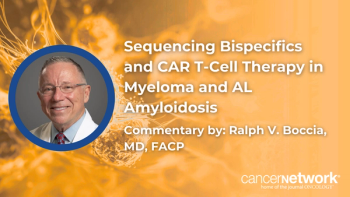
Ralph V. Boccia, MD, FACP, discusses CAR T and bispecific sequencing, fixed-duration therapy, MRD, and bispecifics in AL amyloidosis.
Researchers analyzed postoperative complications and survival outcomes in patients with melanoma who underwent therapeutic lymph node dissection.
In a retrospective study, researchers evaluated the clinical outcomes and complication profiles of patients with melanoma who underwent therapeutic lymph node dissection (TLND) between January 2004 and August 2025.1 The investigation aimed to characterize the safety and efficacy of surgical intervention in the era following the Multicenter Selective Lymphadenectomy Trial II (MSLT-2; NCT00297895), which shifted the standard of care away from completion lymph node dissection (CLND) toward active nodal surveillance for sentinel lymph node-positive disease.2
Survival analysis demonstrated an estimated median overall survival (OS) of 96 months, and the median disease-free survival (DFS) was 38 months. The Kaplan-Meier analysis showed melanoma-specific survival rates of 82% (95% CI, 0.75-0.86) at 1 year, 55% (95% CI, 0.46-0.62) at 5 years, and 49% (95% CI, 0.40-0.57) at 10 years. For DFS, the corresponding rates were 63% (95% CI, 0.50-0.69) at 1 year, 42% (95% CI, 0.34-0.50) at 5 years, and 41% (95% CI, 0.33-0.49) at 10 years.
In an unadjusted analysis, postoperative morbidity was associated with worse prognosis. The Kaplan-Meier melanoma-specific survival differed significantly compared with the complication status and type (P <.001). Of note, wound dehiscence, surgical site infection, and lymphedema demonstrated worse survival compared with patients who did not have complications. The DFS curves showed similar results.
The univariable Cox regression analysis for DFS showed postoperative complications were significantly associated with an increased risk of recurrence (HR, 1.86; 95% CI. 1.14-3.03; P = .013). Regarding individual complications, infection (HR 2.24, 95% CI 1.19–4.22; P = 0.013) and lymphorrhea (HR 1.50, 95% CI 1.01–2.23; p = 0.044) were significantly associated with worse DFS.
When stratified by treatment area, there was no statistically significant difference in melanoma-specific survival for those treated before (n = 104) or after (n = 75) the publication of the MSLT-2 trial. There was no difference in DFS prior to the MSLT-2 trial (n = 99) or after (n = 72).
“In this single tertiary referral center series of [patients with] stage III melanoma undergoing [TLND], long-term outcomes were favorable and comparable to contemporary surgical cohorts, supporting the role of lymphadenectomy in selected patients treated in specialized settings,” the authors of the study wrote.1 “Severe postoperative events were uncommon, whereas locoregional surgical-field morbidity occurred in a meaningful proportion of patients and differed substantially by nodal basin: inguino-iliac-obturator dissection carried the highest risk of wound complications and lymphatic adverse events compared with axillary procedures.”
A total of 185 patients were included in the analysis. The median follow-up was 105 months. Regarding baseline characteristics, 55.1% of patients were male, 58.9% had axillary lymph node dissection, 9.7% had wound dehiscence, and 31.9% had lymphorrhea. Additionally, 96.8% of patients had Clavien-Dindo grade I status, 55.1% had an ECOG performance status of 0, and 57.3% were treated in the pre–MSLT-2 era.
Other systemic therapy not specified was given to 25.4% of patients followed by 16.7% receiving immunotherapy, and 54.0% had clinical relapse during follow-up. The vital status at last follow-up noted 49.2% of patients were dead; however, 57.8% did not have a melanoma-specific death.
Surgical field-related postoperative complications occurred in 16.8% of patients, including 4.9% having persistent seroma, 10.3% having wound dehiscence, 3.8% having surgical site infections, and 1.6% having limb lymphedema. After cervical lymph node dissection, no patients had complication. After axillary dissection, persistent seroma was noted in 3.7% of patients, wound dehiscence in 4.6%, surgical site infection in 0.9%, and limb lymphedema in 0.9%. After inguinal dissection, persistent seroma occurred in 7.0% of patients, wound dehiscence in 19.7%, surgical site infection in 8.5%, and limb lymphedema in 2.8%. After surgery, death was noted in 1.0% of patients.
A univariate analysis for risk factors showed no variables were significantly associated with the occurrence of lymphedema, but there was a trend toward significance (OR, 0.81; 95% CI 0.65–1.01, P = 0.057). Older age was associated with increased risk of lymphorrhea (OR, 1.02; 95% CI 1.00–1.04; P = 0.025). Inguinal dissection showed an independent association of Firth’s penalized logistic regression (OR, 2.71; P = .002).