
Opinion|Videos|September 16, 2024
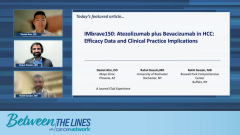
Vp4 and Baseline Varices Data in IMbrave 150: Clinical Implications
Medical experts analyze the exploratory efficacy and safety results for patients with portal vein invasion (Vp4), addressing the challenges in treating this subgroup.
Advertisement
Episodes in this series
Video content above is prompted by the following:
- Please share your thoughts on the exploratory efficacy and safety results of patients with Vp4.
- Why might this be a challenging population to treat?
Advertisement
Related to this article

Zachary L. Bercu, MD, RPVI, FSIR, explains how the Liberty endovascular robotic system works from the operator’s perspective and what went into becoming its first adopting site.
Dan Costin, MD, explains the rationale for testing a personalized mRNA vaccine after resection of high-risk stage I NSCLC.
Paul Rubinstein, MD, discussed how cooperative groups are expanding CAR T and bispecific antibody research for patients with HIV-associated lymphoma.
Data from RAINFOL-01 showed rinatabart sesutecan achieved responses in heavily pretreated platinum-resistant ovarian cancer with low or no FRα expression.

Melody Rasouli, MD, MBA, FACOG, discusses oncofertility gaps at NCI-designated cancer centers and ways to speed fertility referrals for patients.
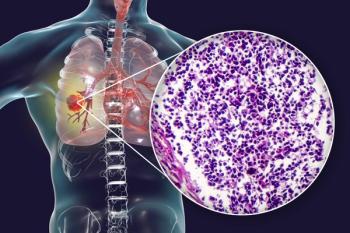
Data from the REZILIENT3 trial support the NDA for zipalertinib plus chemotherapy for those with NSCLC harboring EGFR exon 20 insertion mutations.
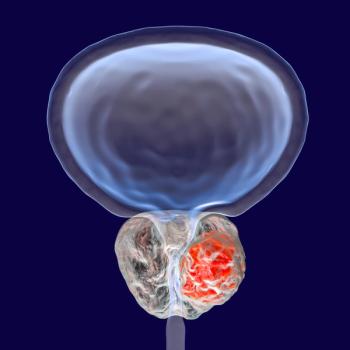
In a phase 2 trial, berzosertib/carboplatin produced a 0% overall response rate vs 15% with docetaxel/carboplatin in heavily pretreated metastatic CRPC.
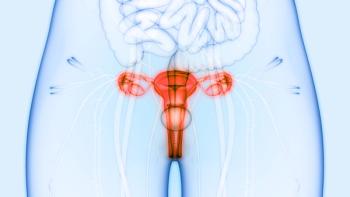
Initial phase 1/2 data showed a 73% objective response rate with ubamatamab in 11 patients with heavily pretreated low-grade serous ovarian cancer.
Advertisement
Advertisement
Trending on CancerNetwork
1
Expanding CAR T and Bispecific Antibody Research in HIV-Associated Lymphoma
2
Prioritizing Proton Therapy for Pelvic Nodal Irradiation in Prostate Cancer
3
Why High-Risk Stage I NSCLC Needs a Post-Surgical Vaccine Option
4
Ubamatamab Yields Responses in Recurrent Low-Grade Serous Ovarian Cancer
5