
Commentary|Videos|July 11, 2026
Weighing Mutation Status and Fitness in Frontline AML Regimen Choice
Author(s)Amer Zeidan, MBBS
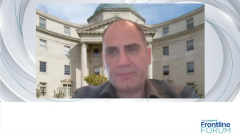
Amer Zeidan, MBBS, MD, discusses how mutation status and physical fitness factor into frontline AML regimen selection.
Advertisement
Episodes in this series


In the wake of a Frontline Forum program, Amer Zeidan, MBBS, MD, discussed whether mutation status should outweigh physical fitness when selecting a frontline regimen in acute myeloid leukemia (AML).
Drawing on the VIALE-A (NCT02993523) and AGILE trials (NCT03173248) as well as the phase 2 PARADIGM trial (NCT04801797), which compared intensive chemotherapy with azacitidine (Vidaza) plus venetoclax (Venclexta) in fit patients, Zeidan emphasized individualized decision-making.1-3 He noted that PARADIGM excluded several subsets, such as core binding factor leukemia, acute promyelocytic leukemia (APL), and younger patients with FLT3 or NPM1 mutations, but not those with IDH1 or IDH2 mutations. Additionally, he described how determining the treatment goal—achieving a cure or establishing a bridge to transplant—should guide regimen choice.
Zeidan is a professor of medicine at Yale School of Medicine and chief of the Division of Hematologic Malignancies, director of Hematology Early Therapeutics Research, and assistant director of the Clinical Trial Office for Hematology at Yale Comprehensive Cancer Center in New Haven, Connecticut.
Transcript:
CancerNetwork®: Long-term follow-up from VIALE-A and AGILE show survival benefits in specific molecular subsets like IDH1/2. For a patient who is borderline fit, does mutation status trump physical fitness when picking a regimen?
Zeidan: The PARADIGM study, which compared intensive chemotherapy with [azacitidine plus venetoclax] in fit patients, showed better event-free survival and improved quality of life, less hospitalization, and a lower incidence of severe adverse events with azacitidine and venetoclax. However, it’s important to remember that the trial excluded a number of patients, such as those with core binding factor leukemia, APL, FLT3 mutations, or NPM1 mutations who were younger. Patients with IDH1 and IDH2 mutations were not excluded from PARADIGM, so it’s reasonable to consider this approach.
One thing to remember is the goal of treatment. If the goal is cure with chemotherapy alone, then intensive chemotherapy always has to be considered. If the goal is a bridge to transplant, then [hypomethylating agents] plus venetoclax or ivosidenib [Tibsovo] with azacitidine are both reasonable. Again, this is individualized decision-making.
References
- DiNardo CD, Jonas BA, Pullarkat V, et al. Azacitidine and venetoclax in previously untreated acute myeloid leukemia. N Engl J Med. 2020;383(7):617-629. doi:10.1056/NEJMoa2012971
- Montesinos P, Recher C, Vives S, et al. Ivosidenib and azacitidine in IDH1-mutated acute myeloid leukemia. N Engl J Med. 2022;386(16):1519-1531. doi:10.1056/NEJMoa2117344
- Fathi AT, Perl AE, Fell G, et al. Results from PARADIGM, a phase 2 randomized multicenter study comparing azacitidine and venetoclax to conventional induction chemotherapy for newly diagnosed fit adults with acute myeloid leukemia. Blood. 2025;146(suppl 1):6. doi:10.1182/blood-2025-6
Advertisement
Related to this article
Experts discuss why the convenience of the all-oral decitabine/cedazuridine plus venetoclax regimen does not reduce the need for close monitoring in AML.
Allen Khodab, MD discussed how patients with larger prostates had reduced IPSS scores that normalized to the same level as those with normal-sized glands.
Jeffrey V. Matous, MD, explains why ramantamig’s MRD negativity rates are clinically significant in relapsed/refractory myeloma.

Jeffrey V. Matous, MD, discusses how to counsel patients on chronic, low-grade toxicities to support adherence to ramantamig.

Melody Rasouli, MD, MBA, FACOG, explained how random-start ovarian stimulation and rapid sperm banking fit fertility preservation into cancer care.
Veronika Bachanova, MD, PhD, discussed how the favorable safety profile of CAR natural killer cell therapies may come with trade-offs in persistence and response durability.
Dan Costin, MD, discusses where personalized mRNA vaccines could fit into lung cancer care within 5 to 10 years.

Melody Rasouli, MD, MBA, FACOG, discussed the system breakdowns that delay fertility referrals and how EHR triggers can automate the process.
Advertisement
Advertisement
Trending on CancerNetwork
1
Sequencing Bispecifics and CAR T-Cell Therapy in Myeloma and AL Amyloidosis
2
Clinical Applications and the Future of Remote Endovascular Procedures
3
Building a Low-Dose Radiation Therapy Program for Benign Disease
4
Novel Cancer Vaccine Plus Temozolomide Miss Primary End Point in Glioblastoma
5