
Qingqing Cai, MD, PhD, discussed early efficacy data for rocbrutinib plus R-CHOP in untreated non-GCB DLBCL and how they compare with frontMIND at ESMO 2026.
Qingqing Cai, MD, PhD, discussed early efficacy data for rocbrutinib plus R-CHOP in untreated non-GCB DLBCL and how they compare with frontMIND at ESMO 2026.
Daniel Y.C. Heng, MD, MPH, FRCPC, explained how subsequent therapy and durable responses may have shaped overall survival results in LITESPARK-011.

Daniel Y.C. Heng, MD, MPH, FRCPC, explained how he manages anemia, hypoxia, and cardiac toxicity with belzutifan plus lenvatinib for renal cell carcinoma.

Daniel Y.C. Heng, MD, MPH, FRCPC, discussed final LITESPARK-011 data, toxicity management, and treatment sequencing in advanced renal cell carcinoma.
Shankar Siva, MBBS, PhD, FRANZCR, discussed when to consider cytoreductive SABR in patients with metastatic kidney cancer responding to systemic therapy.

Rocbrutinib plus R-CHOP yielded a 100% ORR and an 86.7% CR rate in 15 patients with untreated non-GCB DLBCL, warranting randomized evaluation.

Hope S. Rugo, MD, discussed KEYNOTE-B49 data showing pembrolizumab plus chemotherapy improved PFS in PD-L1-positive HR+/HER2- breast cancer.
Dirk Schadendorf, MD, outlineed which patients with BRAF V600–mutant melanoma, including those with brain metastases, may be candidates for triplet therapy.

Dirk Schadendorf, MD, discussed final STARBOARD data with encorafenib, binimetinib, and pembrolizumab and its role in BRAF V600–mutant melanoma care.

A bispecific in biliary tract cancer, dostarlimab organ preservation in rectal cancer, and KRAS G12D data in pancreatic cancer stood out at ESMO 2026.
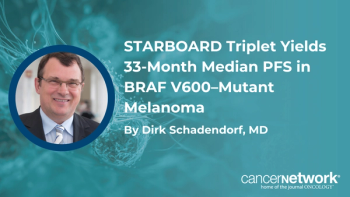
Dirk Schadendorf, MD, reviewed final STARBOARD data for encorafenib, binimetinib, and pembrolizumab in first-line BRAF V600–mutant melanoma.

Presentations at ESMO Congress 2026 detailed how surgery, radiation oncology, and supportive care can contribute to the treatment of patients with NSCLC.
Matthew Lee, MD, discusses the first clinical data for BG-C477, a CEACAM5-targeting ADC, in advanced NSCLC.

ASCENT-03 subgroup data show sacituzumab govitecan improved PFS vs chemotherapy across subgroups in untreated metastatic TNBC.
Bispecific antibodies targeting PD-L1 showed activity across first-, second-, and later-line advanced neuroendocrine carcinoma in 3 trials presented at ESMO 2026.
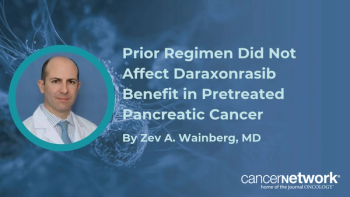
Zev A. Wainberg, MD, MSc, discussed why neither the first-line regimen nor the second-line chemotherapy comparator altered the benefit seen with daraxonrasib in RASolute 302.
Matthew Lee, MD, shares his key takeaway from the first disclosure of BG-C477 data in advanced NSCLC.

“What we are trying to do more often is to ablate as much as we can,” said Shankar Siva, MBBS, PhD, FRANZCR, on pairing SABR with systemic therapy in RCC.
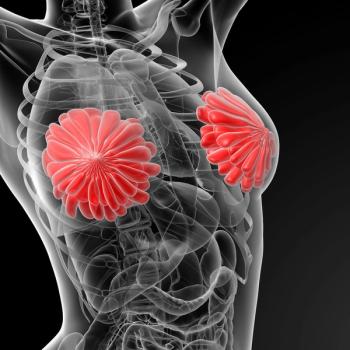
KEYNOTE-B49 data show pembrolizumab plus chemotherapy improved PFS but not OS in PD-L1–positive HR+/HER2– advanced breast cancer.
Matthew Lee, MD, discusses how confident he is that CEACAM5 expression will hold up as a biomarker for BG-C477 in NSCLC.

Futibatinib, pemigatinib, and lirafugratinib showed similar response rates and progression-free survival at first FGFR inhibitor exposure in biliary tract cancers with FGFR alterations.

Frontline iza-bren plus pembrolizumab yielded a 57.9% ORR in recurrent or metastatic HNSCC at 2.5 mg/kg, the dose chosen for phase 3 study.
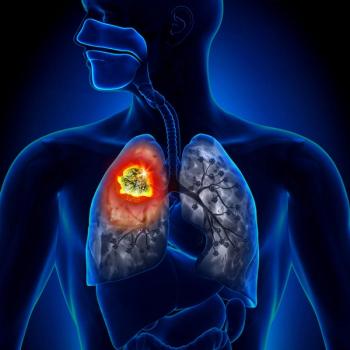
In the real-world CEMI-LUNG study, first-line cemiplimab produced survival and response outcomes consistent with the pivotal EMPOWER-Lung 1 trial.

Data from the phase 3 OptiTROP-Lung06 trial may support sacituzumab tirumotecan plus pembrolizumab as a new frontline option for this NSCLC population.
Catch up on 5 melanoma and skin cancer readouts from ESMO 2026, including NADINA, OptimUM-01, OptimUM-09, C-POST, and KEYNOTE-630.

ESMO 2026 posters showed durable EV-302 benefit in older and comorbid populations plus persistent early mortality in metastatic urothelial carcinoma.

A post hoc ReFocus analysis found prior immune checkpoint inhibitor exposure raised the risk of mucocutaneous AEs with lirafugratinib.

In STARBOARD, frontline encorafenib, binimetinib, and pembrolizumab improved ORR and PFS vs pembrolizumab alone in BRAF V600E/K-mutant melanoma.

Data from the real-world CEMI-LUNG evaluating cemiplimab in advanced NSCLC were consistent with reports from the EMPOWER-Lung1 study.
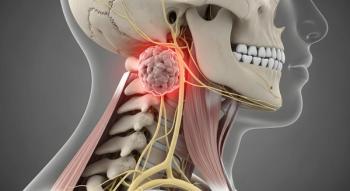
A cisplatin-free pembrolizumab regimen yielded 65.1% laryngectomy-free survival rate at 2 years in SMART-KEY, missing significance vs historical controls.