

Maintenance with niraparib also produces benefits in chemotherapy-free interval and time to first and second therapy among those with BRCA wild-type recurrent ovarian cancer in the phase 3 NOVA study.

Kristie L. Kahl is vice president of content at MJH Life Sciences, overseeing CURE®, CancerNetwork®, the journal ONCOLOGY, Targeted Oncology, and Urology Times®. She has been with the company since November 2017.
She is a graduate of Rider University, where she acquired a Bachelors of Art in journalism, as well as a graduate of Temple University, where she received her Masters of Science in Sports Management.
Follow Kristie on Twitter at @KristieLKahl, or email her at kkahl@mjhlifesciences.com.
Maintenance with niraparib also produces benefits in chemotherapy-free interval and time to first and second therapy among those with BRCA wild-type recurrent ovarian cancer in the phase 3 NOVA study.

With no standard treatment available, darolutamide shows potential activity among patients with androgen receptor–positive salivary gland cancer in the phase 2 DISCOVARY trial.
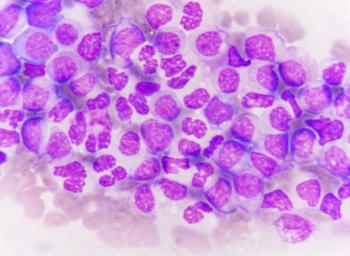
Sustained improvements in leukemia outcomes in low- and middle-income countries are feasible with cross border programs, according to an expert from the University of California, San Diego.
Data from the phase 3 ZIRCON trial evaluating 89Zr-DFO-girentuximab in patients with renal tumors may be practice changing, according to an expert from the University of California Los Angeles.

Luciano J. Costa, MD, PhD, discussed the future treatments being evaluated for the treatment of multiple myeloma.
Luciano J. Costa, MD, PhD, discussed additional studies evaluating various treatment regimens for transplant-ineligible patients with newly diagnosed multiple myeloma, aiming to determine the best standard in this population.
Luciano J. Costa, MD, PhD, discussed the results from the phase 2 GRIFFIN study, designed to evaluate the combination of daratumumab, bortezomib, lenalidomide, and dexamethasone in transplant-eligible patients with multiple myeloma.
Luciano J. Costa, MD, PhD discussed updating findings from the phase 3 MAIA trial of the triplet combination of daratumumab, lenalidomide, and dexamethasone in transplant-ineligible patients with newly diagnosed multiple myeloma.

Talha Badar, MBBS, MD, discussed ongoing trials in the treatment of chronic myeloid leukemia in chronic phase, as well as his hope for future therapies in the space.
Sikander Ailawadhi, MD, discussed the safety and efficacy of talquetamab in heavily pretreated patients with relapsed/refractory multiple myeloma following a readout of the phase 1/2 MonumenTAL-1 trial.
Talha Badar, MBBS, MD, discussed how results from the phase 3 ASCEMBL study of asciminib will impact clinical practice in treating chronic myeloid leukemia in chronic phase.
Talha Badar, MBBS, MD, discussed the unmet needs in the treatment of chronic myeloid leukemia in chronic phase.
Talha Badar, MBBS, MD, discussed the results of the phase 3 ASCEMBL trial, demonstrating the superiority of asciminib versus bosutinib in patients with chronic myeloid leukemia in chronic phase.
Ravi Vij, MD, MBA, suggested that 4-drug regimens may be a new standard for frontline therapy in newly diagnosed multiple myeloma, as oncologists await trial readouts from ongoing clinical trials.
Ravi Vij, MD, MBA, offered additional information about the use of various regimens aimed to treat patients with high-risk, newly diagnosed multiple myeloma, that were read out at the 2022 ASH Annual Meeting.
Ravi Vij, MD, MBA, discussed updated analyses of the phase 3 SWOG S0777 trial, supporting the use of bortezomib, lenalidomide, and dexamethasone in untreated patients with multiple myeloma who do not plan on receiving immediate autologous stem cell transplant.
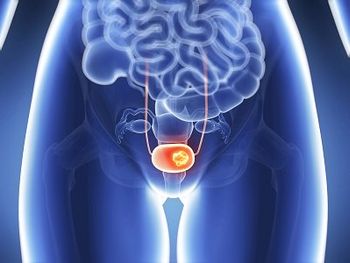
Long-term follow-up showed that the use of pembrolizumab monotherapy maintained durable complete responses, while rates of upstaging at the time of radical cystectomy were consistent with previous findings in the KEYNOTE-057 trial in patients with a bladder cancer subset.

According to a retrospective chart review, there was no significant correlation between BMI and changes in renal function among patients who underwent partial nephrectomy for the treatment of kidney cancer.
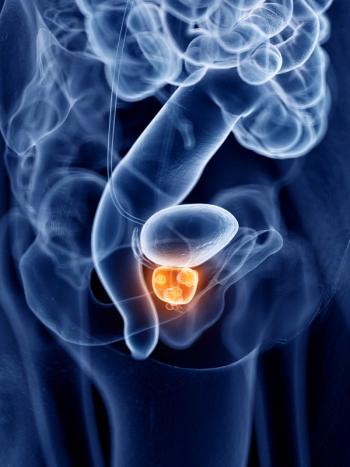
“With more potent agents, can we actually cure patients [with prostate cancer]? I'm not so sure about that…because of heterogeneity,” said an expert from NewYork-Presbyterian – Weill Cornell Medical Center in New York City. “So we'll see. But I think with combinations, maybe someday we're going to be able to get there.”
First results from the RADICALS-HD trial demonstrated improved metastasis-free survival with 2 years of androgen-deprivation therapy (ADT) plus radiotherapy in men with prostate cancer.
The risk for disease progression or death was reduced by 27% with the addition of cabozantinib to nivolumab plus ipilimumab in patients with previously untreated renal cell carcinoma.

Tucatinib as monotherapy and in combination with trastuzumab supported further investigation of the regimens in patients with metastatic HER2-positive colorectal cancer.
Neoadjuvant treatment with cemiplimab led to near or complete disappearance of cutaneous squamous cell carcinoma in almost 64% of patients set to undergo surgery.

Overall survival remained durable in patients with metastatic non–small cell lung cancer when tremelimumab was added to durvalumab plus chemotherapy in the frontline setting.
Patients with localized recall cell carcinoma did not have improved disease-free survival with adjuvant nivolumab plus ipilimumab vs placebo.
Results from the LEAP-002 trial revealed extended median overall survival with lenvatinib monotherapy in patients with unresectable hepatocullar carcinoma.

The addition of abemaciclib vs standard-of-care chemotherapy to trastuzumab numerically improved overall survival in women with hormone receptor–positive, HER2-positive advanced breast cancer.

Findings provided rationale to limit air pollution and highlighted the need for molecularly targeted lung cancer prevention due to particulate matter being revealed as a mechanistic driver for EGFR-positive NSCLC.

After 7 years of follow-up, results from the phase 3 SOLO1/GOG-3004 trial support maintenance olaparib to achieve long-term remission in women with newly diagnosed advanced ovarian cancer.

The final analysis of the PAOLA-1/ENGOT-ov25 trial confirmed the benefit of olaparib plus bevacizumab as maintenance therapy following frontline treatment in women with HRD-positive advanced ovarian cancer.