
Tiba Al Sagheer, PharmD, BCOP, BCACP, said CAR T-cell expansion signals toxicity risk differently across cilta-cel and ide-cel.
Tiba Al Sagheer, PharmD, BCOP, BCACP, said CAR T-cell expansion signals toxicity risk differently across cilta-cel and ide-cel.

Michael R. Savona, MD, and Courtney D. DiNardo, MD, MSCE, discussed ARC initiative data on venetoclax dose modifications in AML.
!["I can’t make [treatment] decisions for you, but I can give you realistic expectations," said Herbert Lepor, MD, of NYU Langone Health.](https://cdn.sanity.io/images/0vv8moc6/cancernetwork/11e93c561a9ff98f731b152d7f48e6f792831864-1000x1000.jpg?w=350&fit=crop&auto=format)
"I can’t make [treatment] decisions for you, but I can give you realistic expectations," said Herbert Lepor, MD, of NYU Langone Health.

A multidisciplinary panel discussed second-line CAR T-cell candidacy, real-world referral barriers, and the management of delayed toxicities in DLBCL.
Kathryn Eckert, DO, spoke about diversifying breast imaging technology after the Hologic Brevera needle recall.

Herbert Lepor, MD, outlines NYU Langone’s long-term PSA and MRI surveillance protocol following focal cryoablation for prostate cancer.

Paul Oberstein, MD, discusses how RASolute 302 may be the most significant advance in pancreatic cancer treatment in more than a decade.
Differentiating between CRS and IEC-HS remains a challenge in mitigating toxicity associated with cellular therapy, said Tiba Al Sagheer, PharmD, BCOP, BCACP.
Among evaluable patients with B-cell NHL from the dose-escalation portion of the trial without CNS involvement, all CRs were sustained through 6 months.

Based on phase 2 data, adding consolidative thoracic radiation cannot be recommended outside of clinical trials for unselected patients with ES-SCLC.
Kathryn Eckert, DO, shared how her team communicates with patients and keeps referral guidelines unchanged during the shortage.

Nikesh Shah, MD, discussed the specific factors that shape the choice between a bispecific and CAR T-cell therapy in follicular lymphoma.

TALAPRO-3 trial findings support the regulatory decision for the talazoparib-based regimen in HRR-altered metastatic castration resistant prostate cancer.
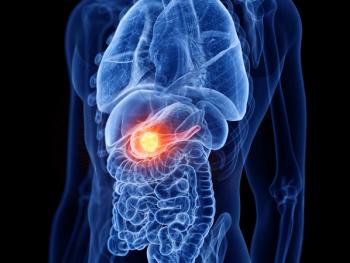
The FDA has accepted the new drug application for daraxonrasib in metastatic pancreatic ductal adenocarcinoma based on results from the phase 3 RASolute 302 study.

Data from the phase 3 MonumenTAL-6 trial demonstrate the potential to target BCMA and GPRC5D simultaneously in multiple myeloma care.
The world of cellular therapy is “still ever-expanding” as novel constructs continue to emerge, according to Megan Melody, MD.
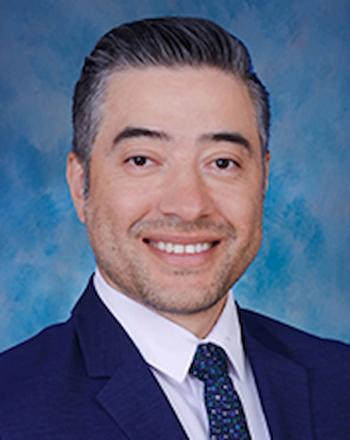
Carlos Silva Rondon, MD, of Moffitt Cancer Center discussed factors guiding selection between CAR T therapy or bispecific antibodies in follicular lymphoma.
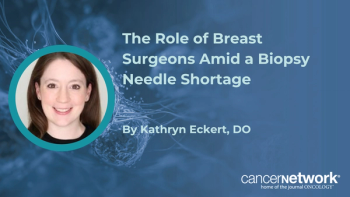
Kathryn Eckert, DO, discussed her role of bridging surgery and radiology teams as breast biopsy needle shortages continue nationwide.

This cross-sectional study evaluated the genetic landscape of a cohort of patients with metastatic prostate cancer who were treated at a referral center in Mexico City, Mexico.

Megan Melody, MD, says it could be “years” before data clarify how to sequence bispecific antibodies and CAR T-cell therapy.

Findings from the global, single-arm phase 1/2 ARROS-1 trial in patients with advanced or metastatic ROS1-positive NSCLC support the regulatory decision.
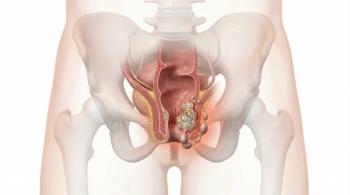
Fast track designation supports pelareorep's development for anal cancer that progresses after first-line checkpoint inhibitor-based therapy.
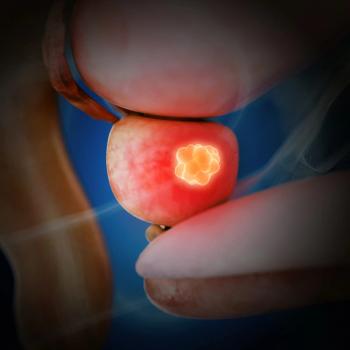
Investigators will evaluate carotuximab plus radium-223 to overcome treatment resistance in metastatic CRPC with bone metastases.
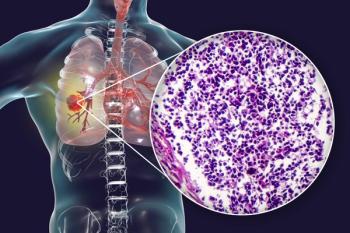
Updated phase 3 HARMONi trial data show ivonescimab plus chemotherapy improves overall survival in Western and Asian EGFR-mutant NSCLC groups.
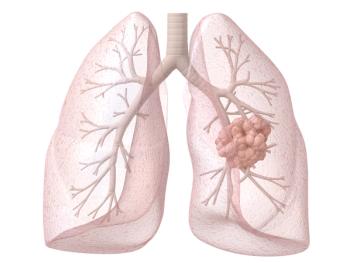
Exploratory data showed that serplulimab maintenance or continuation beyond initial progression may yield incremental survival benefits in ES-SCLC.
Two hematologic oncologists debated the clinical trade-offs of CAR T-cell therapy vs bispecific antibodies in relapsed/refractory follicular lymphoma.
Megan Melody, MD, says acute CAR T-cell toxicities are well managed, but delayed neurotoxicity remains a challenge.
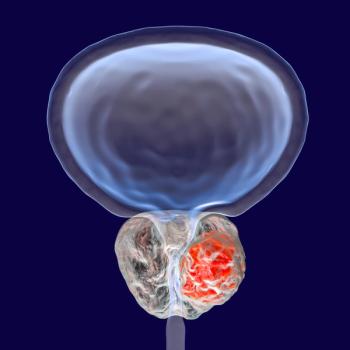
A 10-year analysis of 3477 patients found low prostate cancer–specific mortality with focal high-intensity focused ultrasound or cryotherapy for nonmetastatic disease.
Kathryn Eckert, DO, described how her breast surgery practice and imaging partners responded on day 1 of the Hologic Brevera needle recall.
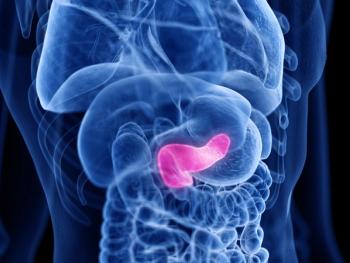
A peptide vaccine targeting KRAS variants was safe and produced durable T-cell responses in individuals with hereditary predisposition for pancreatic ductal adenocarcinoma.