



Leukemia
Latest News
Advertisement
Latest Videos

































































Advertisement
More News

Seema Ali Bhat, MD, and Alexey Danilov, MD, PhD, discuss data updates on the use of fixed-duration venetoclax for the treatment of CLL.
CAR T-cell therapy brexucabtagene autoleucel appears to produce an overall survival benefit among patients with relapsed or refractory B-cell acute lymphoblastic leukemia
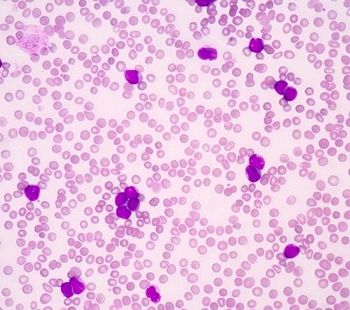
Findings from a study indicate that measurable residual disease clearance is associated with favorable outcomes in acute myeloid leukemia following subsequent therapy before allogenic stem cell transplant.
Dr Seema Ali Bhat continues the conversation on non-covalent BTK inhibitors in CLL treatment with a look at nemtabrutinib and data from the BELLWAVE-001 study.

Catherine Coombs, MD, and Alexey Danilov, MD, PhD, discuss data on the investigational non-covalent BTK inhibitor pirtobrutinib for the treatment of CLL.
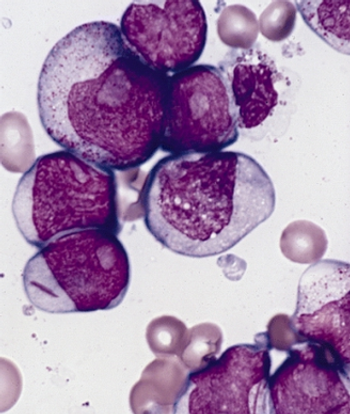
Investigators say that a phase 1/2 trial evaluating MGTA-117 in 2 hematologic malignancies has been paused following a serious adverse effect that may be related to the agent.

The panel explains the factors they consider when deciding on a BTK inhibitor for the treatment of patients with CLL.
Drs Susan O’Brien and Catherine Coombs describe the design and outcomes of the ELEVATE-RR and ALPINE trials that compare BTK inhibitors in CLL.

Eleanor Mayfield, ELS, discusses FLT3-ITD minimal residual disease in acute myeloid leukemia.
Seema Ali Bhat, MD, explains the SEQUOIA trial and the BTK inhibitor zanubrutinib for the frontline treatment of CLL, and Alexey Danilov, MD, PhD, describes the ASCEND trial that led to the approval of acalabrutinib for relapsed CLL.
Catherine Coombs, MD, reviews data on BTK inhibitors ibrutinib, acalabrutinib, and zanubrutinib in the first-line treatment of CLL, and how she approaches selecting the appropriate BTK inhibitor in practice.

Patients with chronic lymphocytic leukemia and small lymphocytic leukemia can now receive treatment with zanubrutinib following its approval by the FDA.
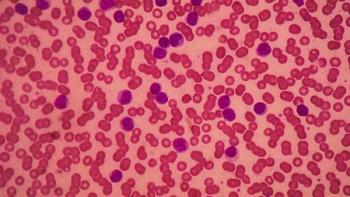
Moxetumomab pasudotox-tdfk, approved as a treatment for relapsed/refractory hairy cell leukemia in 2018, will be withdrawn from the United States market in July 2023.

The FDA gave the dual epigenetic modulator JBI-802 an orphan drug designation to treat small cell lung cancer and acute myeloid leukemia.
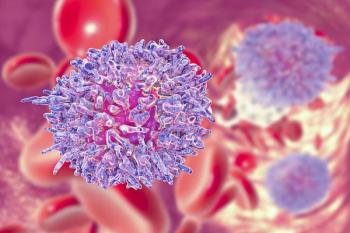
The Japanese approval of acalabrutinib for the treatment of patients with treatment-naïve chronic lymphocytic leukemia was supported by data from the phase 3 ELEVATE-TN trial.
Data presented at this year’s American Society of Hematology Annual Meeting spotlight promising novel treatment options for acute myeloid leukemia, according to an expert from The University of Texas MD Anderson Cancer Center.
Kendra Sweet, MD, discussed several ongoing studies in chronic myeloid leukemia, with some initial results presented at the 2022 American Society of Hematology Annual Meeting and Exposition.
Kendra Sweet, MD, examined how the data surrounding asciminib in chronic myeloid leukemia will affect the standard of care treatment options.
Kendra Sweet, MD, discussed results of the the phase 2 OPTIC trial, which investigated ponatinib in a group of patients with resistant, chronic phase chronic myeloid leukemia.

Following the 2022 ASH Annual Meeting and Exposition, Nakhle Saba, MD; Lindsey Roeker, MD; Javier Pinilla, MD, PhD; and Catherine C. Coombs, MD, participated in a rapid-fire question-and-answer 2-Minute Drill program, hosted by CancerNetwork®. Topics ranged from most exciting data in chronic lymphocytic leukemia and lymphoma, as well as what research needs more follow-up.
Susan O’Brien, MD, provides a brief overview of chronic lymphocytic leukemia (CLL), and Seema Ali Bhat, MD, explains the mechanism of BTK inhibitors.

The original guidance was published as a draft 2 years ago, detailing the FDA's thoughts on the development of agents for the treatment of acute myeloid leukemia.
Harry P. Erba, MD, PhD, highlights key data on ziftomenib in patients with relapsed/refractory acute myeloid leukemia and its potential as part of a combination regimen.

Patients with IDH1-mutant relapsed/refractory acute myeloid leukemia achieved a notable complete response rate following treatment with olutasidenib.
Patients with chronic lymphocytic leukemia or small lymphocytic lymphoma achieved promising early responses following treatment with BCB-11417 with or without zanubrutinib.
Advertisement
Advertisement
Trending on CancerNetwork
1
Subcutaneous Pembrolizumab Approved in Japan for All Tumor Indications
2
Acting on a HER2 Result and Navigating Access to Therapy
3
The Case for Frontline Zongertinib in HER2-Mutant NSCLC
4
Emerging Endocrine Doublets and Serial ESR1 Testing in HR+/HER2− mBC
5