
!["Patients [with cancer] and physicians would rather have a fixed-duration treatment, if possible," said Julie M. Vose, MD, MBA, at SOHO 2026.](https://cdn.sanity.io/images/0vv8moc6/cancernetwork/1cfb57db416943d8f8690afb0bc0d13aa3d90683-400x400.jpg)





Leukemia
Latest News
Advertisement
Video Series

Latest Videos






Shorts

0:32
CLL 17 Data: Equivalent 3-Year PFS Across Arms, Long-Term Questions Remain
10 days ago
by
Julie M. Vose, MD, MBA

0:48
When is Pirtobrutinib Triplet Therapy Most Useful in CLL Care?
3 months ago
by
Matthew S. Davids, MD, MMSc

0:58
Perseverance is Key With Asciminib in Chronic Myeloid Leukemia
4 months ago
by
Jorge E. Cortes, MD

0:35
Does Revumenib Have a Role in The Pediatric AML Setting?
4 months ago
by
Hannah Goulart, MD

0:47
How Safe is Orca-T During Transplantation for Hematologic Malignancies?
5 months ago
by
Wendy Stock, MD

0:54
Can MRD Influence Therapy Duration in Chronic Lymphocytic Leukemia?
6 months ago
by
Nicole Lamanna, MD

0:31
AMPLIFY Trial Affirms Shift Away From Chemoimmunotherapy in CLL
7 months ago
by
Nicole Lamanna, MD
0:50
Key Advances Across Oncology Research and Care at Columbia University
7 months ago
by
Russ Conroy

0:47
Orca-T Reduces the “Costs” of Transplantation in Blood Cancers
7 months ago
by
Gwen Nichols, MD
0:41
Trial in Rare Leukemia Shows “Unprecedented Result” With Blinatumomab
7 months ago
by
Ashkan Emadi, MD, PhD
Podcasts






































































Advertisement
More News
Updated results from the phase 2 ELIANA trial support tisa-cel as definitive therapy for pediatric and young adult patients with relapsed/refractory B-ALL.

Pirtobrutinib plus venetoclax/rituximab reduced the risk of progression or death by 45% among those with CLL in the phase 3 BRUIN CLL-322 trial.
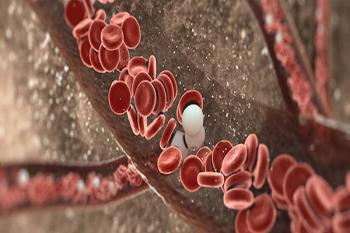
Phase 3 data may support orelabrutinib as a safe and effective option for patients with treatment-naïve CLL or SLL.
Amer Zeidan, MBBS, MD, discusses whether the expanding lower-intensity arsenal has narrowed the definition of a patient with AML who is unfit.
Amer Zeidan, MBBS, MD, discusses how mutation status and physical fitness factor into frontline AML regimen selection.
Amer Zeidan, MBBS, MD, discusses why real-world venetoclax dose modifications do not appear to compromise response durability in AML.
Amer Zeidan, MBBS, MD, discusses how the newly approved all-oral decitabine/cedazuridine plus venetoclax regimen fits into frontline AML care.
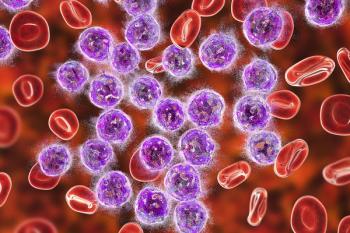
Data from a phase 2 trial show the potential of inotuzumab ozogamicin to deepen remissions in patients with B-cell acute lymphoblastic leukemia.

The CHMP recommended pirtobrutinib in chronic lymphocytic leukemia based on data from the phase 3 BRUIN CLL-313 and BRUIN CLL-314 trials.
Those with TP53-mutated disease may benefit from continuous BTK inhibitor therapy, although limited-duration therapy is worthy of discussion.

Data from a phase 2 trial support further clinical development of AK117 in previously untreated acute myeloid leukemia.
Updated phase 1/1b BGB-11417-101 trial data showed sonrotoclax 320 mg plus zanubrutinib achieved uMRD4 rates exceeding 90% in treatment-naive CLL/SLL.

In BRUIN CLL-322, fixed-duration pirtobrutinib plus venetoclax/rituximab improved PFS vs venetoclax/rituximab in relapsed/refractory CLL.
Combining pirtobrutinib with venetoclax/rituximab yielded high MRD clearance among those with CLL/SLL in the phase 3 BRUIN CLL-322 trial.
In KOMET-007, ziftomenib plus 7+3 produced high responses and MRD-negativity rates in newly diagnosed NPM1-mutated or KMT2A-rearranged AML.
MRD responses appeared to be more favorable with the use of blinatumomab among pediatric patients with high-risk B-cell acute lymphoblastic leukemia.
A phase 1b/2 trial of azacitidine, venetoclax, and ivosidenib showed composite complete remissions and MRD negativity in newly diagnosed IDH1-mutated AML.
Findings from the ASC4FIRST trial show that asciminib is meeting high expectations as a frontline therapy in chronic myeloid leukemia in chronic phase.
Data from the CASSIOPEIA trial showed that more than half of patients with high-risk disease achieved 5-year disease-free survival with tisagenlecleucel.
Updated data from the ASC4FIRST trial affirm asciminib as the treatment of choice for many patients with chronic myeloid leukemia in chronic phase.

The safe administration of revumenib among pediatric patients broadens the applicability of results seen with the menin inhibitor.
Real-world data support prospective evaluation of a frontline venetoclax-based regimen in the second line and beyond.
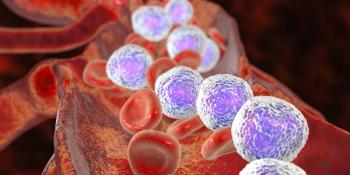
More than 90% of patients achieved a composite complete response to azacitidine plus venetoclax and ivosidenib in a phase 1b/2 trial.

The nilotinib tablets may support patients who have difficulty swallowing while offering flexibility to take treatment with or without water.
Fedratinib may target various proliferative pathways in MDS/MPN that other current standards of care miss, according to Andrew Kuykendall, MD.
Advertisement
Advertisement
Trending on CancerNetwork
1
Subcutaneous Pembrolizumab Approved in Japan for All Tumor Indications
2
Acting on a HER2 Result and Navigating Access to Therapy
3
The Case for Frontline Zongertinib in HER2-Mutant NSCLC
4
Emerging Endocrine Doublets and Serial ESR1 Testing in HR+/HER2− mBC
5