
A single infusion of ciltacabtagene autoleucel produces a manageable safety profile among patients with relapsed/refractory multiple myeloma in the phase 1b/2 CARTITUDE-1 study.
A single infusion of ciltacabtagene autoleucel produces a manageable safety profile among patients with relapsed/refractory multiple myeloma in the phase 1b/2 CARTITUDE-1 study.
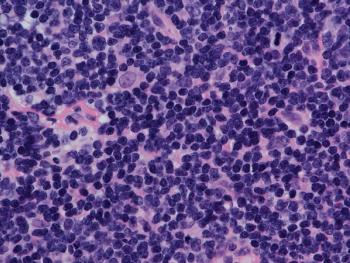
Overall survival rates at 12 and 36 months appear to favor the addition of acalabrutinib to bendamustine and rituximab in the treatment of those with mantle cell lymphoma in a phase 1b trial.
Most treatment-related adverse effects were low-grade following treatment with BMS-986158 plus ruxolitinib or fedratinib in a population of patients with intermediate- or high-risk myelofibrosis.
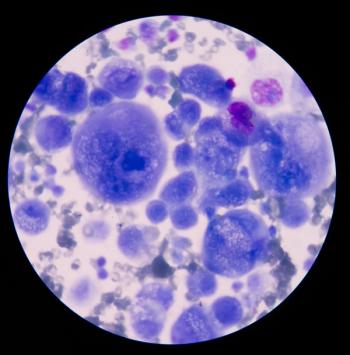
Replacing vincristine with polatuzumab vedotin in R-mini-CHOP, although it hasn’t increased grade 3/4 hematologic toxicity, may increase gastrointestinal adverse effects in a cohort of frail patients with diffuse large B-cell lymphoma.

Findings from the phase 1b RedirecTT-1 study may support initiating larger studies evaluating teclistamab plus talquetamab for patients with relapsed or refractory multiple myeloma.
Investigators identify only 1 death related to treatment with acalabrutinib among older, frail patients with chronic lymphocytic leukemia in the phase 2 CLL-FRAIL trial.
Results from the phase 2 DARIA trial found an improved overall response rate in patients given daratumumab, ixazomib, and dexamethasone with relapsed/refractory multiple myeloma who were previously treated with lenalidomide.
Data presented at the 2022 European Hematology Association Congress demonstrated potential utility of the bispecific antibody RG6234 in a previously treated cohort of patients with multiple myeloma.
Patients with relapsed/refractory multiple myeloma experienced promising responses with REGN5458.
Older patients with acute myeloid leukemia who were treated with decitabine experienced comparable outcomes vs daunorubicin and cytarabine.
Patients with treatment-naïve chronic lymphocytic leukemia who were treated with venetoclax and obinutuzumab with or without ibrutinib experienced a progression-free survival benefit compared with standard chemoimmunotherapy.
The combination of quizartinib plus chemotherapy yielded better survival outcomes vs chemotherapy alone in the frontline setting of FLT3-ITD-positive acute myeloid leukemia.
An expansion cohort from the phase 2 EPCORE NHL-1 trial demonstrated strong efficacy of epcoritamab in patients with relapsed/refractory large B-cell lymphoma.
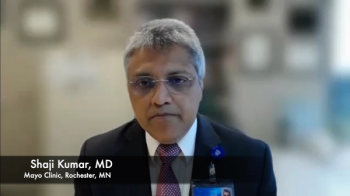
At EHA 2021, Shaji Kumar, MD, reviews the toxicity profile of daratumumab plus lenalidomide and dexamethasone for patients with transplant-ineligible multiple myeloma in the first-line setting.
At EHA 2021, Shaji Kumar, MD, reflects on the significance of 5-year data from the MAIA study of a daratumumab combination in patients with multiple myeloma.
At EHA 2021, Shaji Kumar, MD, reflects on the significance of 5-year data from the MAIA study of daratumumab plus lenalidomide/dexamethasone in patients with newly diagnosed multiple myeloma.
Shaji Kumar, MD, talks about 5-year follow-up data regarding the use of daratumumab, lenalidomide, and dexamethasone in patients with multiple myeloma who are not eligible for transplant.
Data presented from the phase 3 SIMPLIFY 1 and SIMPLIFY 2 trials at 2021 EHA indicate success of momelotinib in extending overall survival in patients with myelofibrosis who achieve transfusion independence.
At the 18-month follow-up, the CAR T-cell therapy led to early, deep, and durable responses with a manageable safety profile in patients with relapsed/refractory multiple myeloma.
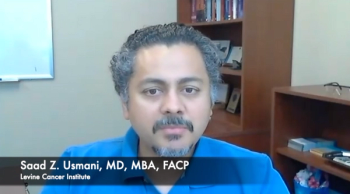
Usmani noted the strong overall response and stringent complete response rates observed with ciltacabtagene autoleucel for multiple myeloma at a median follow-up of 18 months.
Real-world data regarding the use of tisagenlecleucel and axicabtagene ciloleucel CAR T-cell therapy are reported at 2021 EHA.
An end-of-study analysis of the LYRA trial found that patients with treatment-naïve and relapsed multiple myeloma achieved durable responses to daratumumab plus CyBorD induction followed by daratumumab maintenance therapy.
Real-world evidence evaluating the efficacy of rituximab maintenance following frontline BR or R-CHOP supports its use in mantle cell lymphoma.
Close monitoring for neurologic toxicity resulted in no long-term effects in a patient cohort treated with ciltacabtagene autoleucel for relapsed/refractory multiple myeloma.
Retrospective data presented at 2021 EHA revealed potential treatment gaps in the management of patients with myeloproliferative neoplasms.

A progression-free survival advantage persisted at the 3-year mark with venetoclax plus obinutuzumab in patients with previously untreated chronic lymphocytic leukemia.
Treatment with axicabtagene ciloleucel resulted in improved survival and tumor responses in patients with relapsed/refractory follicular lymphoma versus other available therapies.
Clinical activity with the combination of naratuximab emtansine plus rituximab was observed in patients with relapsed or refractory diffuse large B-cell lymphoma.
The risk of progression or death was statistically significantly reduced with the use of ibrutinib and venetoclax versus chlorambucil plus obinutuzumab in patients with treatment-naive chronic lymphocytic leukemia.
After almost 5 years of follow-up, results strongly support upfront daratumumab with lenalidomide and dexamethasone as a new standard of care for patients with transplant-ineligible newly diagnosed multiple myeloma.