




Skin Cancer & Melanoma
Latest News
Advertisement
Video Series
Latest Videos



Shorts

0:43
Expanding the Use of TILs in Metastatic Melanoma Care
5 months ago

1:00
A Potential Breakthrough With TILs in Metastatic Melanoma
5 months ago
by
Muhammad Umair Mushtaq, MD
0:40
Tebentafusp Doubles Survival Rates in Metastatic Uveal Melanoma
6 months ago
by
Paul Nathan, MBBS, PhD, MCRP

0:58
Reducing Melanoma Toxicity in Adoptive Cell Therapy
6 months ago
by
Jose Lutzky, MD

0:46
Why mRNA Vaccines Change the Melanoma Game
6 months ago
by
Jamin C. Morrison, MD

0:39
Looking Beyond Genomics in Precision Medicine for Cancer Care
a year ago
Podcasts
































































Advertisement
More News

Final COMBI-I data show a survival advantage with spartalizumab plus dabrafenib/trametinib over dabrafenib/trametinib alone in BRAF V600-mutant melanoma.

Results from the INTERpath-001 trial of V0940 plus pembrolizumab demonstrated a statistically significant and clinically meaningful improvement in resected melanoma.

The FDA approved the PGDx elio tissue complete CDx to identify patients with advanced melanoma with BRAF V600E/K variants eligible for targeted therapy.
The FDA has approved RP1 plus nivolumab for adults with advanced melanoma who progressed on anti–PD-1 therapy.
Researchers have reported the first known case of TIL therapy in a patient with well-controlled HIV and metastatic melanoma.
The FDA's CTGTAC voted 10-3 in favor RP1 plus nivolumab's benefit-risk profile in anti–PD-1–resistant advanced melanoma.

As the FDA's ODAC prepares to weigh in ahead of an August 2, 2026, decision date, take a look at RP1's clinical trial and regulatory journey.

Miguel A. Materin, MD, discussed insights on multidisciplinary care, intra-arterial chemotherapy, and the evolving landscape of uveal melanoma treatments.

Miguel A. Materin, MD, discussed his new leadership role at Northwell Cancer Institute, and why a multidisciplinary approach is critical to managing ocular malignancies.
FDA breakthrough designation and NCCN inclusion elevate Merlin CP-GEP as a tool to refine SLNB decisions in T1b/T2a melanoma, per MERLIN_001 trial data.

In this patient case, a 72-year-old male with primary malignant melanoma of the ascending colon received adjuvant therapy consisting of immunotherapy with PD-1 inhibitors.
The FDA has accepted a BLA resubmission for RP1 plus nivolumab for patients with advanced melanoma.
Binimetinib tablets at 45 mg received tentative FDA approval for patients with melanoma and NSCLC.

A panel of exerts discussed key takeaways happening in the field of cutaneous squamous cell carcinoma.
Sarah Weiss, MD, highlights pivotal updates in uveal melanoma, intratumoral neoadjuvant therapy, and Merkel cell carcinoma from the 2026 ASCO Annual Meeting.

Catch up on major clinical trials reshaping treatment for brain metastases, Merkel cell carcinoma, cervical cancer, and head and neck cancer, all from ASCO 2026.

Findings from the OptimUM-02 trial may support a new potential therapeutic standard for patients with HLA-A*02:01–negative metastatic uveal melanoma.

Neoadjuvant ipilimumab plus nivolumab and relatlimab achieved a major pathologic response in 73.7% of patients with resectable stage III/IV melanoma.
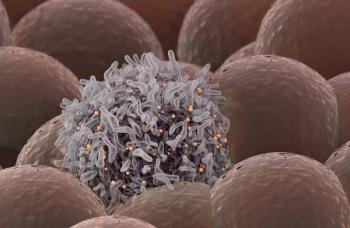
Data from the KEYNOTE-942 trial confirmed a durable benefit with intismeran plus pembrolizumab among patients with high-risk melanoma.

In 897 patients with advanced melanoma treated with ICI, conditional 5-year PFS rose from 29% at baseline to 91% for those progression-free at 4 years.
An OS of 32.9 months was noted with RP1 plus nivolumab for patients who had progressed on prior anti-PD-1 therapy with advanced melanoma.
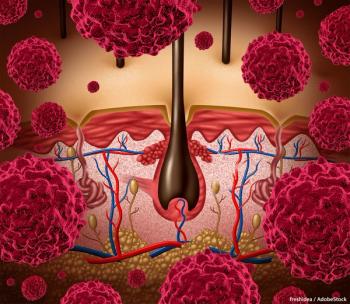
Statistical significance was not met with either dose level of fianlimab plus cemiplimab compared with the control arm for patients with advanced melanoma.
iSCIB1+ continues to be studied in the SCOPE trial for patients with advanced melanoma.
Key data from the ATLAS-IT-05 study showed the activity of the oncolytic peptide ruxotemitide plus pembrolizumab in refractory metastatic melanoma.

The 5-year OS rate was 16% and 8% in the tebentafusp and control arms, respectively, for patients with HLA-A*02:01–positive uveal melanoma.
Advertisement
Advertisement
Trending on CancerNetwork
1
Intismeran Plus Pembrolizumab Reduces Recurrence Risk in Resected Melanoma
2
What Pope Leo XIV’s Lung Cancer Diagnosis Could Mean for Stigma & Nihilism
3
Zipalertinib May Introduce Another Option to EGFR Exon 20+ NSCLC
4
Rethinking Patient Selection Strategy for Phase 1 Breast Cancer Trials
5