



Skin Cancer & Melanoma
Latest News
Advertisement
Latest Videos


























































Advertisement
More News
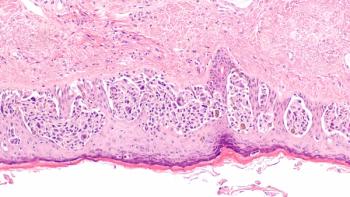
Data from the phase 3 CheckMate-76k trial support the European Commission’s approval of nivolumab as an adjuvant treatment for patients with resected stage IIB or IIC melanoma.

Supporting data for the FDA approval of melphalan administered via percutaneous hepatic perfusion for metastatic uveal melanoma come from the phase 3 FOCUS study.
Using the 31-gene expression profile assay may help lead to more personalized treatment strategies in patients with cutaneous melanoma, according to Aaron Farberg, MD.
Investigators of a phase 1 study evaluating cosibelimab in patients with locally advanced or metastatic cutaneous squamous cell carcinoma plan to share updated results at a future medical conference.
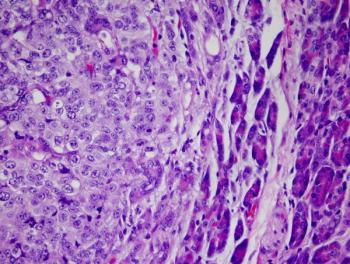
The benefit of nivolumab/ipilimumab plus single-agent nivolumab for unresectable advanced melanoma with poor prognostic characteristics was comparable in all-comers and patients with brain metastases.

Combination therapy with nivolumab and relatlimab produces superior progression-free survival vs nivolumab monotherapy among those with advanced melanoma in the phase 3 RELATIVITY-047 trial.
mRNA-4157 plus pembrolizumab appears well tolerated without an increase in immune-mediated adverse effects vs pembrolizumab monotherapy among those with high-risk melanoma in the phase 2 KEYNOTE-942 trial.
Targeting apoptosis in BRAF V600-mutated melanoma may be considered for future exploration in the post immunotherapy setting, according to an expert at Moffitt Cancer Center.
The safety of fianlimab plus cemiplimab appears consistent with the safety profile previously observed with each individual agent among patients with previously treated metastatic melanoma in a phase 1 study.
Common treatment-emergent adverse effects among patients receiving PRT811 for uveal melanoma or advanced glioma include nausea and vomiting in a phase 1 study.
The FDA sets a Prescription Drug User Fee Act date of November 25, 2023 for lifileucel in the treatment of patients with advanced melanoma.

Treatment with isolated hepatic perfusion appears to yield improved progression-free survival compared with best alternative care in patients with isolated uveal melanoma liver metastases.
The 31-gene expression profile test appears to allow for significant and independent risk stratification of those with stage I cutaneous melanoma.
Tavokinogene telseplasmid plus pembrolizumab is reported to be well tolerated in patients with advanced, pre-treated melanoma based on data from the phase 2 KEYNOTE-695 trial.
Patients with metastatic or recurrent locally advanced Merkel cell carcinoma can now receive treatment with retifanlimab-dlwr following its accelerated approval by the FDA.
Combination treatment with nivolumab and relatlimab appears to be a safe treatment option for patients with advanced melanoma who have progressed on prior anti–PD-L1 therapy.

The European Medicines Agency also validates a type 2 variation marketing authorization application for nivolumab in resected stage IIB or IIC melanoma.
Previous research has identified a link between nutrients commonly found in a Mediterranean diet such as fiber, unsaturated fats, antioxidants, and polyphenols, and immunomodulatory/anti-tumor activities, according to a dietician from the University of Groningen.
Data from the phase 2b KEYNOTE-942 trial support the FDA’s breakthrough therapy designation for adjuvant mRNA-4157-P201 plus pembrolizumab as treatment for high-risk resected melanoma.
The FDA has given fast track designation to peptide-based immunotherapy agent EVX-01 in combination with pembrolizumab for metastatic melanoma.
The biologic license application for cosibelimab for patients with metastatic or locally advanced cutaneous squamous cell carcinoma is supported by findings from a phase 1 study.

“You have to be on your game continually, you have to continually self-evaluate, and the field moves quickly.”
A secondary analysis from the phase 3 SWOG S1404 trial indicated that adjuvant pembrolizumab yielded improved patient-reported outcomes compared with high-dose interferon α or ipilimumab in the treatment of patients with high-risk resected melanoma.

Expert hematologist-oncologists consider the role of maintenance and consolidation following the completion of transplant in patients with newly diagnosed multiple myeloma.
Patients with completely resected stage IIB/C melanoma experienced significant and clinically meaningful improvements in recurrence-free survival following treatment with adjuvant nivolumab compared with placebo.
Advertisement
Advertisement
Trending on CancerNetwork
1
Intismeran Plus Pembrolizumab Reduces Recurrence Risk in Resected Melanoma
2
What Pope Leo XIV’s Lung Cancer Diagnosis Could Mean for Stigma & Nihilism
3
Zipalertinib May Introduce Another Option to EGFR Exon 20+ NSCLC
4
Rethinking Patient Selection Strategy for Phase 1 Breast Cancer Trials
5