
Delaying treatment with ruxolitinib by more than a year leads to decreased response rates and overall survival in patients with myelofibrosis.
Delaying treatment with ruxolitinib by more than a year leads to decreased response rates and overall survival in patients with myelofibrosis.
The modified overall response rate was higher with venetoclax/azacitidine vs placebo/azacitidine in patients with intermediate/high risk MDS.

Treatment with valemetostat yields responses across all PTCL subtypes in the phase 2 VALENTINE-PTCL01 trial.
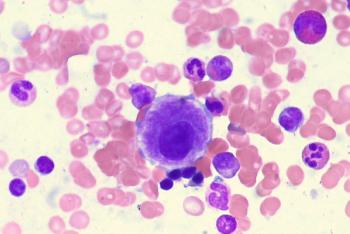
Data from the IMerge trial affirm the enduring responses and clinical benefit with imetelstat in those with transfusion-dependent MDS.
Data from the PERSEUS trial support the benefit of D-VRd and DR maintenance as a standard of care in transplant-eligible newly diagnosed multiple myeloma.

Efficacy, safety, time, and cost were all factors assessed between subcutaneous and intravenous rituximab for patients with non-Hodgkin lymphoma.

Earlier use of liso-cel may improve responses in patients with relapsed/refractory chronic lymphocytic leukemia or small lymphocytic lymphoma.

Investigators believe that disease modifying agents may demonstrate benefit in patients with myeloproliferative neoplasms prior to allogeneic hematopoietic cell transplant.

There remains a therapeutic challenge with understanding and treating patients with accelerated myeloproliferative neoplasms.
As more novel therapeutic targets are discovered in patients with chronic lymphocytic leukemia, the more possibilities are presented in terms of treatment with targeted agents, small molecules, and cellular therapies.
Patients with high-risk polycythemia vera had a worse survival probability at 4 years compared to patients with low-risk disease.

Francesco Passamonti, MD, discusses the future of treatment for patients with polycythemia vera such as adaptive therapies and the utilization of novel targets.

Patients with previously treated chronic lymphocytic leukemia and small lymphocytic lymphoma appeared to benefit from treatment with pirtobrutinib.
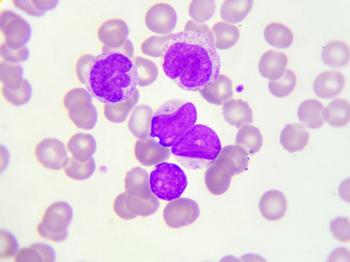
Strong response rates were observed with pirtobrutinib across dose levels to treat patients with chronic lymphocytic leukemia and small lymphocytic lymphoma ion a phase 1/2 study.

The introduction of targeted therapies and immunotherapeutics may work to improve survival for patients with T-cell acute lymphoblastic leukemia.