
![“[E]ven if patients relapse following an allogeneic transplant, donor lymphocyte infusions can be incredibly helpful,” said Mary Jo Lechowicz, MD.](https://cdn.sanity.io/images/0vv8moc6/cancernetwork/06df696db42b151710c58727b1333ee098de6453-1200x800.jpg?w=350&fit=crop&auto=format)
“[E]ven if patients relapse following an allogeneic transplant, donor lymphocyte infusions can be incredibly helpful,” said Mary Jo Lechowicz, MD.
“[E]ven if patients relapse following an allogeneic transplant, donor lymphocyte infusions can be incredibly helpful,” said Mary Jo Lechowicz, MD.

At SOHO 2026, experts highlighted new findings and advances across diseases including lymphoma, myelodysplastic syndrome, and leukemia.
Jasmine Zain, MD, described how pre-existing CHIP mutations should inform pre-infusion risk counseling and treatment selection.
!["Patients [with cancer] and physicians would rather have a fixed-duration treatment, if possible," said Julie M. Vose, MD, MBA, at SOHO 2026.](https://cdn.sanity.io/images/0vv8moc6/cancernetwork/1cfb57db416943d8f8690afb0bc0d13aa3d90683-400x400.jpg?w=350&fit=crop&auto=format)
"Patients [with cancer] and physicians would rather have a fixed-duration treatment, if possible," said Julie M. Vose, MD, MBA, at SOHO 2026.
Posters highlighted sex-based differences in aggressive B-cell NHL, third-line therapies in aggressive BCL, and real-world safety with CD20/CD3 bispecifics.
Mary Jo Lechowicz, MD, discussed how pre-transplant depth of response informs the choice between autologous and allogeneic HSCT in T-cell lymphoma.
Jasmine Zain, MD, described the molecular workup to determine whether a secondary malignancy after CAR T-cell therapy reflects direct insertional mutagenesis.
SOHO 2026 sessions covered chemoimmunotherapy in frontline DLBCL, treatment selection via molecular classifiers, and bispecific antibodies for unfit patients.

Jasmine Zain, MD, emphasized the importance of good patient counseling when outlining the potential risks of secondary T-cell malignancies following CAR T-cell therapy.
Adult T-cell lymphoma and leukemia may warrant up-front allogeneic transplant, according to Mary Jo Lechowicz, MD.
Poster presentations at SOHO 2026 may inform multiple myeloma practice across the newly diagnosed and relapsed/refractory settings.
Poster presentations at SOHO 2026 may inform practice across acute lymphoblastic leukemia, acute myeloid leukemia, and chronic lymphocytic leukemia.
Experts discussed whether CAR T cells or bispecific antibodies should be used first in relapsed/refractory multiple myeloma at the 2026 SOHO Annual Meeting.

The risk of infections with epcoritamab plus R2 appeared to level off after the first 4 cycles of therapy in the EPCORE FL-1 trial.

At SOHO 2026, David Sallman, MD, explained why ofirnoflast produced responses across MDS subtypes, including in a patient with TP53-mutant disease.
Immunochemotherapy, bispecifics, and next-generation BTK inhibitors dominated discussion of ENKTL, MZL, and Waldenström macroglobulinemia at a SOHO session.

DISC-3405 may serve as an adjunctive therapy, not a replacement, for hydroxyurea or interferon, according to Naseema Gangat, MBBS.

DISC-0974 may have utility as monotherapy or in combination with other JAK inhibitors, according to Naseema Gangat, MBBS.
At SOHO 2026, Jasmine Zain, MD, discussed communicating the FDA’s boxed warning for secondary malignancies post–CAR T-cell therapy to patients.
Combination approvals for revumenib and ziftomenib in relapsed/refractory acute myeloid leukemia may arrive before frontline approvals, according to Eunice Wang, MD.
Data at SOHO 2026 show how FLT3 inhibitors and venetoclax-based triplets have reshaped induction, consolidation, and maintenance therapy in FLT3-mutated AML.
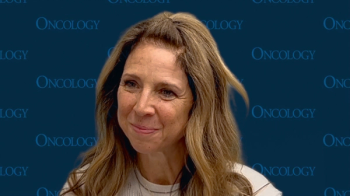
Tara M. Graff, DO, MS, stated that combination therapy approaches may be the optimal route forward for advancing MZL care.
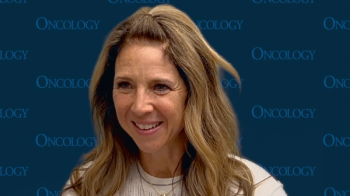
“…if [there’s] a younger patient with MZL, I’m willing to risk a little extra toxicity to give them a longer-term remission,” said Tara M. Graff, DO, MS.
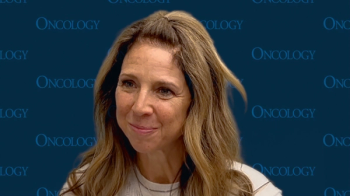
Subcutaneous mosunetuzumab achieved consistent rates of complete responses across various high-risk marginal zone lymphoma subgroups.
There will be an unmet need for therapy in patients with aggressive lymphomas who did not benefit from therapy with bispecifics, CAR-T, chemotherapy, and targeted therapy.
The subcutaneous formulation of mosunetuzumab will require 17 cycles of therapy, without any maintenance, and can be done in outpatient settings.
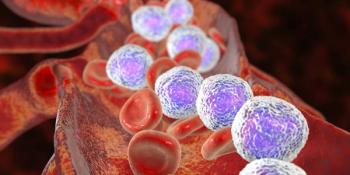
D-VRd had a 72% chance of providing superior PFS outcomes vs isatuximab plus VRd in patients with transplant-ineligible NDMM.
Respiratory, viral, and bacterial infections have emerged as a toxicity of note during bispecific antibody treatment for indolent lymphoma.
Lorenzo Falchi, MD, highlighted the phase 1b/2 EPCORE NHL-2 and phase 1 BP41072 trials as prominent trials evaluating novel immunotherapy combinations in indolent lymphoma.
Bispecific antibodies have demonstrated adaptability and versatility when combined with immunotherapy and chemotherapy agents.