

Both the FDA and European Medicines Agency applications were based on findings from the phase 3 CheckMate-77T trial in patients with resectable non–small cell lung cancer.
Both the FDA and European Medicines Agency applications were based on findings from the phase 3 CheckMate-77T trial in patients with resectable non–small cell lung cancer.
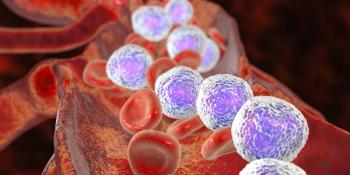
The FDA sets a Prescription Drug User Fee Action date of June 21, 2024 for blinatumomab as a treatment for those with CD19-positive B-cell precursor acute lymphoblastic leukemia.

Results from the phase 3 DREAMM-7 trial highlighted an efficacy benefit with belantamab mafodotin plus bortezomib and dexamethasone in patients with relapsed/refractory multiple myeloma.

Findings from the FRUTIGA study support fruquintinib plus paclitaxel as a promising second-line treatment for those with advanced gastric or gastroesophageal junction adenocarcinoma following prior chemotherapy.

Results from part 3 of the phase 2a CORIST trial found that combining SCO-101 with chemotherapy improved the progression-free survival and clinical benefit rate in patients with metastatic colorectal cancer.

Data from the phase 2 NIPU trial support the FDA’s fast track designation for UV1 in combination with nivolumab and ipilimumab as a treatment for those with unresectable pleural malignant mesothelioma.
Julie M. Vose, MD, MBA, gave a brief overview of the 2023 American Society of Hematology Annual Meeting & Exposition, as well as what to be on the lookout for in 2024.

Screening frequency appears to be a weak risk factor for advanced breast cancer, with obesity in post-menopausal and dense breasts in pre-menopausal patients being more prominent factors.
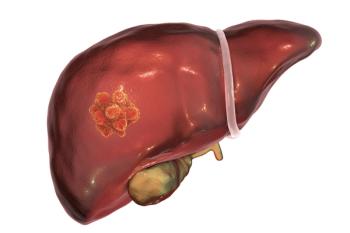
Investigators are assessing the safety, tolerability, and initial efficacy of BST02 in those with advanced or metastatic liver cancer as part of a phase 1 trial.
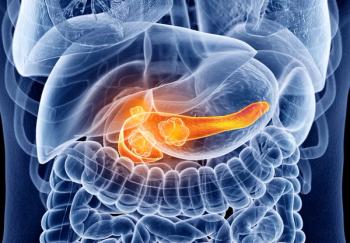
Treatment with NT-I7 may boost the immune system and enhance antitumor activity in patients with pancreatic cancer and other solid tumors.

Tisotumab vedotin may become the first antibody drug conjugate to receive marketing authorization in the European Union as a treatment for those with cervical cancer.

The Lymphoma Research Foundation MCL Scientific Consortium and Workshop focused on relevant topics that can help clinicians personalize treatment for patients.

Notions of blame around smoking may be a prominent factor in patients with lung cancer feeling stigmatized for developing their disease, according to Lisa Carter-Bawa PhD, MPH, APRN, ANP-C, FAAN.

A 77% increase in the risk of developing cancer by 2050 was determined by the World Health Organization in a recent survey.

Combining pembrolizumab with cabozantinib produces encouraging efficacy in platinum-ineligible patients with advanced urothelial carcinoma, says Rohit K. Jain, MD, MPH.
Benefits with enfortumab vedotin plus pembrolizumab in prespecified patient subgroups with urothelial carcinoma in the EV-302 trial appear to be consistent with outcomes in the overall study population.
Treatment with liso-cel appears to result in clinically meaningful activity across several subgroups of patients with mantle cell lymphoma, including those with high-risk features.

Adding bevacizumab to atezolizumab plus carboplatin and pemetrexed appears to be tolerable among patients with metastatic nonsquamous non–small cell lung cancer.

Findings from the phase 1/2 LINKER-MM1 trial support the marketing authorization application for linvoseltamab in the management of relapsed/refractory multiple myeloma.

Considering tumor genomics, personalization of therapy, and the use of biomarkers, experts in the mantle cell lymphoma field discuss how to best utilize these strategies to improve treatment outcomes.
Considering cystectomy in patients with bladder cancer may help with managing the shortage of Bacillus Calmette-Guerin, according to Joshua J. Meeks, MD, PhD, BS.
Most patients with acute myeloid leukemia appear to remain on treatment with ziftomenib plus standard-of-care therapy in the phase 1 KOMET-007 trial.

Patients with benign thyroid tumors resected with a transoral endoscopic thyroidectomy vestibular approach have less complications vs those treated with a standard surgical approach.
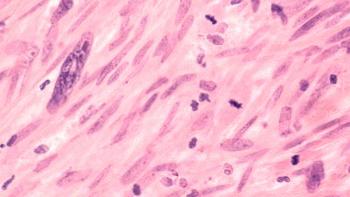
Data from the phase 2 SPEARHEAD-1 trial support the biologics license application for afami-cel as a treatment for patients with advanced synovial sarcoma.

Clinical practice guideline amendments detail novel urinary biomarkers and agents that may improve Bacillus Calmette-Guerin efficacy in the management of non-muscle invasive bladder cancer.
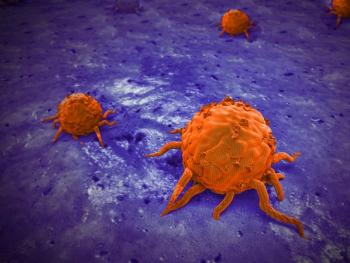
FDA initiatives such as the Food and Drug Omnibus Reform Act will set goals and specify measures for improving representation in pediatric cancer clinical studies.

Starting April 1, 2024, Diane Simeone will be the new director of UCSD Moores Cancer Center.

Findings from the phase 3 PERSEUS trial support the supplemental New Drug Application for the daratumumab and hyaluronidase-fihj combination in transplant-eligible newly diagnosed multiple myeloma.

Patients with multiple myeloma appear to feel confident in being able to report adverse effects associated with bortezomib independently via digital tools.

Data from the phase 3 INSPIRE trial may support iruplinalkib as a new treatment option for those with advanced ALK-positive non–small cell lung cancer.