
Kami J. Maddocks, MD, reviews updates to a pivotal trial supporting the use of brentuximab vedotin in advanced-stage Hodgkin lymphoma and ongoing research into PD-1 inhibitors in this space.

Your AI-Trained Oncology Knowledge Connection!
Kami J. Maddocks, MD, reviews updates to a pivotal trial supporting the use of brentuximab vedotin in advanced-stage Hodgkin lymphoma and ongoing research into PD-1 inhibitors in this space.

Long-term follow-up from the phase 2 KEYNOTE-158 trial showed enduring anti-tumor activity when pembrolizumab was used to treat patients with microsatellite instability–high/mismatch repair deficient advanced endometrial cancer.

An ongoing phase 1 trial is assessing the potential of SY-5609 plus chemotherapy in patients with advanced solid tumors, with the FDA granting orphan drug designation to the combination for patients with relapsed metastatic pancreatic cancer.

The positive results from the phase 3 CheckMate76K trial suggest that recurrence-free survival may be improved following treatment with adjuvant nivolumab vs placebo in fully resected stage IIB/C melanoma.

Matthew Schabath, PhD, spoke about COLOR designed as competency training for oncologists treating patients from the LGBTQ+ community.

Expert oncologists review key studies in the metastatic castration-resistant prostate cancer treatment landscape and discuss how evidence can be applied to clinical practice to improve patient outcomes.
At ASCO 2022, Pamela L. Kunz, MD, spoke about a phase 2 trial investigating temozolomide alone and temozolomide plus capecitabine in advanced pancreatic neuroendocrine tumors.

At 2022 ASCO, Tanya Dorff, MD, reviewed the use of CAR T cells in the treatment of prostate cancer.
Angela DeMichele, MD, MSCE, discussed how the standard of care can be shifted based on the results of the phase 2 I-SPY2 trial investigating novel neoadjuvant treatment strategies in early breast cancer.
Based on findings from a real-world retrospective analysis, Stacey A. Cohen, MD, discussed the prognostic value of post-surgical minimal residual disease detection in patients with stage I to III colorectal cancer.

Findings from a pooled analysis indicated that a decrease in circulating tumor DNA was associated with improved clinical benefit in patients with non–small cell lung cancer treated with immune checkpoint inhibitors.

Findings from a phase 2 clinical study indicated that neoadjuvant pegylated liposomal doxorubicin plus cyclophosphamide, trastuzumab, and pertuzumab demonstrated promising efficacy and safety in the treatment of HER2-positive breast cancer.

Results from the phase 1/2 MajesTEC-1 trial highlighted sustained responses when teclistamab was used to treat patients with relapsed/refractory multiple myeloma who are triple refractory.
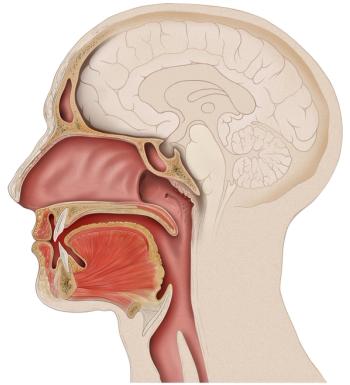
Patients with stage IVA to IVB nasopharyngeal carcinoma experienced an improvement in failure-free survival following treatment with paclitaxel, cisplatin, and capecitabine for 2 cycles vs 2 cycles of cisplatin and fluorouracil.

In patients with acute myeloid leukemia receiving venetoclax, tumor lysis syndrome was uncommon; patients at high risk should be admitted for venetoclax dosing ramp-up.

Investigators support individualized approaches and compassionate care to minimize nonmedical opioid use and opioid use disorder in patients with cancer pain.

Hossein Borghaei, DO, MS, discussed where investigators may drive future research following the phase 2 Lung-MAP trial examining pembrolizumab and ramucirumab in previously treated advanced non–small cell lung cancer.

Routine biopsychosocial screening of a patient with metastatic renal cell cancer at the Centro de Câncer de Brasília improved symptom management and shrunk costs for both the patient and her caregivers.

A supplement biologics license and a Type II variation were submitted to the FDA and European Medicines Agency, respectively, for first-line rucaparib in patients with advanced ovarian cancer.

Roy S. Herbst, MD, PhD, considers next steps in the management of patients with non–small cell lung cancer harboring genomic drivers.
Alexander I. Spira, MD, PhD, FACP, details the safety profile of single-agent adagrasib in patients with KRAS G12C–mutated advanced or metastatic non–small cell lung cancer, as well as plans for future research following the phase 1/2 KRYSTAL-1 study.

Mary E.R. O’Brien, MBBS, discussed results of an exploratory analysis of the phase 3 PEARLS/KEYNOTE-091 study examining pembrolizumab in resected non–small cell lung cancer.

“Opportunities to escalate therapies that work well in stage IV into what we consider a more curative setting...are exactly what we need to be looking for.” –Mark A. Socinski, MD

Final data from the phase 2 ATLEP trial showed high response rates with a combination of lenvatinib and pembrolizumab in patients with anaplastic and poorly differentiated thyroid cancer.

Findings from the phase 2 KEYNOTE-B61 trial demonstrated promising efficacy with a combination of pembrolizumab and lenvatinib in the frontline treatment of non–clear cell renal cell carcinoma.

Data from the phase 1 METEOR-1 trial showed modest efficacy with GSK3326595, a PRMT5 inhibitor, in patients with advanced solid tumors.

Howard S. Hochster, MD, considers drug price negotiation in this month's Letter to the Readers.
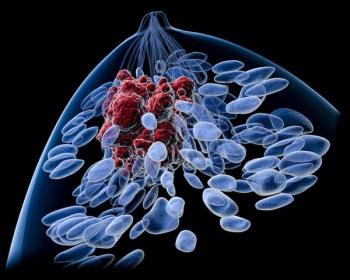
A pooled exploratory analysis of phase 3 trials found statistically significant progression-free survival and overall survival benefits with ribociclib/endocrine therapy for patients with hormone receptor–positive, HER2-negative breast cancer and visceral metastases.

Findings from the phase 1b/2 KRYSTAL-1 trial showed encouraging responses with adagrasib in patients with advanced KRAS G12C-mutant colorectal cancer.

Treatment with fam-trastuzumab deruxtecan-nxki yielded promising patient-reported outcomes in patients with hormone receptor–positive, HER2-low metastatic breast cancer, according to Naoto Ueno, MD, PhD.