
Patients with Bacillus Calmette-Guérin–unresponsive non-muscle invasive bladder carcinoma in situ appear to benefit from treatment with N-803, leading to the FDA accepting its biologics license application.

Your AI-Trained Oncology Knowledge Connection!
Patients with Bacillus Calmette-Guérin–unresponsive non-muscle invasive bladder carcinoma in situ appear to benefit from treatment with N-803, leading to the FDA accepting its biologics license application.
Patients with relapsed/refractory follicular lymphoma with 2 or more prior therapies experienced promising safety and remission rates following treatment with mosunetuzumab.

Paul G. Richardson, MD, uses results of the DETERMINATION study that were presented at 2022 ASCO to justify choice of appropriate therapy for individual patients with treatment-naïve multiple myeloma.

Patients with metastatic unresectable leiomyosarcoma in the first line benefitted more from doxorubicin and trabectedin compared with doxorubicin alone.
Findings from the phase 2 TRANSCEND-PILOT-017006 supported the use of lisocabtagene maraleucel as a second-line treatment for patients with large B-cell lymphoma who were not able to or didn’t want to receive hematopoietic stem cell transplant.

Serial postoperative ctDNA analysis could be a useful tool in guiding treatment decisions and improving care for patients with stage III colorectal cancer.

Patients with borderline resectable pancreatic ductal adenocarcinoma experienced favorable overall survival following treatment with mFOLFIRINOX alone, with additional hypofractionated radiotherapy showing little benefit.

Distinct clinical, genomic, and immunologic features were observed among patients with KRAS G12D–positive non–small cell lung compared with those with other types of KRAS positivity.
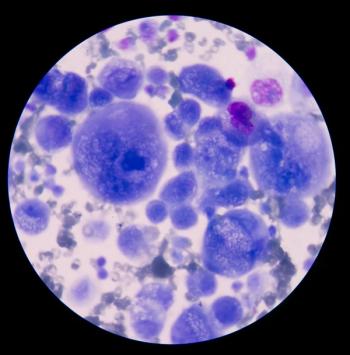
Patients with relapsed/refractory multiple myeloma appear to benefit from treatment with teclistamab, which was given a positive opinion by the European Medicines Agency’s Committee for Medicinal Products for Human Use.

Valentina Boni, MD, PhD, spoke about the safety profile observed of lurbinectedin monotherapy and future analyses for patients with BRCA1/2-associated metastatic breast cancer.

Radical proctectomy, external beam radiotherapy, and brachytherapy yielded comparable prostate cancer–specific mortality, while external beam radiotherapy with or without brachytherapy resulted in favorable distant metastases outcomes in patients with high-risk prostate cancer.

Results from cohort K of the phase 1b/2 KEYNOTE-869 trial showed improved responses for patients with advanced or metastatic urothelial carcinoma when treated with enfortumab vedotin-efjv plus pembrolizumab.
A health-related quality of life survey found similar outcomes between those treated with pembrolizumab plus axitinib vs sunitinib in advanced renal cell carcinoma.

Kira MacDougall, MD, and Muhammad Rafay Khan Niazi, MD, spoke with CancerNetwork® about their research into the significance of peripheral blood biomarkers of response to immunotherapy in non–small cell lung cancer published in the journal ONCOLOGY®.

Hope S. Rugo, MD, FASCO, gave an overview of ribociclib plus aromatase inhibitor use vs abemaciclib plus aromatase inhibitors for patients with hormone receptor-positive, HER2-negative advanced breast cancer.

Findings from the phase 1/2 FAKTION trial indicated that survival had increased following the addition of capivasertib to fulvestrant for patients with aromatase inhibitor–resistant, estrogen receptor–positive, HER2-negative advanced breast cancer.

Trastuzumab deruxtecan was granted priority review by the FDA for patients with unresectable advanced or metastatic HER2-low breast cancer.

Patients with mismatch repair deficient and/or microsatellite instability–high locally advanced colorectal cancer appear to derive promising benefit from treatment with neoadjuvant immune checkpoint inhibitors.

Tony S. Mok, MD, spoke about utilizing adjuvant or neoadjuvant treatment for patients with non–small cell lung cancer.
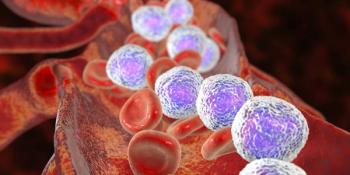
Patients in Europe who have multiple myeloma and have received at least 1 previous therapy can now receive treatment with selinexor plus bortezomib and low-dose dexamethasone following its full marketing authorization by the European Commission.
Hope S. Rugo, MD, FASCO, reviewed data from a matching-adjusted indirect comparison study which analyzed quality of life in patients with hormone receptor–positive, HER2-negative advanced breast cancer treated with ribociclib- or abemaciclib-based regimens.

A panel of oncologists reviews a publication by Robert J. Motzer, MD, and colleagues on data from the CLEAR trial examining lenvatinib plus either pembrolizumab or everolimus for advanced renal cell carcinoma.
Roger Li, MD, spoke about future trials planned for the combination of CG0070 plus pembrolizumab for patients with non–muscle invasive bladder cancer who were unresponsive to bacillus Calmette-Guerin.
The needle might be further pushed forward for precision medicine through exploration of novel proteins such as CDC37 and MAOB in patients with metastatic colorectal cancer.

Investigators recommended that ddPCR testing and immunohistochemical staining be used to detect POLE status and p53/mismatch repair status, respectively, and allow for more rapid classification and risk-stratification.

The phase 3 KEYNOTE-412 trial assessing pembrolizumab and consolidation chemoradiotherapy plus maintenance pembrolizumab in unresected locally advanced head and neck squamous cell carcinoma missed its primary end point of event-free survival improvement vs matched placebo.

The primary end points of progression-free survival and overall survival were not met in the phase 3 OVAL trial assessing ofranergene obadenovec for patients with platinum-resistant ovarian cancer.
Kim A. Reiss Binder, MD, spoke about the use of niraparib plus either nivolumab or ipilimumab for patients with platinum-sensitive advanced pancreatic adenocarcinoma.

Patients with solid tumors undergoing treatments with chemotherapy, immunotherapy, or chemoimmunotherapy mounted an adequate antibody response to the mRNA-1273 COVID-19 vaccine.
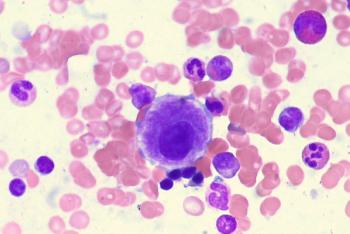
Results from a phase 1/2 trial highlighted improved clinical outcomes for patients receiving eltanexor monotherapy for relapsed/refractory myelodysplastic syndrome.