

The marketing authorization was based on results from the DESTINY-Breast09 trial assessing T-DXd/pertuzumab in first-line HER2+ metastatic breast cancer.
The marketing authorization was based on results from the DESTINY-Breast09 trial assessing T-DXd/pertuzumab in first-line HER2+ metastatic breast cancer.

Safety data from the phase 1 LUMMICAR study 1 show no high-grade CRS or any-grade ICANS among patients with myeloma who received zevorcabtagene autoleucel.

Investigators used the NCCN Distress Thermometer to identify psychological distress in Nigerian patients with breast cancer in a cross-sectional study.
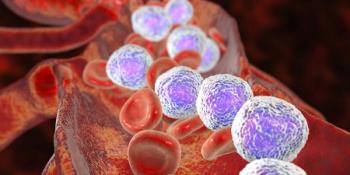
Epcoritamab did not demonstrate a significant improvement in OS, but improvements were observed in PFS, ORR, and DOR in this DLBCL group.

Pembrolizumab failed to produce clinical responses in patients with recurrent or metastatic medullary thyroid cancer, regardless of prior GI-6207 exposure.

Experts from VCU Massey Cancer Center discuss seamlessly integrating bioimpedance spectroscopy into standard workflows for lymphedema detection.

Data from the phase 2 ALTER-L043 trial may support the viability of perioperative penpulimab-based treatment in resectable non–small cell lung cancer.

Data from CARTITUDE-4 show that cilta-cel can improve outcomes for patients with lenalidomide-refractory multiple myeloma as early as first relapse.

According to investigators, the lack of anti-tumor activity and immunogenicity results do not support the agent’s further development in metastatic CRPC.

Ongoing studies are evaluating teclistamab-based regimens in the frontline setting as well as smoldering multiple myeloma, according to Surbhi Sidana, MD.
The FDA has assigned a PDUFA date of August 30, 2026, for approving ropeginterferon alfa-2b-njft among adults with essential thrombocytopenia.
A potential FDA approval of teclistamab/daratumumab would offer a “highly effective” option in multiple myeloma.

Data from the phase 3 MajesTEC-9 trial support teclistamab as an essential therapy for patients with multiple myeloma as early as first relapse.

A disease control rate of 100% was attained among 4 patients with Waldenström lymphoma treated with the CAR-NK cell therapy.

Federal cuts to insurance and cancer research could reduce access to therapies and stifle progress when incidence is rising across many common cancers.
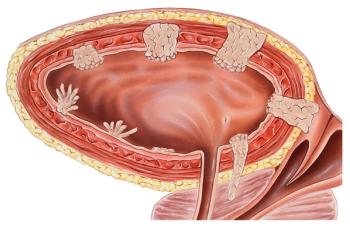
Data from the QUILT-3.032 trial supported the Saudi approval of nogapendekin alfa plus BCG in adults with BCG-unresponsive NMIBC with carcinoma in situ.
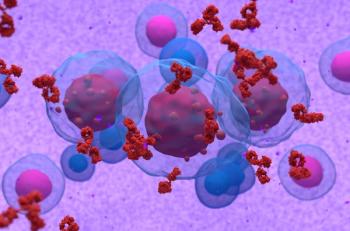
Patients with BPDCN who did not achieve a complete or clinical complete response during treatment experienced a restoration of hematopoiesis.

The Taiwan FDA has approved nivolumab/ipilimumab for patients with MSI-H/dMMR metastatic colorectal cancer based on data from CheckMate 8HW.
Data from the QUILT-3.055 and QUILT-2.023 studies support the accelerated approval of the nogapendekin alfa inbakicept regimens in Saudi Arabia.

No grade 3 or greater treatment-related adverse effects or long-term safety signals emerged with gemogenovatucel-T in this ovarian cancer group.

Investigators will submit detailed results from the QUILT-2.023 and QUILT-3.055 trials for peer-reviewed publication and future scientific presentations.
Next steps in surgery for gastroesophageal cancer include offerings for patients with advanced disease, such as those with oligometastases.

Data from the phase 1/2 EVICTION study support the breakthrough therapy designation for ICT01 plus venetoclax/azacitidine in acute myeloid leukemia.

Osimertinib plus chemotherapy improved overall survival across various subgroups in the phase 3 FLAURA2 trial, including those with CNS metastases.

Data from the GALAXY study in Japan may inform future use of total neoadjuvant therapy among patients with rectal cancer in the US.

Any-grade AEs were comparable between cadonilimab and a PD-1 monoclonal antibody regimen in this population, and no difference in grade 3/4 AEs emerged.
The complicated nature of gastroesophageal cancer underscores the importance of collaboration between teams to safely treat patients with the disease.

Ash Tewari, MBBS, hopes that with institutional partner aid, in 10 years, 1 million men will undergo prostate cancer screening through mobile units.

Researchers highlight the importance of geriatric assessments and patient-centered outcomes to manage unique physiological and functional challenges in older breast cancer survivors.
Bodies like the NCCN must keep up with data related to ctDNA so that it can be incorporated in a measured manner, said Nicholas Hornstein, MD, PhD.