
Panelists discuss how the evolution of GPRC5D-targeted therapies is expected to shape future treatment approaches for relapsed/refractory multiple myeloma in community practices by offering more personalized options and improving patient outcomes.
Panelists discuss how the evolution of GPRC5D-targeted therapies is expected to shape future treatment approaches for relapsed/refractory multiple myeloma in community practices by offering more personalized options and improving patient outcomes.
Panelists discuss how the interpretation of HER2 IHC scores informs treatment decisions in NSCLC, including adherence to ASCO/CAP guidelines and strategies for managing equivocal results.
Panelists discuss how enhancing communication between academic and community oncologists during the referral and treatment process for multiple myeloma patients requires a multifaceted approach involving standardized protocols, technology integration, regular collaborative meetings, and shared decision-making to ensure seamless patient care and optimal outcomes.

Adult and pediatric oncology collaboration in assessing nivolumab in advanced Hodgkin lymphoma facilitated the phase 3 SWOG S1826 findings.
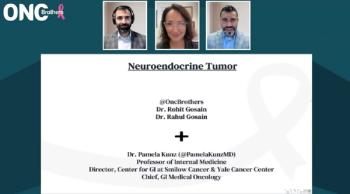
Panelists discuss how next-generation sequencing can identify actionable mutations and molecular alterations in neuroendocrine tumors, potentially guiding personalized treatment decisions and clinical trial eligibility while advancing our understanding of tumor biology.
Panelists discuss how treatment selection for well-differentiated grade 3 neuroendocrine tumors requires careful consideration of factors including Ki-67 index, tumor biology, and disease progression rate to determine whether platinum-based chemotherapy or targeted therapies are most appropriate.
Panelists discuss how somatostatin analogues, while effective in controlling hormone-related symptoms and tumor growth in neuroendocrine tumors, face challenges including drug resistance, optimal dosing strategies, and timing of initiation in the treatment sequence.
Panelists discuss how accurate grading and classification of neuroendocrine tumors is crucial for determining prognosis and treatment strategies, focusing on key histopathological features.
Treatment paradigms differ between adult and pediatric oncologists when treating young adults with lymphoma.
Panelists discuss how the optimal sequencing of bispecific antibodies and CAR T-cell therapies in relapsed/refractory multiple myeloma could maximize treatment efficacy and improve patient outcomes in this challenging disease setting.
Differences in pancreatic cancer responses to treatment elicits a need to better educate patients on expectations in treatment, particularly chemotherapy.
Panelists discuss how the OPTec study, which explores outpatient step-up administration of teclistamab, could impact real-world practice by potentially improving patient convenience and reducing healthcare resource utilization in the treatment of multiple myeloma.
Increasing patient awareness of modifiable risk factors for pancreatic cancer may help mitigate incidence of pancreatic cancers.
Panelists discuss how minimal residual disease (MRD) detection in patients with colorectal liver metastases (CLM) in the GALAXY study predicts both the benefit of adjuvant therapy and overall prognosis, potentially guiding more personalized treatment decisions.
Panelists discuss how the 24-month data from the GALAXY study presented at the European Society for Medical Oncology (ESMO) 2024 meeting underscore the importance of minimal residual disease (MRD) status and circulating tumor DNA (ctDNA) clearance as key prognostic and predictive factors in colorectal cancer (CRC) management.
Panelists discuss how treatment strategies for circulating tumor DNA (ctDNA)–positive colorectal cancer (CRC) are evolving, with a focus on tailoring interventions based on molecular findings to improve patient outcomes and minimize unnecessary therapies.
Panelists discuss how the decision between quadruplet versus triplet therapy depends on multiple factors, including cytogenetic risk status, insurance coverage/drug access, patient fitness to tolerate additional toxicity, and the strength of evidence supporting improved outcomes with 4-drug combinations.
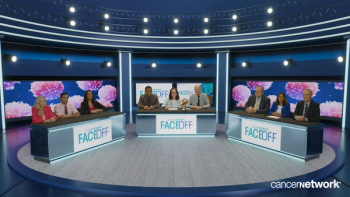
Panelists discuss how to tailor treatment strategies for a 67-year-old, BCMA-naïve woman with relapsed/refractory multiple myeloma, weighing the potential benefits of BCMA-targeted therapies against other available options in the context of her specific clinical presentation.
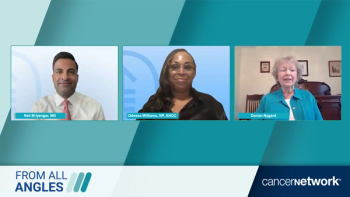
Panelists discuss how a patient experienced care coordination during treatment at Memorial Sloan Kettering (MSK), detailing the health care professionals involved, the integration of services such as wound care and integrative medicine, and the positive impact of a team-based approach on her treatment experience and confidence in her care.
Panelists discuss how effective care coordination at Memorial Sloan Kettering (MSK) involves a multidisciplinary team of health care professionals working collaboratively to optimize the patient’s journey from diagnosis through treatment and follow-up, highlighting the essential role of nurse practitioners in this process.
Panelists discuss how to approach treatment decisions for a 68-year-old woman with triple-class exposed relapsed/refractory multiple myeloma, considering factors such as prior therapies, disease characteristics, and emerging treatment options to optimize her care.
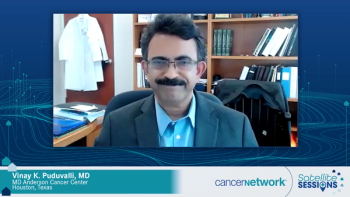
Panelists discuss how they tailor treatment strategies for oligodendrogliomas and Grade 2 gliomas based on key clinical and molecular markers, with particular attention to insights from the CODEL trial and RTOG 9802 study.
Panelists discuss how understanding the distinctions between HER2 overexpression and mutations in NSCLC influences patient care strategies and prognosis, alongside the challenges of biomarker testing methods such as IHC and NGS.
Panelists discuss how comprehensive long-term monitoring protocols for patients who have received bispecific therapy typically involve regular follow-ups, standardized testing schedules, and clear communication channels between academic centers and community practices to manage potential complications and adverse events.
Panelists discuss how key areas for improvement in the application of GPRC5D-targeted therapies in real-world settings include optimizing patient selection, addressing logistical challenges, and enhancing adverse event management.
Panelists discuss how determining a patient's readiness to transition back to community oncology care after bispecific therapy involves assessing multiple factors including treatment response, toxicity resolution, overall stability, and the community practice's capabilities.

It may be crucial to test every patient for markers such as BRAF V600E mutations, NRG1 fusions, and KRAS G12C mutations to help manage pancreatic cancers.

Panelists discuss strategies for sequencing bispecific antibodies with B-cell maturation antigen (BCMA)–targeted therapies, considering factors such as prior CAR T-cell treatment, the impact of relapse timing on treatment decisions, and approaches for managing high-risk cytogenetics and extramedullary disease in relapsed/refractory multiple myeloma (R/R MM).
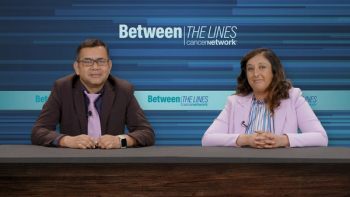
Panelists discuss how data from the long-term CARTITUDE-4 update reveal a notable rate of minimal residual disease (MRD) negativity with ciltacabtagene autoleucel, emphasizing its potential to enhance long-term outcomes in patients with lenalidomide-refractory multiple myeloma.
Panelists discuss how additional resources such as enhanced staff training, financial support, and improved patient education could benefit the implementation of bispecific therapies in community settings.