
Lorenzo Falchi, MD, highlighted the phase 1b/2 EPCORE NHL-2 and phase 1 BP41072 trials as prominent trials evaluating novel immunotherapy combinations in indolent lymphoma.
Lorenzo Falchi, MD, highlighted the phase 1b/2 EPCORE NHL-2 and phase 1 BP41072 trials as prominent trials evaluating novel immunotherapy combinations in indolent lymphoma.
Panelists discuss how long-term MEDALIST trial data demonstrate the sustained efficacy of luspatercept in transfusion-dependent patients with lower-risk MDS, with median response duration exceeding 2 years and manageable safety profiles. They address concerns about cardiac events in this elderly population and the need for multidisciplinary care coordination including cardio-oncology consultation and optimization of cardiovascular risk factors.
Panelists discuss how real-world retrospective data comparing first-line (1L) erythropoiesis-stimulating agents (ESAs) vs luspatercept in patients with low-risk MDS (LR-MDS) validate clinical trial findings, showing doubled response rates with luspatercept (particularly in SF3B1-positive patients). They debate optimal response end points, hemoglobin targets, and the need to incorporate quality-of-life measures beyond traditional transfusion independence criteria.
Experts discuss the critical role of biomarker testing in guiding frontline treatment decisions for chronic lymphocytic leukemia (CLL)—especially in high-risk patients with TP53 mutations or deletion 17p—and highlight promising 5-year outcomes from the SEQUOIA trial, which supports targeted monotherapy as an effective alternative to chemoimmunotherapy in this population.
Patients with high-risk markers may especially benefit from the addition of daratumumab to lenalidomide as maintenance therapy for NDMM.
Bispecific antibodies have demonstrated adaptability and versatility when combined with immunotherapy and chemotherapy agents.
A machine learning method for scoring tumor-infiltrating lymphocytes may address variability in pathologist measurements.

Panelists discuss how the future of renal cell carcinoma (RCC) treatment lies in developing better biomarkers for patient selection, novel immune therapies including chimeric antigen receptor (CAR) T cells and T-cell engagers, HIF-alpha inhibitors, radioligand therapies, and moving beyond the current immunotherapy-based doublet paradigm that has dominated for 7 years.
Treatment with mosunetuzumab and polatuzumab vedotin led to a complete response rate of 79% in patients with mantle cell lymphoma.

Clinical trials in small cell lung cancer appear to be more “pragmatic” with their inclusion criteria than before, according to Anne Chiang, MD, PhD.
Mosunetuzumab plus polatuzumab vedotin demonstrated efficacy in subgroups of patients with mantle cell lymphoma with poor risk factors.

Gary Steinberg, MD, discusses the role of patient counseling and surveillance when using the gemcitabine intravesical system for BCG-unresponsive NMIBC.
According to Adam J. Olszewski, MD, M-Pola’s safety profile makes it administrable in community settings to those with transplant-ineligible RLBCL.
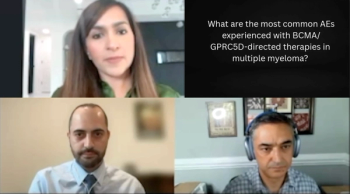
CRS, neurotoxicities, and infections are the most common AEs associated with BCMA- and GPRC5D-directed therapies in patients with multiple myeloma.
The mosunetuzumab and polatuzumab vedotin combination was evaluated in a high-risk factor subgroup of patients with mantle cell lymphoma.
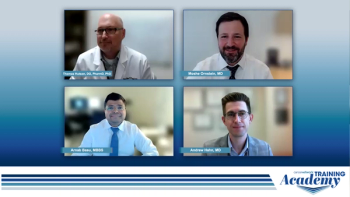
Panelists discuss the ongoing challenges and progress in treating non–clear cell renal cell carcinoma (nccRCC), emphasizing the need for subtype-specific trials, mechanistically driven therapy, and international collaboration to move beyond data extrapolation from clear cell RCC (ccRCC) and toward truly evidence-based, personalized care.
Panelists discuss the future of clear cell renal cell carcinoma (ccRCC) treatment, focusing on optimizing sequencing and combinations of existing therapies, integrating novel agents like belzutifan and cellular therapies, and advancing research through clinical trials and investigator-led studies to drive more personalized and effective care.
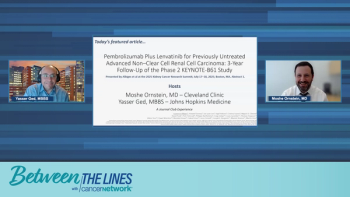
Panelists discuss how the durability of response data was particularly compelling, with a median duration of response of approximately 2 years and 35% of patients maintaining responses at 3 years, especially noting the surprising 31% response rate in chromophobe renal cell carcinoma (RCC) despite this histology's historically poor responsiveness to immunotherapy due to low tumor mutational burden.
Panelists discuss how the KEYNOTE-B61 study demonstrated remarkable efficacy with a 50.6% objective response rate and 82% disease control rate across all non–clear cell renal cell carcinoma (RCC) histologies, representing a significant improvement over historical tyrosine kinase inhibitor (TKI) data that showed response rates below 30% and setting a new treatment benchmark for this patient population.
A 2-way communication between providers and patients may help facilitate dose modifications to help better manage adverse effects.
Panelists discuss the ongoing challenge of lacking reliable biomarkers in renal cell carcinoma (RCC), emphasizing promising advances in RNA expression signatures and emerging tools like protein biomarkers and circulating tumor DNA (ctDNA) to personalize treatment and improve real-time therapy decisions despite current limitations.
Although OS data are still immature, they have shown favorable trends for mosunetuzumab and polatuzumab vedotin in transplant-ineligible LBCL.
Treatment with AML depends on a variety of factors, including stage of treatment, transplant eligibility, and mutational status.
Experts weigh in on tumor-informed testing, false positives, relevant trial data, and other key concepts related to circulating tumor DNA.
Panelists discuss results from a phase 2 study of nivolumab plus cabozantinib in non–clear cell renal cell carcinoma, highlighting promising efficacy but notable treatment discontinuation rates likely linked to patient complexity, underscoring the need for further research on TKI-IO combinations in this diverse population.
Panelists discuss findings from a landmark European phase 3 trial showing improved overall survival with ipilimumab and nivolumab versus standard therapies in non–clear cell renal cell carcinoma, supporting the role of immune-based combinations across histologic subtypes and reinforcing the need for subtype-specific treatment strategies.
Results from the SUNMO trial may show that M-Pola is a viable treatment option for those with transplant-ineligible relapsed/refractory LBCL.
Experts have a compelling debate on first-line treatment for EGFR-mutated non–small cell lung cancer (NSCLC), weighing the robust survival and central nervous system (CNS) benefits of osimertinib plus chemotherapy against the promise of novel targeted strategies that aim to prevent resistance and push the boundaries of precision oncology.
Oncologists are still working on management strategies for neuropathy; a common adverse effect related to chemotherapeutics for ovarian cancer.
Experts partake in a dynamic, debate-style educational event where teams present and challenge current frontline treatment strategies for EGFR-mutant non–small cell lung cancer (NSCLC), focusing on the promise and practical challenges of combination therapy involving a bispecific antibody and third-generation EGFR tyrosine kinase inhibitor (TKI).