Articles by Geoffrey Shouse, DO, PhD
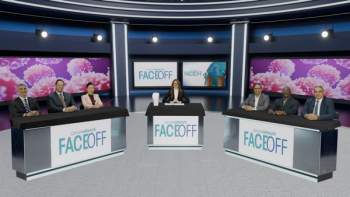
Relapsed DLBCL: Navigating CAR-T Logistics, Work, and Caregiving
ByTara M. Graff, DO, MS,Elizabeth Budde, MD PhD,Alex Herrera, MD,Geoffrey Shouse, DO, PhD ,Abhinav Deol, MD,Olalekan Oluwole, MD MPH,Nirav Niranjan Shah, MD Panelists review a patient with DLBCL relapsing 8 months after frontline Pola-R-CHP following an initial complete response. With low symptom burden and favorable performance status, the debate centers on optimal second-line strategy, outpatient CAR T feasibility, caregiver limitations, and balancing treatment intensity with quality-of-life and employment considerations in an urban setting.
CAR-T Decision Making in A Case of Primary Refractory DLBCL
ByTara M. Graff, DO, MS,Elizabeth Budde, MD PhD,Alex Herrera, MD,Geoffrey Shouse, DO, PhD ,Abhinav Deol, MD,Olalekan Oluwole, MD MPH,Nirav Niranjan Shah, MD Faculty analyze a primary refractory, high-intermediate–risk DLBCL case with persistent PET-positive disease after frontline R-CHOP and symptomatic progression. Discussion focuses referral for second-line CAR T and how rural geography and distance from a CAR-T center influence logistics. Panelists weigh aggressive disease biology against access barriers and caregiver availability in determining next steps.
Debate Round 3: CAR-T vs Bispecifics in R/R LBCL
ByTara M. Graff, DO, MS,Elizabeth Budde, MD PhD,Alex Herrera, MD,Geoffrey Shouse, DO, PhD ,Abhinav Deol, MD,Olalekan Oluwole, MD MPH,Nirav Niranjan Shah, MD Panelists debate whether the treatment paradigm in relapsed/refractory LBCL has fundamentally shifted from salvage chemotherapy and autologous transplant toward novel immune-based strategies. The discussion centers on CAR T-cell therapy versus bispecific antibodies, examining differences in outcomes. Faculty explore how emerging data, sequencing considerations, and real-world constraints are redefining treatment decision-making.
Debate Round 2: CAR T Decision in Rapidly Progressing LBCL
ByTara M. Graff, DO, MS,Elizabeth Budde, MD PhD,Alex Herrera, MD,Geoffrey Shouse, DO, PhD ,Abhinav Deol, MD,Olalekan Oluwole, MD MPH,Nirav Niranjan Shah, MD Panelists debate how to select between axicabtagene ciloleucel and lisocabtagene maraleucel for patients with rapidly progressive second-line DLBCL. Key arguments examine differences in efficacy signals, vein-to-vein time, and toxicity profiles and how these factors influence urgency of treatment. Faculty explore how real-world experience, institutional infrastructure, and patient-specific risk factors and lifestyle shape optimal CAR T product selection.
Debate Round 1: Treatment selection in biologically aggressive DLBCL
ByTara M. Graff, DO, MS,Elizabeth Budde, MD PhD,Alex Herrera, MD,Geoffrey Shouse, DO, PhD ,Abhinav Deol, MD,Olalekan Oluwole, MD MPH,Nirav Niranjan Shah, MD Panelists debate whether high-risk disease biology should accelerate referral for CAR T-cell therapy in second-line DLBCL. Key arguments consider patient-specific sequencing approaches, emphasizing individualized assessments before committing to CAR T. The opposing argument supports early referral for CAR T in biologically high-risk patients. Faculty weigh the balance between urgency and personalization, exploring how disease kinetics, logistical barriers, and real-world practice patterns influence optimal timing of referral.
US Real World CAR-T Patterns in R/R LBCL (ASH 2025 Updates from ABC Consortium)
ByTara M. Graff, DO, MS,Elizabeth Budde, MD PhD,Alex Herrera, MD,Geoffrey Shouse, DO, PhD ,Abhinav Deol, MD,Olalekan Oluwole, MD MPH,Nirav Niranjan Shah, MD Panelists discuss real-world data from the US ABC Consortium evaluating axicabtagene ciloleucel, tisagenlecleucel, and lisocabtagene maraleucel in relapsed/refractory LBCL. Faculty discuss key differences in manufacturing, review outcomes, and consider toxicity profiles for each of the CAR T products in clinical practice.
Examining CAR-T Outcomes in 2L LBCL Treatment (Axi-cel & Liso-cel, DESCAR-T Registry)
ByTara M. Graff, DO, MS,Elizabeth Budde, MD PhD,Alex Herrera, MD,Geoffrey Shouse, DO, PhD ,Abhinav Deol, MD,Olalekan Oluwole, MD MPH,Nirav Niranjan Shah, MD Panelists analyze comparative real-world data from the French DESCAR-T registry evaluating axicabtagene ciloleucel and lisocabtagene maraleucel in second-line relapsed/refractory LBCL. Faculty consider distinctions in toxicity profiles along with selection bias, vein-to-vein time, patient frailty, and whether certain patients may preferentially benefit from one CAR T product over another in routine second-line practice.
Key Perspectives on Real World CAR-T Use in R/R LBCL (DESCAR-T & REALYSA Registries)
ByTara M. Graff, DO, MS,Elizabeth Budde, MD PhD,Alex Herrera, MD,Geoffrey Shouse, DO, PhD ,Abhinav Deol, MD,Olalekan Oluwole, MD MPH,Nirav Niranjan Shah, MD Panelists examine real-world comparative data from the French DESCAR-T registry and REALYSA cohort evaluating second-line axicabtagene ciloleucel versus standard-of-care salvage therapy in early relapsed/refractory DLBCL. The discussion highlights the event-free survival with CAR T-cell therapy (1-year EFS 46% vs 16% in SOC). Faculty also discuss the impact of third-line CAR T use in the SOC arm and what these real-world registry data mean for routine second-line treatment decision-making.
Panelists discuss how unmet needs in relapsed/refractory follicular lymphoma (R/R FL), including durability of responses, adverse effect management, personalized treatment, resistance to therapy, and access to care, are driving exciting developments in emerging targeted therapies, improved CAR T technologies, combination approaches, and efforts to enhance access and affordability for patients.
Panelists discuss how collaborating with community physicians and providers through clear communication, shared care plans, education, referral networks, and regular monitoring is crucial for treating patients with complex cancer and ensuring coordinated care, particularly for those receiving advanced therapies such as CAR T and bispecific antibodies.
Panelists discuss how bridging therapies, including chemotherapy, targeted therapies, immunotherapy, and steroids, are used to control disease progression in patients awaiting CAR T therapy, with the choice of treatment depending on disease type, performance status, and the urgency of disease control.
Panelists discuss how treatment sequencing for relapsed/refractory lymphoma is influenced by factors such as disease characteristics, prior treatments, patient preferences, and adverse effect profiles, with the inclusion of Tafasitamab + R2 in the second-line setting potentially altering third-line therapy decisions.
Panelists discuss how shared decision-making in treatment selection involves considering factors such as treatment convenience, efficacy duration, toxicity profile, access to care, and financial impact, ensuring that the chosen approach aligns with the patient’s preferences, lifestyle, and overall well-being.
Panelists discuss how selecting CAR T therapies or bispecific antibodies for relapsed/refractory follicular lymphoma (R/R FL) depends on factors such as disease characteristics, prior treatment responses, performance status, CD20 expression, and overall patient health, emphasizing the importance of a personalized approach to treatment decisions.
Panelists discuss how evaluating zanubrutinib in combination with obinutuzumab involves considering patient comorbidities, disease characteristics, and previous treatments, with a focus on tolerability, adverse-effect profiles, and patient preferences to guide optimal treatment choices.
Panelists discuss how the updated NCCN Guidelines now recommend tazemetostat for the treatment of advanced epithelioid sarcoma, regardless of EZH2 mutation status, based on clinical trial data showing significant clinical benefits and improved progression-free survival in patients with both mutated and non-mutated disease.
Panelists discuss how a thoughtful, individualized approach to third-line treatment in relapsed/refractory follicular lymphoma (R/R FL) involves assessing disease biology, prior treatment responses, and patient-specific factors to guide optimal therapy selection and align with patient-centered goals.
Panelists discuss how treatment in the third-line setting for relapsed/refractory follicular lymphoma (R/R FL) should balance durable disease control with quality-of-life considerations, emphasizing the importance of shared decision-making to align clinical strategies with individual patient goals and preferences.
Panelists discuss how rebiopsy and CD20 reassessment at suspected progression of follicular lymphoma after second-line therapy are critical for detecting histologic transformation, evaluating changes in disease biology, and informing the selection of appropriate third-line treatment strategies.
Panelists discuss how recognizing disease heterogeneity and monitoring for clinical indicators of progression in relapsed/refractory follicular lymphoma (R/R FL) are essential for guiding timely and individualized third-line treatment decisions that optimize patient outcomes.


