
Diane Simeone, MD, highlights the necessity of a collaborative approach to pancreatic cancer screening, similar to trends across multiple disease states.
Diane Simeone, MD, highlights the necessity of a collaborative approach to pancreatic cancer screening, similar to trends across multiple disease states.

Sunil Dutta, MD, discusses integrating FAST-Forward and PRIME II trial data to personalize breast cancer treatment and sequencing radiation with ADCs.
Seth M. Pollack, MD, discusses new strategies for converting immune-cold tumors, including the role of TLR4 agonists and IL-12–producing viral agents.
Vanessa Almendro-Navarro, PhD, MBA, outlined her experience as a research fellow and how her clinical work may impact her new role at City of Hope.

Panelists discuss how early financial navigation and proactive payer coordination can mitigate insurance delays and out-of-pocket burdens that commonly derail CAR T access.

Experts discuss the complexities of treatment regimens for CLL, focusing on MRD's role and the impact on patient outcomes.
Panelists discuss how clearer communication and streamlined referral workflows (including dedicated navigation/support roles) can reduce uncertainty around scheduling, manufacturing timelines, and treatment capacity.
Experts discuss the complexities of treatment regimens for CLL, focusing on MRD's role and the impact on patient outcomes.
Fumiko Chino, MD, FASCO, discussed the psychological "free fall" patients may experience after completion of radiation therapy for breast cancer.

KTX-1001 may provide a new option for patients with relapsed/refractory multiple myeloma harboring t(4;14).

Urinary toxicity, gastrointestinal toxicity, and sexual function are among the categories that should be tracked when treating patients with inoperable endometrial cancer.
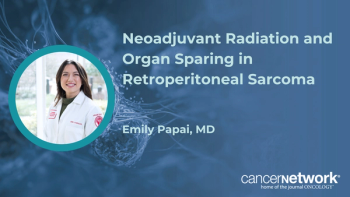
Emily Papai, MD, discussed her recent study on radiographic response in retroperitoneal sarcoma and the limitations of neoadjuvant radiation for organ preservation.
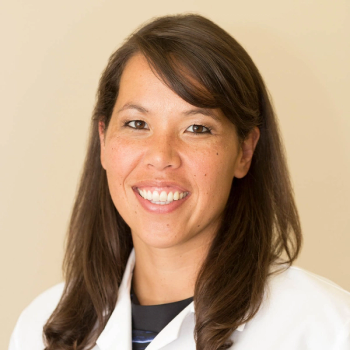
Dominique Rash, MD, presented several cases of patients with inoperable endometrial cancer at the 2026 ACRO Summit.

According to Dominique Rash, MD, the incidence of inoperable endometrial cancer is rising in the US, and clinicians may encounter it more frequently.
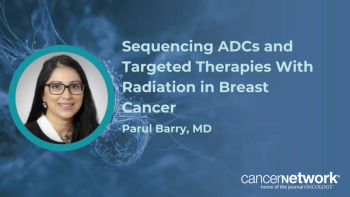
Parul Barry, MD, discussed the evolving role of ADCs and targeted therapies in breast cancer, highlighting strategies for sequencing them with radiation.
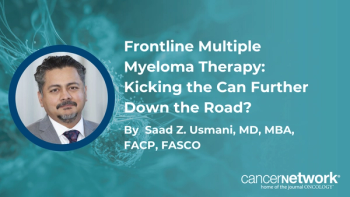
The multiple myeloma field may have even better treatment options available by the time some patients experience disease recurrence years down the line.
Because there are so many options available for treating DCIS, the chosen method is often based on the patient's preferences, said Jean L. Wright, MD, FASTRO.
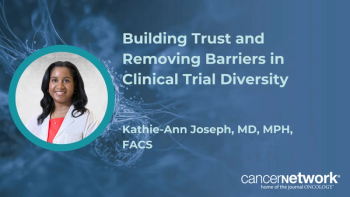
Certain strategies are needed to improve clinical trial diversity, focusing on building patient trust, increasing workforce representation, and reducing logistical burdens.
According to Jean L. Wright, MD, FASTRO, the flow of new information and research pertaining to ductal carcinoma in situ is constant.
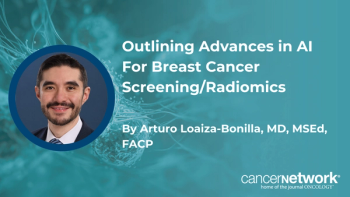
The implementation of AI into radiomics may help predict the likelihood of response to therapies among patients undergoing breast cancer treatment.
Long-term follow-up data on BTK inhibitors reassures patients about safety and efficacy, guiding treatment decisions for chronic conditions.
Panelists discuss how early referral drop-off is driven by awareness gaps, outdated perceptions of when CAR T should be used, travel/caregiver burdens, and process complexity—and which barriers are most addressable.
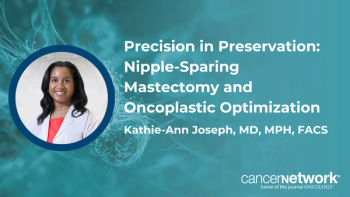
Kathie-Ann Joseph, MD, MPH, FACS, described the clinical criteria for nipple-sparing mastectomies and oncoplastic surgery, focusing on tumor-to-nipple distance and oncologic safety for breast cancer patients.
Experts discuss the promising long-term results of zanubrutinib for high-risk CLL patients, emphasizing the importance of upfront biomarker testing.
Panelists discuss how real-world CAR T outcomes in older or comorbid patients can mirror trial results when organ function, monitoring, and multidisciplinary support are optimized.
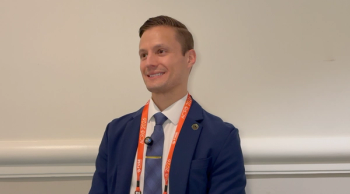
Theranostics is an escalating field within radiation oncology and clinicians should be utilizing it every day, according to Brandon Mancini, MD, MBA, FACRO.
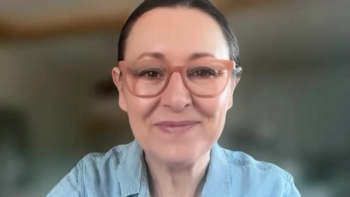
Over the past 10 years, more barriers have become apparent in the process of getting insurance companies to approve cancer treatments, according to Loretta Nastoupil, MD.
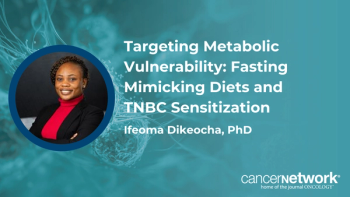
Ifeoma Dikeocha, PhD candidate, explains why triple-negative breast cancer is uniquely sensitive to fasting mimicking diets.
Although institutional cancer centers boast large amounts of resources, community centers do not always have the resources to initiate clinical trials, according to Loretta Nastoupil, MD.
The consolidation of oncologists and the transition to bispecific antibodies and CAR T-cell therapies are among factors that have led to increasing cancer care costs.