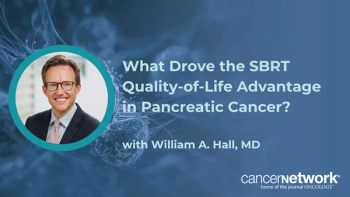
William A. Hall, MD, explains how fewer visits, no concurrent chemotherapy, and adaptive MRI guidance may have preserved quality of life with SBRT.
ASCO Breakthrough 2026 spotlighted liquid biopsy, biomarkers, AI, and global equity, showing how data-driven precision oncology shapes personalized cancer care worldwide.
The 2026 ASCO Breakthrough Meeting concluded with a strong focus on precision oncology, biomarker-driven treatment, and the implementation of emerging technologies, reinforcing the meeting's overarching message: the future of cancer care will be increasingly personalized, data-driven, and globally collaborative.
The meeting’s closing day featured an inspiring keynote from Professor Y.M. Dennis Lo, DM, D.Phil, a pioneer in cell-free DNA research, who reviewed the remarkable evolution of liquid biopsy technologies and their expanding applications across oncology.1 Through engaging analogies and accessible storytelling, Lo demonstrated how cell-free DNA has evolved from a promising research concept into a clinically relevant tool with applications in early cancer detection, treatment monitoring, minimal residual disease assessment, and disease surveillance.
Lo is the vice-chancellor and president of the Chinese University of Hong Kong, as well as the Li Ka Shing Professor of Medicine and professor of chemical pathology.
Another major highlight was a comprehensive presentation by Elizabeth Steinberg, PhD, who reviewed the rapidly expanding role of biomarkers in guiding personalized anticancer therapy.2 As the therapeutic landscape continues to grow more complex, biomarker testing has become increasingly essential for selecting targeted therapies, immunotherapies, and other precision treatment strategies. The session emphasized how molecular profiling is fundamentally reshaping clinical decision-making by matching therapies to the unique biology of each patient's cancer.
Steinberg is a senior clinical scientist in Product Development Oncology at Roche/Genentech.
While Day 3 highlighted these advances, it also served as an opportunity to reflect on several dominant themes that emerged throughout the meeting.
Artificial intelligence (AI) proved to be one of the defining topics of ASCO Breakthrough 2026. Standing-room-only sessions explored AI applications across nearly every aspect of oncology, including multidisciplinary tumor boards, pathology, radiology, clinical trial matching, translational research, and clinical decision support. Experts emphasized that the conversation has shifted from whether AI should be incorporated into oncology practice to how these technologies can be implemented safely, ethically, and equitably while maintaining appropriate physician oversight.
Minimal residual disease (MRD) and circulating tumor DNA (ctDNA) also emerged as recurring themes. Multiple presentations explored whether molecular response assessment should evolve beyond prognostication to actively guide therapeutic decision-making, including treatment escalation and de-escalation strategies currently being evaluated in prospective clinical trials.
Global oncology remained another major focus throughout the conference. Sessions highlighted persistent disparities in cancer care while showcasing collaborative strategies to improve access to diagnostics, clinical trials, and innovative therapies across diverse healthcare settings. Speakers repeatedly emphasized that scientific breakthroughs alone cannot improve patient outcomes unless they are successfully implemented across both high- and low-resource environments.
ASCO Breakthrough 2026 highlighted the convergence of several transformative trends. AI is becoming increasingly integrated into routine oncology practice. Biomarkers such as ctDNA and MRD are moving closer to directing treatment decisions. Precision medicine continues to expand through increasingly sophisticated molecular profiling. At the same time, equity and implementation science are ensuring that these advances can reach patients worldwide.
As oncology continues to evolve at an unprecedented pace, ASCO Breakthrough once again demonstrated its role as a forum where emerging innovations are translated into practical strategies that may ultimately redefine cancer care.
Reporting from Singapore, Dr. Yan Leyfman for CancerNetwork.