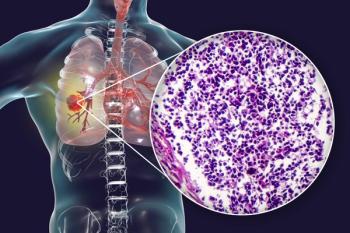
Dan Costin, MD, discusses where personalized mRNA vaccines could fit into lung cancer care within 5 to 10 years.
The new living guideline contains updated recommendations for biomarker testing and therapeutic strategies based on factors such as PD-L1 expression status.
The American Society of Clinical Oncology (ASCO) has released new evidence-based recommendations for therapy among patients with stage IV non–small cell lung cancer (NSCLC) who present without driver alterations, which were published in the Journal of Clinical Oncology.1
Authors of the updated living guideline—which included experts in medical oncology, pulmonary care, community oncology, research methodology, and advocacy—reviewed findings from 6 new randomized clinical trials to issue therapeutic recommendations for this patient population. These recommendations are intended to address the guiding questions regarding the most effective first-line treatment options for patients with stage IV NSCLC without driver alterations based on cancer subtype as well as the most beneficial therapies in the second line and beyond.
Regarding biomarker testing, the authors issued a strong recommendation based on high-quality evidence for testing via validated tissue and/or blood-based broad multigene panel and a validated immunohistochemistry (IHC) assay for PD-L1, HER2, and MET expression for all patients with NSCLC. In a qualifying statement, the panel noted that combining blood and tissue testing may increase the probability of detecting molecular alterations and that comprehensive RNA-based next-generation sequencing evaluation is preferred. Additionally, the false-negative rates of liquid biopsy should be a point of consideration among clinicians and tissue testing should be conducted whenever feasible. The authors concluded by describing how PD-L1 IHC alone was not sufficient to inform treatment decision-making.
The panel issued various recommendations for certain therapeutic regimens based on PD-L1 expression status among patients with nonsquamous histology. In the case of a PD-L1 tumor proportion score (TPS) of 50% or higher, the guideline indicated a strong recommendation for single-agent pembrolizumab (Keytruda), cemiplimab-rwlc (Libtayo), or atezolizumab (Tecentriq).
The authors also provided conditional recommendations for using several combination regimens in select circumstances. These combinations included:
In patients with a PD-L1 TPS of 1% to 49%, the panel issued strong recommendations for the use of pembrolizumab or cemiplimab in combination with carboplatin and pemetrexed. The guideline also included conditional recommendations for several other combination regimens, which included atezolizumab plus carboplatin and (nab)-paclitaxel with or without bevacizumab, nivolumab/ipilimumab, and durvalumab/tremelimumab plus platinum-based chemotherapy.
Although there were no strong therapeutic recommendations for patients with unknown or negative PD-L1 expression status, the authors highlighted conditional uses for all aforementioned combination regimens that were listed for conditional use in patients with a PD-L1 TPS of 50% or higher.
In patients with squamous cell carcinoma and a PD-L1 expression status of 50% or higher, it is strongly recommended to administer single-agent pembrolizumab, cemiplimab, or atezolizumab based on high-quality evidence. Other combination regimens that may be offered in conditional situations include pembrolizumab or cemiplimab plus carboplatin and paclitaxel, nivolumab/ipilimumab, nivolumab/ipilimumab plus 2 cycles of platinum-based chemotherapy, and durvalumab plus tremelimumab and platinum-containing chemotherapy.
Regarding patients with a PD-L1 TPS of 1% to 49%, the panel issued strong recommendations for the use of pembrolizumab or cemiplimab plus carboplatin and paclitaxel; all other previously mentioned combination regimens received conditional recommendations. The guideline authors also noted that single-agent pembrolizumab could be provided in this setting to patients who are ineligible for combination therapies.
According to the panel, clinicians may offer any of the aforementioned combination regimens based on conditional recommendations.
For patients with good performance statuses who are seeking treatment in the second line and beyond, the panel issued a strong recommendation based on low-quality evidence for the use of platinum-doublet chemotherapy among those with receipt of prior immune checkpoint inhibitors alone.
In patients who previously received chemotherapy plus immune checkpoint inhibitor therapy, it is strongly recommended to administer docetaxel with or without ramucirumab (Cyramza). Conditional recommendations were also issued for the following regimens:
The guideline authors noted a few limitations of research and potential future directions for the field. Of note, the role of tumor-treating fields appears to be unknown in the modern treatment paradigm, although studies such as the ongoing phase 3 LUNAR-2 trial (NCT06216301) may further elucidate the modality’s utility in the field.2 The panel noted that VEGF-based therapies represent another important unanswered question; although the VEGF/PD-1 bispecific antibody ivonescimab, for example, has demonstrated promise vs pembrolizumab in the phase 3 HARMONi-2 trial (NCT05499390), additional data in a global population are needed to affirm the agent’s potential benefits.3