Allen Khodab, MD discussed how patients with larger prostates had reduced IPSS scores that normalized to the same level as those with normal-sized glands.
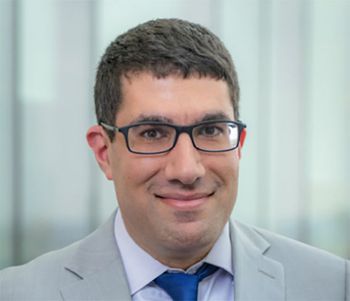
Fumiko Chino, MD, discussed the nuances of patient-centered care, addressing financial toxicity, AI bias in oncology, and survivorship.
The term patient-centered care is often treated as a staple of clinical mission statements, yet in the high-volume, high-technology environment of radiation oncology, its true application remains complex. At the
From the "free fall" many patients experience after daily treatment ends to the "durable costs" of financial toxicity that linger long into survivorship, Chino highlighted the gaps in current delivery systems. Overall, her insights encompass:
Chino: A common misconception about patient-centered care is that it can be very prescriptive in that you do this [but] you don’t do that. The true center of patient-centered care is knowing the patient and what their wishes, desires, and fears are while using those to tailor your specific approach, education, and follow-through with questions. There are people who have an incredibly high level of health literacy. They’re on ClinicalTrials.gov, and they’re researching their diagnosis. They’re finding out what the latest treatments are. Then there are people who want to be like, “Doc, tell me what to do.” Patient-centered care means understanding the motivators for the person and then how to approach them. A second tier for patient-centered care is family-centered care. We’re still barely at the edge of it now, which is embracing the caregiver and the family as part of the team dynamic.
It’s important to think about the team dynamics within, for example, a radiation oncology clinic. There are many opportunities—from the person who checks them in at the front desk to the social worker, the nurse, the therapist, the physician, and the physician’s assistants—to think about. How do we meet this person where they are and start anticipating and meeting some of their needs? That means thinking about how to use navigators wisely. How do we use our social workers and not overburden them? How do we use our nurses to the maximum within their capacity, training, and licensure to improve outcomes? We have a lot of staff in radiation oncology; we roll deep. How do we motivate the therapist to make sure they’re doing the education that they’re absolutely trained for? How do we empower them to ensure they’re making that person’s care the best it can be?
I treat breast cancer, and I treat a lot of young women with breast cancer who are still working. I can’t tell you how many of them have told me that when they finished their radiation, they felt like they fell off a cliff. Whereas they didn’t want to be there every day for the radiation, but they at least felt like they were doing something every day. They got to see someone. They felt like they were actively fighting cancer. Then they transition into survivorship, and it’s like nothing. They’re just in free fall. No. 1 is expectation management, making sure that we’re giving good education and discharge instructions, what to look out for, and when to call us—just simple, home-based things. Some of it is also just making sure that they have all the tools that are going to help them thrive in survivorship. That could be, again, a survivorship group. It could be the AYA [adolescent and young adult] center I work at. At MD Anderson, we have an AYA cancer focus. It could be thinking about some people who are going to need a shorter follow-up and other people who are going to do better in the long term. But then [we must] tell every single person, “If you’re having a problem, I want to hear about it.”
Last year, I had the great opportunity of being one of the coeditors for a special edition for JCO Oncology Practice focused on financial toxicity. What we know is that it’s a durable problem for our patients. It’s not just cancer diagnosis and treatment. Far into survivorship, there are durable costs related to financial burdens; how do we optimize things like health insurance? How do we make sure that people are accessing proper survivorship care? How do we make sure we’re tuning people into all the resources that they have available to them? That may be food stamps or making sure that they have work negotiations for whatever long-term [adverse] effects they may have from their cancer treatment. It’s not just, “OK, we’re done treating your cancer. Go back into the world. Good luck.” That is how, classically, it has been done. We’ll focus only on cancer symptoms from now on, but it’s like, “How are you doing? Where are you at your baseline? Are you at 90% of your baseline? Are you at 70% of your baseline? What can we do to get you to be the most functional in the long term?”
We did an evaluation looking at communication and whether people who are of the same or different race or gender would make a difference in terms of how they rated communication. What we found is that overall communication was rated highly to begin with. That was phenomenal. There wasn’t a difference in race or gender. That’s great because it means that you can align with your patients even if you are not the same orientation or don’t have the same lived experiences. It’s very encouraging. The one thing I’ll point out about our research is that, unfortunately, there were very few Hispanic, Latinx, or Black physicians whom we were able to capture in our sample, and we’re not going to be able to capture or measure a disparity when we just don’t have the population to measure it in. That’s a real limitation, and it unfortunately reflects the workforce that we already know exists: There are very few of certain types of physicians in the world, and there should maybe be more of them.
The limitation of our research is that people who are willing to answer an online survey are already pretty engaged in the health care process, and that’s a real weakness of any survey or study, which is the people who probably are the most at risk—the people who have the poorest comprehension and are the least engaged—are also the ones who are less likely to answer our questions. Thinking about all the research that exists in communication or in financial toxicity, we’re just probably at the tip of the iceberg, and everything that we capture is likely the best outcome. When we think about communication as it relates to adherence, some patients do feel like they were poorly prepared for long- or short-term [adverse] effects. We know that’s true. It’s likely even worse [for] the people who didn’t answer the survey.
We have to be very discreet and thoughtful in terms of designing these systems because when you rely on large language models and large databases that are used to train some of these AI models, you may be building in some element of disparity or gaps in care. The example I’ll usually give is with prior authorization, which is that we know that companies are using AI models, increasingly, to make the first determinations for prior authorization. If you’re using these models that have a stop—this person passes through without prior authorization because these elements are all met—we realize that, for example, patients who are Black or Hispanic may have improper or insufficient staging in their chart or they may not have certain things documented appropriately. That means that you’re building that into the model, and these types of patients then somehow get an additional stop in terms of transitioning through to approval. I see that as being a real problem. [We must be] evaluating very carefully what we’re putting into the model. As every AI talk I’ve ever been to [has] featured, it’s [currently] garbage in, garbage out. You can’t use a faulty data set to create a perfect tool. You need good data to make a good tool.
We know that burnout is a real problem. It’s been highlighted in the last decade and then peaked during the COVID-19 pandemic. How do we make sure that people are rewarded as much by their job as they give to their job? There’s this classic Simone’s maxim: “The institution doesn’t love you back.” How do we be person centered in terms of our patient care but also in terms of our staff and faculty reward benefits? The secret is caring for the patient and extrapolating that [care] over to faculty and staff as well. When thinking about burnout, do we have the right tools to do things efficiently? What are we doing to make sure that we honor individuals and their decisions? Are there options for people who want to work part-time? Are there flexible schedules for people who want to pick up their kid at 3 PM every day? What are we doing to acknowledge that we’re all living in an unusual existence in this century? It will only get weirder. That’s ad hoc but true.
There was this huge resistance to remote work for decades. Suddenly, COVID-19 opened it up, and we realized that we can work from home and we can honestly be more efficient. Not everything is appropriate for working from home, but even research from my prior institution shows that a remote radiation oncology consultation can save patients time and money. For some, remote management is quite safe and effective. Again, it’s not for every single person, and we need to acknowledge that there are large barriers to broadband access for both patients and some providers based on where they live. It’s opened a whole new world to think about; who do we need here to do this? I don’t mean we’re going to be replaced by robots, but how do we optimize the outcomes?
Morgan A, Shah K, Tran K, Chino F. Racial, ethnic, and gender representation in leadership positions at National Cancer Institute-designated cancer centers. JAMA Netw Open. 2021;4(6):e2112807. doi:10.1001/jamanetworkopen.2021.12807