
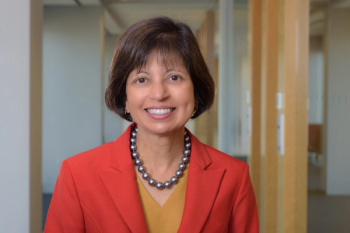
The future of radiation oncology will be largely affected by artificial intelligence and genomics, according to Sheila D. Rege, MD, FACRO.
The future of radiation oncology will be largely affected by artificial intelligence and genomics, according to Sheila D. Rege, MD, FACRO.
The expansion of clinical trials evaluating proton-based radiotherapy could elucidate its benefits and increase its access across the US.
According to Charlotte Rivers, MD, it’s important for patients with CNS cancers to meet with all involved doctors so they can make an informed decision regarding their care.
Charlotte Ivy Rivers, MD, explored the impact of updated WHO criteria and functional imaging, such as DOTATATE-PET, on the diagnosis and treatment of patients with CNS tumors.
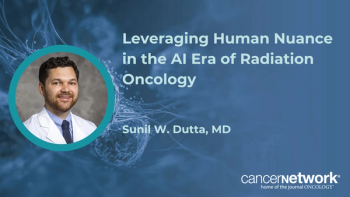
Sunil W. Dutta, MD, discussed why clinical follow-up remains an essential soft skill for radiation oncologists in an increasingly automated field.
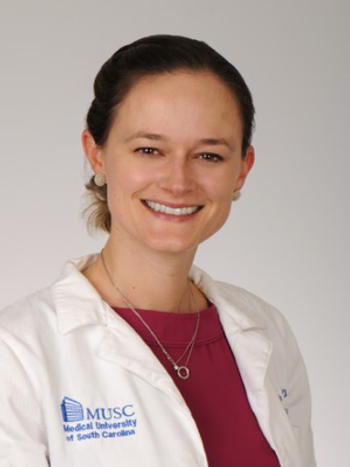
Charlotte Ivey Rivers, MD, discussed the importance of rare CNS tumor research, upcoming trial data in meningioma, and the role of functional radiosurgery.
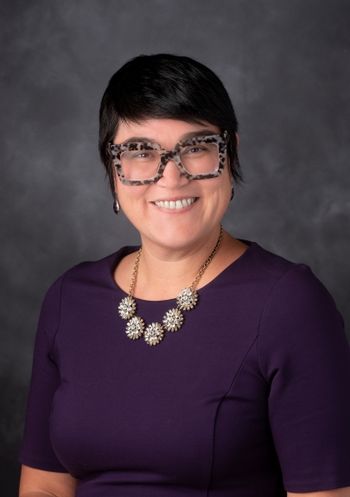
Fumiko Chino, MD, discussed the nuances of patient-centered care, addressing financial toxicity, AI bias in oncology, and survivorship.
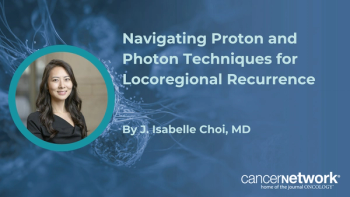
J. Isabelle Choi, MD, discussed proton and photon therapy for locoregional recurrences, emphasizing advanced IMRT/VMAT techniques and CTV delineation.
Sunil W. Dutta, MD, discussed hypofractionation in breast reconstruction and why clinical follow up remains a key "soft skill" in an AI-driven field.
Sunil Dutta, MD, discusses integrating FAST-Forward and PRIME II trial data to personalize breast cancer treatment and sequencing radiation with ADCs.
Fumiko Chino, MD, FASCO, discussed the psychological "free fall" patients may experience after completion of radiation therapy for breast cancer.
Urinary toxicity, gastrointestinal toxicity, and sexual function are among the categories that should be tracked when treating patients with inoperable endometrial cancer.
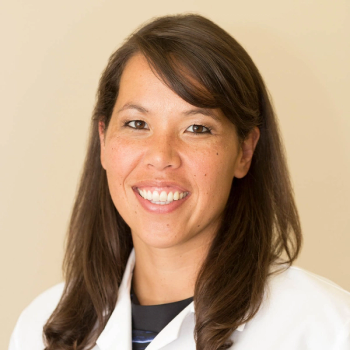
Dominique Rash, MD, presented several cases of patients with inoperable endometrial cancer at the 2026 ACRO Summit.
Parul Barry, MD, discussed the evolving role of ADCs and targeted therapies in breast cancer, highlighting strategies for sequencing them with radiation.

OS and PFS rates were positive as demonstrated by real-world data in patients given SBRT for oligometastatic ovarian cancer.
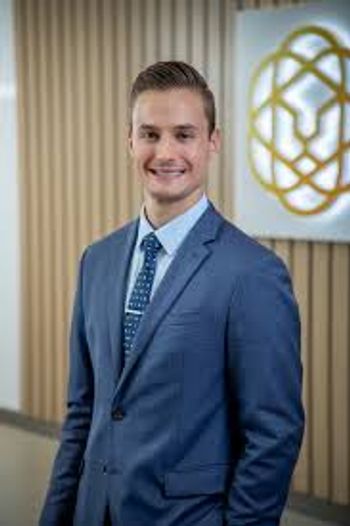
Theranostics, a technique that combines traditional medication with diagnostics, is “limitless,” according to Brandon Mancini, MD, MBA, FACRO.
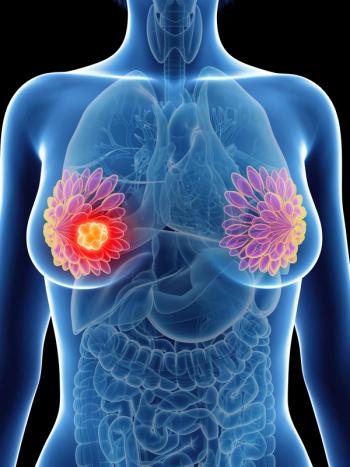
J. Isabelle Choi, MD, outlined evidence-based strategies for radiation dose escalation in locoregionally advanced breast cancer.
Sunil Dutta, MD, discusses how whole-breast radiation or systemic therapy is responsible for controlling low-volume disease.

Due to certain errors in the 2026 PFS Final Rule pre-publication, ACRO has issued a statement while awaiting the publication of the 2026 HOPPS Final Rule.
ACR-accredited radiation oncology practices will now be eligible to apply for an advanced quality recognition program developed by ACRO and RSS.
As noted in the letters, "ACRO’s comments seek to ensure ongoing access to high-quality, state-of-the-art radiation oncology services."
ACRO's Accreditation Program has completed and passed its annual surveillance by the International Standards Organization.