Tyler Wilhite, MD, discusses expanding a radiation oncology program to also utilize low-dose radiation therapy for benign diseases.
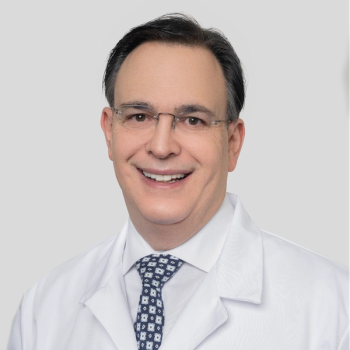
Sunil W. Dutta, MD, discussed hypofractionation in breast reconstruction and why clinical follow up remains a key "soft skill" in an AI-driven field.
As breast cancer management increasingly balances high-tech automation with clinical de-escalation, the role of the radiation oncologist is evolving into one of a technical expert and a compassionate communicator.
During the
The conversation also addressed the technical complexities of integrating radiation with rapid advancements in systemic therapy, specifically antibody-drug conjugates like fam-trastuzumab deruxtecan-nxki (T-DXd; Enhertu). Furthermore, the field continues to implement phase 3 RT CHARM (NCT03414970) and FABREC (NCT03422003) results for hypofractionation in the setting of immediate reconstruction. He noted that at higher doses per fraction, "hot spots" become biologically more significant, potentially leading to long-term fibrosis or compromised cosmetic results.
Looking toward the future of the specialty, Dutta highlighted that the most essential "soft skill" for new residents is a commitment to long-term patient follow-up. While acknowledging that AI is a powerful tool in the modern clinic, he reminded colleagues that its knowledge base is often delayed by a year or more. Consequently, active participation in summits to review the latest data remains the only way to ensure patients receive the absolute current standard of care.
Dutta is an assistant professor in the Department of Radiation Oncology at Emory University School of Medicine.
Dutta: One I attended yesterday was from my mentor, Isabelle Choi, MD, who has a similar practice to me of a busy breast service where she sees complicated cases. One of the things she covered was how she manages or approaches these cases. I thought that was very helpful because recurrent breast cancer is a very heterogeneous type of disease presentation. Seeing how someone handled cases while still covering the literature broadly—she did a good job.
The PRIME II data lowered the age limit where we can offer omission of radiation. I tell all patients in that age group that radiation is just improving recurrence risk in the breast, although that is already low and has no difference on survival. Once you tell the patient that, they often come at ease, and they can make a decision from there. I can give the same spiel to a patient about the radiation for that age group; some will say they don’t want the radiation, and then some will. It’s a very personal decision, and so I try to personalize the radiation to that patient. Oftentimes, we can offer 5 days of radiation for that patient group, if they do elect for radiation. Whether that's the UK FAST-Forward whole breast regimen or a partial breast regimen, they do quite well with those regimens.
There are some data to show that there should be some hesitation or concern with combining those newer agents. Thankfully, with breast cancer, it’s a relatively radiosensitive tumor because we are covering microscopic disease, and the regimens are getting more convenient, whether it be 5 or 15 days of radiation. I always prefer to sequence them and not combine them. There may be specific cases where there’s gross disease, and we don’t want to pause systemic therapy, but that’s a very rare situation.
Those trials confirm that, from an oncologic and cosmetic standpoint, the moderately hypofractionated regimens are safe and effective. I, personally, do use those often. One thing I would just give caution to providers is that when you go to a higher dose per fraction, things like the heterogeneity of the dose become more important. When you go faster and there’s more hot spots, those hot spots are going to be more pronounced in the long term, cosmetically or with fibrosis or [adverse] effects. On the flip side, if you’re having trouble getting doses to certain areas, or if you’re giving, say, 90% of the shorter regimen of a dose, that’s going to be a numerically lower biologic dose than if you’re going to the more protracted conventional radiation. Sometimes, it’s more of a technical question. If you can do the 15 fractions and get good coverage of your targets and sparing of the organs at risk, I would say that’s a great option. It’s never wrong to switch to the more conventional regimen if you’re worried about those things.
There are automated and advanced providers running a lot of the follow-up clinics. One of the things that I found most helpful is seeing your patients during follow up and seeing the nuance between different [adverse] effects from the radiation. Seeing those [adverse] effects and talking to those patients and their experiences will actually shape how you plan cases in the future and the informed consent process with future patients. It’s important for new graduates or residents to see patients and follow up as [often] as they can while still having clinic time to see new patients. That’s going to get you to that experience level, or that expert radiation oncologist, where you can give a thorough, informed consent with your new patients and learn how to better treat your patients [who are experiencing adverse] effects.
Going back to the AI point, I personally use AI. It’s a great tool. One of the things I’ve noted is that its knowledge goes up to, generally, at least 1 to 2 years ago, so I would just encourage coming to conferences like this, seeing presentations of the latest data and latest experiences is one way that we can offer patients the most up-to-date care in the age of AI, which may assist us but not replace the current standard of care.
Choi I. Improving outcomes in locoregionally advanced or recurrent breast cancer. Presented at: American College of Radiation Oncology 2026 Radiation Oncology Summit; February 5, 2026; Orlando, FL.