In 62 patients with ICI-naive HPV16-Positive HNSCC, 17.7% experienced grade 3 or 4 treatment-related adverse events.
Berzosertib plus cisplatin and radiotherapy did not meet the preliminary efficacy end point of complete response rate in this head and neck cancer group.
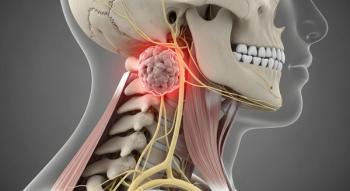
The addition of berzosertib (VX-970) to cisplatin and radiotherapy displayed safety and tolerability but did not meet the preliminary efficacy end point of complete response (CR) rate among patients with locally advanced head and neck squamous cell carcinoma (HNSCC), according to findings from a phase 1 trial (NCT02567422) published in Cancer.1
Among patients treated with the 120 mg/m2 starting dose of berzosertib plus 40 mg/m2 of cisplatin and radiation (n = 11), 2 patients experienced dose-limiting toxicities (DLTs). One patient experienced grade 4 thrombocytopenia and discontinued the systemic therapy following week 4 of treatment, and the other experienced grade 3 mucositis and dysphagia, resulting in a reduction in radiation dose from 70 Gy to 60 Gy.
Moreover, at the second dose level of berzosertib at 160 mg/m2 (n = 6), 1 patient experienced a grade 4 respiratory failure requiring transient hospitalization. One patient in the third, 200 mg/m2 dose level (n = 11) experienced a grade 3 renal injury and hypoxia leading to hospitalization and a grade 4 instance of transaminitis requiring a hold on cisplatin for more than 2 weeks and then treatment discontinuation. At the third dose level, an additional patient died at week 5 due to cardiac arrest, but this event was deemed unrelated to study treatment.
Per the Escalation with Overdose Control (EWOC) design, the maximum tolerated dose (MTD) was determined to be 200 mg/m2, with the safety monitoring committee establishing this dose level as the recommended phase 2 dose (RP2D). A total of 15 patients were enrolled at this dose level in an expansion cohort, with a patient experiencing a fatal respiratory failure event in week 5 deemed possibly related to radiation.
“[I]t will be prudent to monitor for increased toxicity, particularly hematologic, should this or a similar regimen move into larger studies with less restrictive eligibility especially in [patients with] HNSCC who are more likely to present with multiple comorbid conditions which predispose to increased risk of adverse outcomes,” lead investigator Aarti Bhatia, MD, MPH, associate professor of Medicine (Medical Oncology) and clinical research team leader of the Head and Neck Cancers Program at the Yale School of Medicine, wrote with study coinvestigators in the manuscript.1 “In our study, 2 of 43 [patients] enrolled died within the DLT monitoring period but these events were deemed unrelated to protocol treatment.”
Among 41 patients who started treatment, the objective response rate (ORR) was 63.4%; patients who were treated with at least 50% of planned treatment (n = 37) had an ORR of 70.3%, and those treated in the expansion cohort (n = 15) had an ORR of 46.7%. After excluding 8 patients who were not evaluable for post-treatment imaging assessment, the respective rates were 78.8%, 78.8%, and 63.6%.
In the expansion cohort, the CR rate was 45.5% (95% CI, 16.7%-76.6%), which did not surpass the historical control of 60%. Moreover, the probability of duration of response (DOR) exceeding 1.5 years was greater than 74% (95% CI, 55%-92%). The median progression-free survival (PFS) and overall survival (OS) in the entire cohort was 24.7 months (range, 1.4-32) and 2.4 years (range, 0.12-2.24), respectively. The respective 2-year rates were 63.6% (95% CI, 45%-75%) and 80% (95% CI, 67%-92%).
“While the combination of berzosertib with radiation and cisplatin was safe, it did not significantly enhance treatment outcomes for patients with [locally advanced] HNSCC compared to existing therapies. This highlights the need for continued exploration of new treatment strategies to improve survival and reduce recurrence rates in this patient population,” Bhatia and coauthors wrote in a news release on the study findings.2 “The researchers recommend further studies to identify biomarkers that might predict which patients could benefit from ATR inhibition. Additionally, they suggest exploring alternative combinations or dosing strategies to enhance the efficacy of berzosertib in future trials.”
Patients 18 years and older with American Joint Committee on Cancer (AJCC) VII clinical stage III or IV unresectable HNSCC of the larynx, oropharynx, hypopharynx, oral cavity, paranasal sinuses or carcinoma of the neck of unknown primary site, regardless of HPV site, were eligible to enroll on the trial.3 Those eligible also had an ECOG performance status of 0 to 2, presence of measurable lesions per RECIST v1.1 guidelines, and adequate marrow and organ function.
In stage 1 of the trial, patients received 30 to 40 mg/m2 of cisplatin, standard radiotherapy at 70 Gy, and 120 mg/m2 of berzosertib. In stage 2, escalating doses of berzosertib up to 280 mg/m2 were assessed. Radiation was given at 2 Gy per day for 6 to 7 weeks, with treatment continuing to a cumulative dose of 70 Gy in the absence of progression, intercurrent illness, intolerable toxicity, or patient withdrawal. Intravenous cisplatin was given at a dose of 40 mg/m2 once weekly with a dose reduction of 30 mg/m2 considered in the event of intolerability for up to 7 doses.
The coprimary end points of the trial included DLTs, RP2D, and grade 3 or higher AEs. Secondary end points included pharmacokinetics, ORR, metabolic ORR, and expression of tissue-based biomarkers.
A total of 95% of patients experienced grade 3 or higher toxicities. The most common any-grade AEs included fatigue (80%), anemia (80%), mucositis (80%), radiation site dermatitis (78%), nausea (76%), dysphagia (71%), and weight loss (71%). The most common grade 3 or higher toxicities were primarily hematologic in nature and included anemia (27%), leukopenia (27%), and neutropenia (20%), with dysphagia (24%) and aspiration/pneumonia (20%) emerging as common non-hematologic ones.