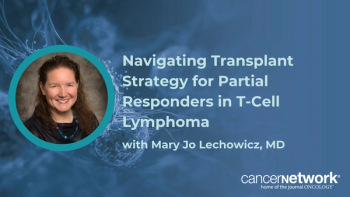
Mary Jo Lechowicz, MD, discussed how pre-transplant depth of response informs the choice between autologous and allogeneic HSCT in T-cell lymphoma.
Hua-Jay Cherng, MD, described the “threefold” benefits of taking part in training programs among junior investigators in lymphoma.
The landscape of oncology has shifted toward a collaborative model where academic silos are no longer viable. According to Hua-Jay Cherng, MD, assistant professor of medicine in the Lymphoma Program in the Division of Hematology and Oncology at Columbia University Irving Medical Center, who spoke with CancerNetwork® at Columbia University, organizations such as the Academy of Next Wave of Investigators and the ASH Clinical Research Training Institute play a pivotal role in this transition. Cherng asserted that these programs offer junior investigators a "threefold" advantage.
First, they provide structured training in the mechanics of clinical trials, filling a critical gap in residency curricula. Second, they offer access to external mentorship, allowing early-career researchers to learn from seasoned veterans across the field. Finally, they facilitate multi-institutional collaboration, which is essential in an era where resource-sharing is necessary to achieve significant patient outcomes. By fostering these lifelong professional connections, Cherng posited these organizations could help investigators build the foundation for their own clinical research programs, ensuring the next wave of lymphoma care remains innovative and highly connected.
Now more than ever, academic medicine––including oncology––is [unable] to exist in a silo. Particularly for junior investigators such as myself, the benefits of taking part in these training opportunities are threefold.
One, you get structured training on how to [conduct] clinical research and run clinical trials; this is not a structured curriculum for medical school or residency. To learn from seasoned researchers who have been doing it for decades is invaluable. Potentially even more so is the opportunity to find external mentors beyond your own institution, as well as external collaborators. We cannot do research alone anymore; no one institution has enough resources or patients.
To get perspectives and advice from people outside of where you work, as well as make these connections that will one day potentially be lifelong collaborations and friendships, [is important]. You will see these [colleagues] when you do collaborative research or [go to] conferences. Establishing these connections is so important for building the foundation of your own clinical research program for the future.