
Opinion|Videos|July 6, 2026
Clinical Scenario 1: Locally Advanced CSCC
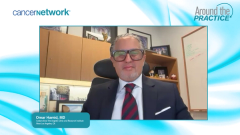
Dr. Hamid presents a 71-year-old male smoker with coronary artery disease and a 3.5 cm cervical CSCC lesion that has recurred after multiple surgical resections and adjuvant radiation therapy.
Advertisement
Episodes in this series

Dr. Hamid presents a 71-year-old male smoker with coronary artery disease and a 3.5 cm cervical CSCC lesion that has recurred after multiple surgical resections and adjuvant radiation therapy. Imaging shows no distant metastases, but the lesion is unresectable due to prior surgical attempts, and the patient has reached his cumulative radiation dose limit. Performance status is ECOG 1; laboratory values include creatinine 1.2 mg/dL and normal liver enzymes and thyroid function.
Dr. Zeitouni approaches this case as locally advanced unresectable CSCC with meaningful comorbidities (smoking history, coronary artery disease) but preserved performance status. With surgery and re-irradiation excluded, systemic immunotherapy with an anti-PD-1 or anti-PD-L1 agent is indicated following multidisciplinary tumor board discussion. Given his comorbidities and the priority of a manageable safety profile, she favors consideration of cosibelimab for its potentially lower immune-mediated adverse event burden. The patient discussion would address expected response rates, response durability, and treatment goals.
NP Schollenberger describes her monitoring approach: laboratory assessment (comprehensive metabolic panel, complete blood count, thyroid studies) before every treatment, with additional hormone studies such as morning cortisol and adrenocorticotropic hormone if the patient presents with fatigue. Serial clinical photography is performed at each visit and compared longitudinally in the chart. For this patient with cervical disease and potential nodal involvement, neck CT imaging supplements clinical assessment. Pain reduction from any perineural involvement is an early and clinically meaningful response indicator. Patients are given clinic and nurse navigator contact information and instructed to communicate symptoms promptly between scheduled visits rather than waiting for appointments.
Advertisement
Related to this article

SurVaxM, a cancer vaccine, missed statistical significance for overall survival in patients with newly diagnosed glioblastoma in the SURVIVE trial.

Veronika Bachanova, MD, PhD, discussed how the favorable safety profile of CAR natural killer cell therapies may come with trade-offs in persistence and response durability.

“What we have here, I believe, is a strong signal that there is a population…who will benefit from chemotherapy,” said Mark D. Hurwitz, MD, FASTRO, FACRO.
Experts discuss data from the MonumenTAL-3 trial and the evolving roles of talquetamab and other bispecific antibodies in relapsed/refractory multiple myeloma.

Data from the phase 3 HER2CLIMB-05 study support the FDA approval of tucatinib-based maintenance treatment in HER2-positive metastatic breast cancer.

PRV111 eliminated planned surgery in 100% of evaluable patients with non-invasive oral cancer or high-grade dysplasia.
The final 3-year OS rate was 72.7% with OST-HER2 vs 45.8% in a combined historical control in a phase 2b trial of pulmonary metastatic osteosarcoma.
Dan Costin, MD, discusses where personalized mRNA vaccines could fit into lung cancer care within 5 to 10 years.
Advertisement
Advertisement
Trending on CancerNetwork
1
FDA Approves Tucatinib Combo as Maintenance in HER2+ Breast Cancer
2
Selinexor-Based Quadruplet Targets Myeloma After T-Cell Redirecting Therapy
3
Personalized Vaccines May Have Utility Across All Lung Cancer Stages
4
Firmonertinib Misses PFS End Point in First-Line EGFR Exon 20 NSCLC
5