
Opinion|Videos|June 29, 2026
CSCC Disease Progression and Comorbidity Considerations
Experts unpack unresectable cutaneous squamous cell carcinoma, weighing PD-1/PD-L1 immunotherapy benefits and risks in older, comorbid patients.
Advertisement
Episodes in this series
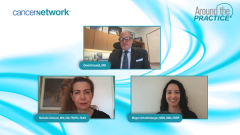
Dr. Omid Hamid introduces the program on advanced cutaneous squamous cell carcinoma (CSCC), joined by Dr. Nathalie Zeitouni, a dermatologist and Mohs surgeon at the University of Arizona College of Medicine in Phoenix, and nurse practitioner Megan Schollenberger from the cutaneous malignancies group at Johns Hopkins Hospital.
Dr. Zeitouni outlines disease progression from localized to advanced CSCC. The majority of CSCC cases are highly treatable with surgery, but a subset of high-risk tumors characterized by perineural invasion, lymphovascular invasion, deep tissue infiltration, or recurrence after prior treatment can progress to locally advanced or metastatic disease. Locally advanced disease involves tumors that are deeply infiltrative into bone or critical structures, rendering them unresectable or resectable only with significant morbidity or deformity. Metastatic disease involves spread to regional lymph nodes or distant organs including lung and liver.
NP Schollenberger addresses comorbidity management in this population, noting the typical patient age of approximately 78 years and describing treatment considerations across multiple comorbidity scenarios. Systemic therapy for advanced CSCC centers on immune checkpoint inhibitors: the anti-PD-1 agents cemiplimab and pembrolizumab, and the anti-PD-L1 agent cosibelimab. These agents enhance immune-mediated tumor killing but carry immune-related adverse event risks that manifest as autoimmune-like conditions including colitis and pneumonitis.
The benefit-risk calculation must be individualized: advanced CSCC of the head and neck causes significant symptoms including pain, bleeding, drainage, facial paralysis from perineural invasion, and functional impairment, often making the benefits of checkpoint inhibitor therapy outweigh toxicity risks even in frail patients. However, the nature of immunosuppression requires careful consideration. Patients immunocompromised due to chronic lymphocytic leukemia were largely excluded from trials and likely have reduced checkpoint inhibitor efficacy, though without increased harm. Patients with underlying autoimmune conditions on immunosuppressive therapy risk life-threatening exacerbation of their underlying disease. Organ transplant recipients (a population with particularly high CSCC incidence) face risk of transplant rejection. Multidisciplinary tumor board discussion is essential for individualized decision-making.
Advertisement
Related to this article

“When we give the most effective therapy at the time of new diagnosis, we get the most value out of the effort and time that we and our patients are spending,” said Neeraj Agarwal, MD, FASCO.
An aglatimagene besadenovec-based radiotherapy combination increased intratumoral lymphocyte fraction in intermediate- to high-risk localized prostate cancer.

The ROADS investigators reported no differences between cesium-131 tile-based radiation therapy and SRT in quality of life, functional status, or neurocognitive function.
William A. Hall, MD, discussed the SOFT Preop study of preoperative SBRT vs conventional chemoradiation for pancreatic adenocarcinoma.
Chih-Yi “Andy” Liao, MD, discusses how oncologists are sequencing pemigatinib, futibatinib, and lirafugratinib and how their tolerability differs.

“It should be protocol that 100% of your patients with metastatic prostate cancer get germline testing. Full stop. No exceptions,” said Neal D. Shore, MD, FACS.
Chih-Yi “Andy” Liao, MD, discusses the FDA approval of lirafugratinib and what the field has learned about resistance to FGFR2 inhibitors.

In the phase 3 NRG-CC009 trial, SRS led to longer overall survival vs HA-WBRT plus memantine with similar neurocognitive failure in SCLC brain metastases.
Advertisement
Advertisement
Trending on CancerNetwork
1
BCMA/GPRC5D CAR T-Cell Therapy Shows Early Efficacy in R/R Multiple Myeloma
2
Multimodal Biopsy Combo Shows Low Morbidity in Suspected Prostate Cancer
3
Aglatimagene Combo Shows Sustained Immune Remodeling in Prostate Cancer
4
SBRT Matches Chemoradiation, Preserves QOL Before Pancreatic Surgery
5