
Opinion|Videos|July 20, 2026
Immunocompromised Patients with CSCC, Future Directions, and Closing Pearls
NP Schollenberger addresses the particularly challenging and understudied population of immunocompromised patients with advanced CSCC.
Advertisement
Episodes in this series
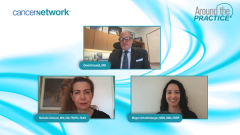
NP Schollenberger addresses the particularly challenging and understudied population of immunocompromised patients with advanced CSCC. Patients with underlying autoimmune conditions (such as rheumatoid arthritis or Crohn's disease) are managed with close specialist co-management from rheumatology or gastroenterology; Johns Hopkins has an open clinical trial specifically monitoring outcomes of anti-PD-1 therapy in patients with underlying autoimmune disease. Organ transplant recipients, particularly kidney transplant patients, represent a high-incidence CSCC population where the risk of checkpoint inhibitor-related graft rejection must be weighed against cancer mortality; a Johns Hopkins trial is evaluating immune checkpoint inhibitors in this population. Patients with hematologic malignancies such as chronic lymphocytic leukemia represent another common and incompletely characterized group in whom checkpoint inhibitor efficacy appears reduced and optimal management remains undefined.
Looking ahead, Dr. Zeitouni is most excited about neoadjuvant systemic immunotherapy involving treating patients with checkpoint inhibitors prior to surgery to reduce tumor burden and potentially expand operability, noting that no FDA-approved neoadjuvant indication for CSCC exists yet but early data are emerging. NP Schollenberger highlights oncolytic viruses as a particularly promising frontier for cutaneous malignancies given their injectability, potential synergy with checkpoint inhibitors, and possible utility in patients with immunosuppression or autoimmune conditions who are poor candidates for systemic checkpoint inhibition. An oncolytic virus is already approved for advanced melanoma and may eventually extend to CSCC.
Closing key messages for community oncologists: NP Schollenberger encourages academic specialist consultation, emphasizing the nuance involved in patient selection and treatment decisions, and advocates considering neoadjuvant immunotherapy in appropriate candidates. Dr. Zeitouni reinforces the active collaborative role of dermatologists and Mohs surgeons throughout the treatment journey, before, during, and after systemic therapy, and welcomes outreach from community providers. Dr. Hamid adds that virtual consultation platforms have substantially reduced logistical barriers for patients and their community physicians, and that he and his colleagues can connect referring providers with local experts when proximity to an academic center is a limitation.
Advertisement
Related to this article

Indocyanine green may be highly sensitive in the identification of ovarian cancer metastases, though with low specificity.
The therapeutic cancer vaccine OSE2101 combined with either docetaxel or nivolumab met the primary end point of 1-year overall survival in the Combi-TED trial.
In a phase 1 trial, CD19/CD20/CD22 CAR T cells produced complete responses in 83% of patients with relapsed/refractory B-cell non-Hodgkin lymphoma.
Nikolai Strusberg, MD, explained the clinical hypothyroidism endpoint and how thyroid dose should guide proton vs photon choice in breast cancer.
Leah Katz, MD, MPH, discusses IDEA, TARGIT-B, NeoORB, and other breast radiation data from ASTRO 2026, and why patient selection is the unifying theme.
Frederick Howard, MD, explored the evolving intersection of artificial intelligence (AI), computational pathology, and precision breast oncology.
“Vitamin C is a powerful epigenetic drug, which is not generally realized,” said Peter A. Jones, PhD, DSc (hon).
Findings from the AZUR-1 trial support the FDA approval of dostarlimab for patients with stage II/III locally advanced rectal cancer.
Advertisement
Advertisement
Trending on CancerNetwork
1
FDA Approves Dostarlimab in Previously Untreated Locally Advanced Rectal Cancer
2
Is Vitamin C an Epigenetic Interception Strategy in Pre-Leukemic Disease?
3
AI Foundation Models & Molecular Biomarkers in Breast Cancer
4
Ris-Rez Produces Anti-Tumor Activity in Extensive-Stage SCLC
5