
Opinion|Videos|July 6, 2026
Efficacy, Response Counseling, and Treatment Duration in CSCC
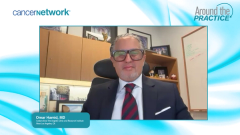
NP Schollenberger addresses how she interprets and communicates efficacy data to patients.
Advertisement
Episodes in this series
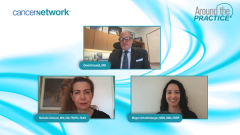
NP Schollenberger addresses how she interprets and communicates efficacy data to patients. Across anti-PD-1 and anti-PD-L1 agents approved for advanced CSCC, objective response rates of approximately 50% are observed in both metastatic and locally advanced settings. She frames this in the context of patient goals, particularly symptom relief from painful, locally destructive tumors, emphasizing that responses, when they occur, are often meaningfully durable.
In responders, two2year follow-up data show approximately 70% to 80% remaining progression-free. Many patients achieve complete responses, with tumor resolution that is sustained. Time to initial response is typically around 2 months, and responses often deepen over time; patients who achieve partial responses frequently progress to complete responses with continued therapy.
Pseudoprogression in the first few treatment cycles, where tumors may appear angrier, more erythematous, or more necrotic before improving, is an important concept to proactively address with patients to prevent premature discontinuation. Dr. Hamid adds that stable disease with long-term control is also a meaningful outcome, even without objective shrinkage.
Regarding treatment duration, NP Schollenberger notes that clinical trials treated patients until progression, treatment-limiting toxicity, or 2 years, which is a lengthy commitment for elderly patients. Retrospective data from approximately 55 patients who stopped therapy early at a median of 8 months showed that only approximately 9% experienced disease progression after cessation, and those who stopped due to excellent tumor control fared better than those who stopped for toxicity. This informs a clinically flexible approach: for patients in complete response who wish to stop therapy due to age, comorbidities, or treatment burden, early discontinuation appears reasonable. Monitoring for continued benefit includes clinical photography at each visit for visible tumors, pre-treatment laboratory work including comprehensive metabolic panel, complete blood count, and thyroid studies, symptom assessment for pain reduction as an early response indicator, and imaging including CT for nodal surveillance and MRI for perineural disease monitoring.
Advertisement
Related to this article

SurVaxM, a cancer vaccine, missed statistical significance for overall survival in patients with newly diagnosed glioblastoma in the SURVIVE trial.
Veronika Bachanova, MD, PhD, discussed how the favorable safety profile of CAR natural killer cell therapies may come with trade-offs in persistence and response durability.

“What we have here, I believe, is a strong signal that there is a population…who will benefit from chemotherapy,” said Mark D. Hurwitz, MD, FASTRO, FACRO.
Experts discuss data from the MonumenTAL-3 trial and the evolving roles of talquetamab and other bispecific antibodies in relapsed/refractory multiple myeloma.

Data from the phase 3 HER2CLIMB-05 study support the FDA approval of tucatinib-based maintenance treatment in HER2-positive metastatic breast cancer.

PRV111 eliminated planned surgery in 100% of evaluable patients with non-invasive oral cancer or high-grade dysplasia.
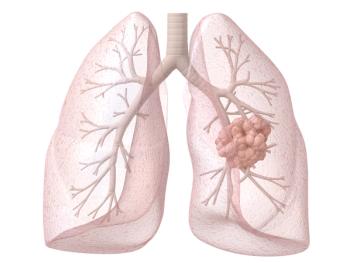
The final 3-year OS rate was 72.7% with OST-HER2 vs 45.8% in a combined historical control in a phase 2b trial of pulmonary metastatic osteosarcoma.
Dan Costin, MD, discusses where personalized mRNA vaccines could fit into lung cancer care within 5 to 10 years.
Advertisement
Advertisement
Trending on CancerNetwork
1
FDA Approves Tucatinib Combo as Maintenance in HER2+ Breast Cancer
2
Selinexor-Based Quadruplet Targets Myeloma After T-Cell Redirecting Therapy
3
Personalized Vaccines May Have Utility Across All Lung Cancer Stages
4
Firmonertinib Misses PFS End Point in First-Line EGFR Exon 20 NSCLC
5