
Opinion|Videos|January 31, 2025
Example of Successful Collaboration with a Referring Community Practice
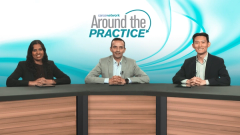
Panelists discuss collaborating with community practices on CAR T-cell therapy for multiple myeloma through joint clinical trials, patient education programs, and shared data initiatives. These partnerships enhance treatment access, foster innovation, and improve patient outcomes across diverse settings.
Advertisement
Episodes in this series
Video content above is prompted by the following:
- Can you share any examples of successful collaborations between your academic center and community practices in the context of CAR T-cell therapy for multiple myeloma?
Advertisement
Related to this article
Ralph V. Boccia, MD, FACP, discussed educating hospital teams and using tocilizumab to manage bispecific toxicities when patients need admission.

Ralph V. Boccia, MD, FACP, noted how designated hospitals and a 24/7 on-call team support emergencies during bispecific step-up dosing.

Ralph V. Boccia, MD, FACP, explained the caregiver’s role in monitoring and reporting during bispecific antibody step-up dosing.
Ralph V. Boccia, MD, FACP, explained who needs REMS certification and which care team members need training to deliver bispecific antibodies.

Saad Z. Usmani, MD, MBA, FACP, FASCO, discussed quadruplet induction, extended maintenance, and when a community clinician should call a myeloma center.

Saad Z. Usmani, MD, MBA, FACP, FASCO, discussed the threshold he will act on in standard-risk disease, and the trial that would make the decision firmer.

In a retrospective analysis, teclistamab produced response rates numerically higher than in MajesTEC-1, with missed doses not compromising outcomes.

Data from the phase 3 OCEAN trial and others support the expanded approval for melflufen in patients with previously treated multiple myeloma.
Advertisement
Advertisement
Trending on CancerNetwork
1
FDA Approves Perioperative Durvalumab/Enfortumab Vedotin in MIBC
2
Subsequent Therapy May Have Narrowed the Overall Survival Gap in LITESPARK-011
3
Managing Emergencies During Outpatient Bispecific Step-Up Dosing
4
ACS Updates Prostate Cancer Screening Guideline With Risk-Based PSA Intervals
5