

Opinion|Videos|March 19, 2024
Frontline Therapy for Patients With Non-Clear Cell RCC
Martin Voss, MD, reviews data updates from ASCO GU 2024 on the KEYNOTE-B61 study of lenvatinib + pembrolizumab in nccRCC in addition to real-world outcomes in patients with chromophobe RCC.
Advertisement
Episodes in this series
Advertisement
Related to this article
More frequent blood draws may be necessary to account for the risk of liver toxicity with neladalkib, said Alice Shaw, MD, PhD.

Jan Franko, MD, PhD, FACS, discussed how health systems can weigh surgical volume and maintained competency against keeping complex cancer operations close to home.
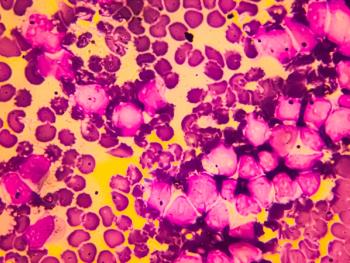
The phase 2 REMNANT study reported a 33% MRD-negative complete response rate in a broadly eligible, transplant-eligible NDMM population.
Neeta Somaiah, MD, outlines which adverse effects stem from bezuclastinib and how clinicians can use dose levels and supportive care.

A national analysis found counties without a local gastrointestinal or hepatobiliary cancer surgeon had higher colorectal, pancreatic, and hepatobiliary cancer mortality.

Jan Franko, MD, PhD, FACS, explained why time is the biggest cost of traveling for cancer care, and why days spent at home should be measured as a marker of quality.
Alice Shaw, MD, PhD, discusses the timing of neladalkib hepatotoxicity, how often to check liver tests, and how she manages transaminase elevations.

Neeta Somaiah, MD, discussd PEAK exon 9 and crossover data, adverse effect management, and sequencing for newly approved bezuclastinib/sunitinib in GIST.
Advertisement
Advertisement
Trending on CancerNetwork
1
Managing Toxicities of Bezuclastinib Plus Sunitinib in Advanced GIST
2
Balancing Regionalized Complex Cancer Surgery With Local Access
3
Clinical Scenario: CELMoD Therapy for High-Risk and Extramedullary Multiple Myeloma
4
VRd/Transplant Produces MRD-Negative Responses in Broadly Eligible NDMM
5