
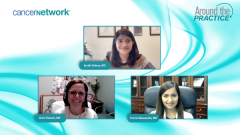
Opinion|Videos|August 28, 2026
Individualizing CAR T-Cell Therapy vs Bispecific Antibodies in Relapsed Multiple Myeloma
The faculty discuss how to individualize the choice between chimeric antigen receptor (CAR) T-cell therapy and bispecific antibodies in relapsed multiple myeloma.
Advertisement
Episodes in this series
The faculty discuss how to individualize the choice between chimeric antigen receptor (CAR) T-cell therapy and bispecific antibodies in relapsed multiple myeloma. Prompted by CARTITUDE-1 data showing 1 in 3 patients alive and progression-free at 5 years in a heavily pretreated population, one panelist describes that result as the reason the field started defining the word cure in multiple myeloma and frames the decision as an individualized conversation covering every available option now that CAR T-cell therapy is available in the second line. She reports using CAR T-cell therapy before B-cell maturation antigen (BCMA)-directed bispecific antibodies, citing retrospective consortium data showing significantly lower CAR T-cell efficacy after prior BCMA bispecific exposure, and identifies younger patients with high-risk disease as those she considers doing CAR T-cell therapy for in an earlier line. Patients who are older or frail, or who cannot reach a CAR T center but can receive bispecific antibodies closer to home, are described differently. The panel then groups the decision into patient factors such as comorbidities, dialysis, age, and frailty status; disease factors including pace of relapse, ability to await manufacturing, availability of bridging, extramedullary disease, and functional high-risk disease; and logistical factors including travel, time away from work, and prolonged caregiver support. Distinct toxicity profiles are contrasted for antibody-drug conjugates, BCMA CAR T-cell products, and bispecific antibodies.
Advertisement
Related to this article

Robot-assisted radical hysterectomy reduced mostly low-grade intraoperative complications vs open surgery in early-stage cervical cancer.

Ralph V. Boccia, MD, FACP, explained why CAR T-cell therapy followed by bispecific antibodies may be the preferred sequence at first relapse in multiple myeloma.

The NCCN published its first guidelines for pediatric bone sarcoma, centering on Ewing sarcoma and other undifferentiated round cell sarcomas in youth for pediatric patients.
Investigators of the phase 3 ACTION-1 trial will continue to follow up with patients to assess overall survival outcomes with RYZ101.
Ralph V. Boccia, MD, FACP, details remote monitoring, ICE scoring, CRS prophylaxis, and IVIG strategies for patients receiving bispecifics.
An expert panel discusses the case for de-escalating antibiotic therapy for pediatric patients who undergo hematopoietic cell transplantation.
Ralph V. Boccia, MD, FACP, discusses step-up dosing workflows, REMS, staff training, caregivers, and hospital partnerships for bispecifics.
Ralph V. Boccia, MD, FACP, discusses CAR T and bispecific sequencing, fixed-duration therapy, MRD, and bispecifics in AL amyloidosis.
Advertisement
Advertisement
Trending on CancerNetwork
1
Larger Prostates Showed Post-Radiotherapy Urinary Symptom Normalization
2
Sequencing Bispecifics and CAR T-Cell Therapy in Myeloma and AL Amyloidosis
3
RYZ101 Improves Progression-Free Survival in Previously Treated GEP-NETs
4
Why CAR T-Cell Therapy Before Bispecifics May Be the Ideal Multiple Myeloma Sequence
5