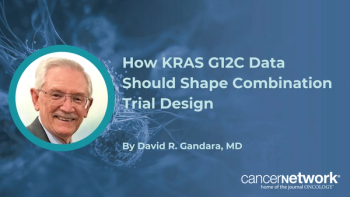
David R. Gandara, MD, discusses how EMPOWER-Lung 1’s findings in KRAS G12C-mutated disease should inform the design of combination trials.
Caroline Chung, MD, MSc, FRCPC, CIP, discussed how AI is transforming radiotherapy, ranging from uniform dosing to personalized, immune-sparing strategies.
Caroline Chung, MD, MSc, FRCPC, CIP, noted that although the targeting is personalized, radiotherapy has previously been administered with a one-size-fits-all approach: standardized doses delivered on fixed schedules, much like a universal drug prescription. However, considering the growing prevalence of artificial intelligence (AI), this rigid paradigm is shifting toward a more fluid and biological model of care.
In this interview from the
Radiotherapy, up until this point, has been largely delivered in a very uniform [manner]. It’s like saying that if you were to take a drug equivalent, you’re saying you can only deliver 200 mg of this dose—no matter who it is, no matter where it is—daily, and that’s the schedule to deliver radiation. That’s a very limited way of delivering energy, which is ultimately what we’re doing when we're delivering radiation; we’re depositing energy into tissue. We’re now starting to explore the entire array of delivering different doses each day, perhaps. [We’re] looking at different ways of defining the targets that we’re treating, not just treating the lump of tumor that we visibly see but characterizing those tissues based on underlying AI-discovered features within the scan and looking at the images more from a spatial perspective. These are ways that we can explore spatial, temporal, and dosimetric variations in radiation. We were just discussing sparing certain parts of the tissue intentionally to preserve immune function and immune response because we are starting to discover that the immune response is an incredible part of cancer therapeutic response. Can we manipulate the way that we deliver the radiation spatially but also temporally to spare certain regions from certain doses? There are many ways we can explore the drug discovery or clinical trial space [by] going across the comprehensive range of how radiation can be delivered for cancers. Thinking about the human—the entire human—and their own immune status is an exciting space for us to be exploring. It’s opened a whole world of research.