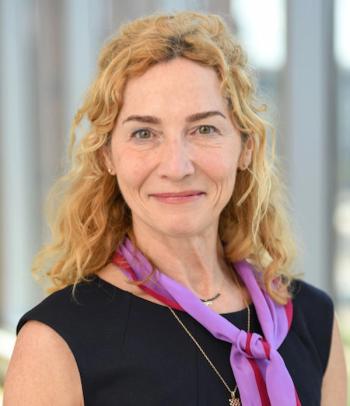
“Those of us who work with NK cells have no doubt that they are incredibly powerful at killing cancer cells,” said Veronika Bachanova, MD, PhD.
Alex Herrera, MD, analyzed the SWOG S1826 trial, highlighting how nivolumab plus AVD improved survival and reduced AEs in advanced Hodgkin lymphoma.
Previously, treating stage III or IV classical Hodgkin lymphoma involved a difficult trade-off between curative efficacy and significant toxicity. The landscape has now shifted with the recent
In a conversation with CancerNetwork®, Herrera broke down the results of the phase 3 SWOG S1826 trial (NCT03907488), which compared nivolumab/AVD against the previous standard, brentuximab vedotin (Adcetris) plus AVD.2 Therein, nivolumab/AVD delivered a 2-year progression-free survival (PFS) rate of 91% and proved effective across all patient subgroups—from adolescents as young as 12 years to adults 60 years or older.
Crucially, Herrera highlighted the reduced need for radiotherapy with this regimen, potentially mitigating long-term late toxicities for younger patients. Additionally, he pointed out that unlike traditional chemotherapy, nivolumab/AVD necessitates vigilance for immune-related adverse effects such as pneumonitis and endocrinopathies. From utilizing circulating tumor DNA for therapy refinement to addressing unmet needs in older populations, Herrera outlined why nivolumab/AVD represents a massive leap forward in balancing survival with quality of life.
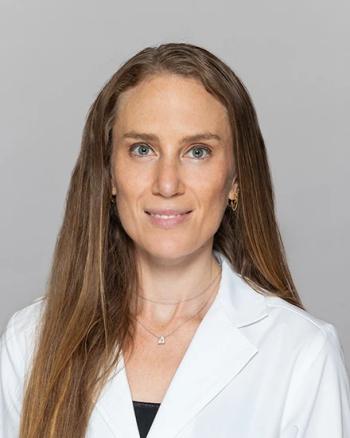
Herrera is chief of the Division of Lymphoma in the Department of Hematology & Hematopoietic Cell Transplantation at City of Hope as well as associate medical director of the Briskin Center for Clinical Research.
Herrera: For decades, the treatment of advanced-stage classic Hodgkin lymphoma has been 1 of 2 traditional chemotherapy regimens: doxorubicin, bleomycin, vinblastine, and dacarbazine [ABVD] and, particularly in Germany or Europe, escalated doxorubicin, cyclophosphamide, vincristine, procarbazine, and prednisone. Patients with advanced-stage Hodgkin lymphoma have typically received combination chemotherapy for longer courses than we might see in early-stage disease.
A few years ago, brentuximab vedotin, which is an antibody-drug conjugate directed against CD30 on the surface of the Hodgkin lymphoma Reed-Sternberg cell, was incorporated into the frontline treatment of advanced-stage Hodgkin lymphoma through the phase 3 ECHELON-1 study [NCT01712490], which showed that 6 cycles of brentuximab vedotin combined with AVD led to prolonged PFS and, ultimately, overall survival [OS] compared with 6 cycles of ABVD.3
That approach, brentuximab vedotin/AVD, has some drawbacks. Even though it improved efficacy compared with ABVD, it also increased the toxicity compared with standard ABVD; we saw more peripheral neuropathy and an increase in the risk of febrile neutropenia [and] sepsis infections that necessitated the use of G-CSF [granulocyte colony-stimulating factor]. It became incorporated into our treatment as an option for [patients with] advanced-stage Hodgkin lymphoma, but it had its drawbacks.
For pediatric patients with advanced-stage Hodgkin lymphoma, there were some variations in these regimens––tweaks to the chemotherapy. Also…as high as 60% of [pediatric] patients with advanced-stage Hodgkin lymphoma received radiotherapy as part of their initial treatment. That was the context we [considered] as we designed the SWOG S1826 trial.
We understood that the PD-1 pathway was important in the pathogenesis of classic Hodgkin lymphoma. There are genetic changes in the Hodgkin lymphoma cell that led to the overexpression of PD-L1 on Hodgkin lymphoma cells. We [also] understood that nivolumab and pembrolizumab [Keytruda] were [quite] effective in patients with relapsed/refractory Hodgkin lymphoma, and we were conducting studies over the years moving this PD-1 blockade—this very targeted therapy—in Hodgkin lymphoma earlier in the course of therapy. There were some initial studies showing that even as part of frontline therapy, PD-1 blockade was effective and safe, but these were smaller studies. We designed the SWOG S1826 study to test whether, in patients with advanced-stage classic Hodgkin lymphoma, stage III or IV disease, nivolumab combined with AVD could lead to improved outcomes compared with the standard therapy. In this case, the control arm was brentuximab vedotin combined with AVD.
The approval of nivolumab combined with AVD for patients with advanced-stage Hodgkin lymphoma is a major improvement in the treatment of these patients for a number of reasons. The SWOG S1826 study demonstrated that nivolumab/AVD improved efficacy. [It] prolonged PFS compared with a prior standard, brentuximab vedotin combined with AVD. It was better tolerated than brentuximab vedotin/AVD, and very few patients in the study needed radiation.
The hope is that with such a dramatic reduction in the use of radiation, especially for younger pediatric patients, there would be a reduction of long-term late effects from treatment. This trifecta of improving efficacy, improving short-term acute toxicity, and hopefully improving long-term late toxicity is particularly important in the young patients who often have this disease. Those are real tangible and important advances in the care of these patients.
The key efficacy data from the SWOG S1826 trial centered on PFS, which was the primary end point of the study. Patients who received nivolumab/AVD had prolonged PFS compared with patients who received brentuximab vedotin/AVD. The 2-year PFS rate was 92% in patients who received nivolumab/AVD compared with 83% in patients who received brentuximab vedotin/AVD, a substantial prolongation of PFS. At the
Importantly, when you look at the different subgroups of patients whom we enrolled in the trial––this was a collaboration with the Children’s Oncology Group, and we enrolled patients as young as 12––if you look at adolescents, they had a substantial improvement in PFS. If you look at adults, ages 18 to 60, they had a substantial and significant improvement in PFS. We also enrolled adults over the age of 60, and they had a quite dramatic improvement in PFS. In fact, OS is better in those older patients. In whatever subgroup you looked at—[including] patients with stage III or stage IV disease and patients with a low or high international prognostic score—no matter how you slice it, patients who received nivolumab/AVD had improved outcomes.
This makes it easy in terms of [seeing] how this impacts practice. You’re not trying to identify a particular group of patients who are benefiting from the treatment; it’s across the board. Patients appeared to benefit from this treatment, and it was better tolerated. Older patients have been a difficult group of patients to treat [with] other regimens, [and] brentuximab vedotin combined with AVD is poorly tolerated. Patients [experience] a lot of gastrointestinal toxicity, neuropathy, sepsis, [and] febrile neutropenia. This was a real unmet need [for] these older patients with Hodgkin lymphoma, and nivolumab/AVD was well tolerated and improved PFS in this group.
The new part of this [regimen] is the nivolumab. Thankfully, a lot of medical oncologists, globally, have familiarity with these drugs and PD-1 blockade, given that we use these drugs in a lot of different types of cancers. In Hodgkin lymphoma, some of the toxicities that we see with checkpoint blockade are a little new in the frontline setting for patients with advanced-stage disease. The main toxicities that are new, or that we want to watch out for, are immune-related toxicities associated with nivolumab. One important point to remember is if a patient has an autoimmune disease, especially if they’re requiring treatment for that autoimmune disease, those tend to be patients [for whom] we would typically avoid nivolumab/AVD. We have other good treatment options—brentuximab vedotin/AVD, for example—where we can still cure a majority of patients without inciting immune-related toxicities. That’s one group of patients to remember that we may not want to use nivolumab/AVD in.
Otherwise, immune-related toxicities are the toxicities that we worry about. This would be pneumonitis, colitis, [or] inflammation in different parts of the body that can be triggered with checkpoint blockade. These can be dangerous. They’re rare––a severe or significant immune-related adverse event is certainly happening less than 10% of the time—but when it happens, it’s notable. Patients may need treatment with high-dose steroids or other immune suppressants. [It’s] important to be monitoring patients carefully for immune-related toxicities and to treat them quickly once they’re recognized. The other immune-related toxicities that we can see [are] endocrinopathies, and those may require hormone replacement. Thyroiditis [may] require thyroid hormone replacement, [for example]. Those are [what we] want to be monitoring patients for [when treating them].
The SWOG S1826 trial and this approval by the FDA represent a massive step forward in the treatment of these patients. Now, we’ve gotten to a point where the efficacy of our treatment is quite excellent. If you have more than 90% of patients who are alive and progression free 3 years out from your treatment, that’s a pretty good place to be. Patients who primarily have this disease tend to be younger, and the question is, in these younger or even older patients, is there a way to refine the therapy that we’re giving to potentially reduce toxicity? Are there patients who are responding favorably where you might be able to de-escalate the treatment? Are there patients who maybe aren’t responding sufficiently, and you might need to tweak the therapy in some way to improve their outcome?
Historically, we’ve done PET-adapted therapy in patients with classic Hodgkin lymphoma. We know that PET is more challenging in patients who receive checkpoint blockade; it’s harder to interpret the scans. We have newer tools like circulating tumor DNA and blood tests where we can identify active or residual disease in the blood. We’re getting to a point where we can hopefully use these kinds of tests that appear to be more sensitive and specific than PET scans; maybe we can use these tests to refine our therapy.
There are upcoming trials planned where we can be testing circulating tumor DNA, for example, in real time and dynamically assess the response of the patient over time, and that will allow us to maybe step back on either the number of cycles of chemotherapy or even individual chemotherapies like doxorubicin that have some [adverse] effects that we’d like to avoid. That’s probably where the field will move: optimizing therapy.
The approval of nivolumab/AVD is a key advance for patients with advanced-stage Hodgkin lymphoma. It’s rare when you have a randomized trial that demonstrates a regimen that can improve the efficacy and reduce the toxicity, [allowing us to] move away from our historical treatments like radiation that can have late [adverse] effects. You have this almost unicorn trial [with] all these different things that we’re able to observe. It’s [usually] like, “You improved efficacy, but there’s a downside.” Maybe you [have] some increased toxicity as well.
[In the SWOG S1826 trial], there was improved efficacy, better tolerability, less radiation, and hopefully less long-term toxicity. It’s an exciting advance and an exciting time for patients with advanced-stage Hodgkin lymphoma. It’s a good option for older patients, where nivolumab/AVD is much better tolerated than a lot of the prior treatments that we’ve used historically.