
Opinion|Videos|September 30, 2026
Relapsed/Refractory Multiple Myeloma: Case-Based Discussion — The Comorbid, Higher-Risk Patient, and Program Conclusions
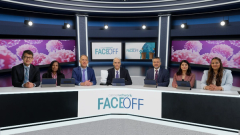
Dr. Thomas Martin presents the final and most challenging case: an older patient being evaluated for BCMA-directed therapy after progression on prior anti-CD38 therapy, with baseline neuropathy, mild gait instability, recurrent infections, and significant caregiver concern about neurologic toxicity, infection, and logistics.
Advertisement
Episodes in this series
Dr. Thomas Martin presents the final and most challenging case: an older patient being evaluated for BCMA-directed therapy after progression on prior anti-CD38 therapy, with baseline neuropathy, mild gait instability, recurrent infections, and significant caregiver concern about neurologic toxicity, infection, and logistics. Team Myeloma Masters favors a lower-intensity, potentially fixed-duration bispecific approach with dose attenuation and less frequent dosing to mitigate risk in a frail patient, while the panel stresses that IVIG alone does not address the full infection risk and that a more comprehensive antimicrobial prophylaxis strategy is warranted. Team Myeloma Mavericks raises the option of a non-BCMA-directed approach, including GPRC5D-targeted therapy or immunomodulatory and carfilzomib-based combinations, reinforcing that treatment must be individualized rather than forced into a single framework. The segment concludes with the award ceremony, in which Dr. Martin congratulates both teams, summarizes the trade-offs between one-time CAR T-cell therapy with its durability and cure potential and the off-the-shelf accessibility of bispecific antibodies, declares that patients are the true winners, and awards the trophy to the CAR T-cell team on the rationale that patients should first have the opportunity to consider cellular therapy.
Advertisement
Related to this article
An aglatimagene besadenovec-based radiotherapy combination increased intratumoral lymphocyte fraction in intermediate- to high-risk localized prostate cancer.

The ROADS investigators reported no differences between cesium-131 tile-based radiation therapy and SRT in quality of life, functional status, or neurocognitive function.
William A. Hall, MD, discussed the SOFT Preop study of preoperative SBRT vs conventional chemoradiation for pancreatic adenocarcinoma.

Chih-Yi “Andy” Liao, MD, discusses how oncologists are sequencing pemigatinib, futibatinib, and lirafugratinib and how their tolerability differs.

“It should be protocol that 100% of your patients with metastatic prostate cancer get germline testing. Full stop. No exceptions,” said Neal D. Shore, MD, FACS.
Chih-Yi “Andy” Liao, MD, discusses the FDA approval of lirafugratinib and what the field has learned about resistance to FGFR2 inhibitors.

In the phase 3 NRG-CC009 trial, SRS led to longer overall survival vs HA-WBRT plus memantine with similar neurocognitive failure in SCLC brain metastases.
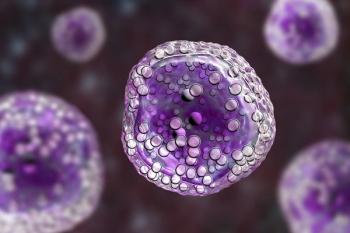
In a phase 1 first-in-human trial, BMS-986453 showed a favorable safety profile and high response rates in relapsed/refractory multiple myeloma.
Advertisement
Advertisement
Trending on CancerNetwork
1
Multimodal Biopsy Combo Shows Low Morbidity in Suspected Prostate Cancer
2
BCMA/GPRC5D CAR T-Cell Therapy Shows Early Efficacy in R/R Multiple Myeloma
3
Integrating Talazoparib Plus Enzalutamide Into HRR-Mutated mHSPC Care
4
Proton Therapy Does Not Improve Survival in Hepatocellular Carcinoma
5