
Opinion|Videos|September 30, 2026
Relapsed/Refractory Multiple Myeloma: Safety and Real-World Management of BCMA-Directed Therapies
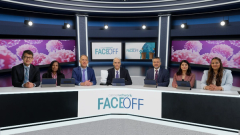
Team Myeloma Mavericks presents the sixth abstract review, a real-world and safety-focused discussion of BCMA-directed therapies in earlier-relapse disease, closing out the data-and-landscape section.
Advertisement
Episodes in this series
Team Myeloma Mavericks presents the sixth abstract review, a real-world and safety-focused discussion of BCMA-directed therapies in earlier-relapse disease, closing out the data-and-landscape section. The presentation reviews the movement disorder and Parkinsonism-like toxicities associated with CAR T-cell therapy, including their typically subtle early presentation, characteristic timing, reliance on clinical diagnosis and neurology partnership, and the emerging, increasingly effective management strategies such as high-dose cyclophosphamide, intrathecal chemotherapy, and JAK inhibition, alongside immune effector cell-associated enterocolitis and second primary malignancies. The importance of holding and bridging therapy for disease control, and the logistics of early referral from community to academic centers, are emphasized. Team Myeloma Masters offers rebuttal, arguing that a bispecific approach avoids these considerations and the need for specialized neurologic expertise, and raising the observed rates of secondary hematologic malignancy with cellular therapy. The exchange, moderated by Dr. Martin, extends into non-relapse mortality with both modalities, the maturity and follow-up differences between the CAR T-cell and bispecific datasets, and the open question of optimal sequencing to maximize combined progression-free survival across successive lines, all within a fair-balance framing.
Advertisement
Related to this article

An aglatimagene besadenovec-based radiotherapy combination increased intratumoral lymphocyte fraction in intermediate- to high-risk localized prostate cancer.

The ROADS investigators reported no differences between cesium-131 tile-based radiation therapy and SRT in quality of life, functional status, or neurocognitive function.
William A. Hall, MD, discussed the SOFT Preop study of preoperative SBRT vs conventional chemoradiation for pancreatic adenocarcinoma.

Chih-Yi “Andy” Liao, MD, discusses how oncologists are sequencing pemigatinib, futibatinib, and lirafugratinib and how their tolerability differs.

“It should be protocol that 100% of your patients with metastatic prostate cancer get germline testing. Full stop. No exceptions,” said Neal D. Shore, MD, FACS.

Chih-Yi “Andy” Liao, MD, discusses the FDA approval of lirafugratinib and what the field has learned about resistance to FGFR2 inhibitors.

In the phase 3 NRG-CC009 trial, SRS led to longer overall survival vs HA-WBRT plus memantine with similar neurocognitive failure in SCLC brain metastases.

In a phase 1 first-in-human trial, BMS-986453 showed a favorable safety profile and high response rates in relapsed/refractory multiple myeloma.
Advertisement
Advertisement
Trending on CancerNetwork
1
Multimodal Biopsy Combo Shows Low Morbidity in Suspected Prostate Cancer
2
BCMA/GPRC5D CAR T-Cell Therapy Shows Early Efficacy in R/R Multiple Myeloma
3
Integrating Talazoparib Plus Enzalutamide Into HRR-Mutated mHSPC Care
4
Proton Therapy Does Not Improve Survival in Hepatocellular Carcinoma
5