

Opinion|Videos|June 6, 2024
Safety Profile: Adverse Events and Treatment Modifications in MARIPOSA-2
A comprehensive look at the safety data from the MARIPOSA-2 trial, including rates of adverse events, toxicities, and treatment modifications across the three regimens. Specific details are provided on adverse event types and grades by the treatment arm.
Advertisement
Episodes in this series
Advertisement
Related to this article
Subcutaneous amivantamab is safer and more convenient for patients compared with the intravenous formulation, according to Misako Nagasaka, MD, PhD.
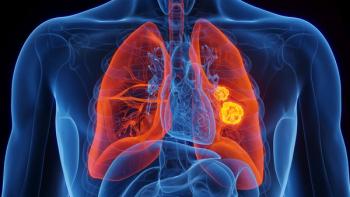
Investigators are evaluating cesalatamig among patients with advanced cancer in the international phase 1/2 BiPAVE-001 trial.

The FDA granted fast track designation to the oral pan-KRAS inhibitor KST-6051 for patients with KRAS-mutant advanced or metastatic solid tumors.
Based on updated data from the TRUST-1 trial, a sNDA for taletrectinib has been approved by the FDA for patients with TKI-naive ROS1+ NSCLC.

Misako Nagasaka, MD, PhD, explains how subcutaneous amivantamab’s shorter administration time benefits patients and infusion centers.
Misako Nagasaka, MD, PhD, discusses PALOMA-2’s 70% 3-year survival rate compared with historical MARIPOSA data for intravenous amivantamab.
The OMNI-EGFR inhibitor BH-30643 produced a 45% objective response rate among patients with EGFR C797S–positive disease in the phase 1/2 SOLARA trial.

New data on antibody drug conjugates and extended survival follow-ups may inform clinical decision-making surrounding non–small cell lung cancer.
Advertisement
Advertisement
Trending on CancerNetwork
1
Pembrolizumab/Enfortumab Vedotin Earns Positive CHMP Opinion in MIBC
2
Screening for CHIP Mutations to Guide CAR T Cell Candidacy in Lymphoma
3
FDA Approves Imlunestrant Combo in ESR1-Mutated Breast Cancer
4
Daraxonrasib Receives FDA Breakthrough Therapy Status in 1L Metastatic PDAC
5