

Opinion|Videos|July 3, 2024
Supportive Care Strategies for CAR T-Cell Therapy Recipients
Experts on multiple myeloma provide clinical insights on supportive care strategies for patients experiencing infections or secondary malignancies following CAR T-cell therapy.
Advertisement
Episodes in this series

Video content above is prompted by the following question:
- Discuss the importance of comprehensive supportive care strategies for CAR T-cell therapy recipients to mitigate risks and optimize outcomes.
Advertisement
Related to this article

The phase 2 REMNANT study reported a 33% MRD-negative complete response rate in a broadly eligible, transplant-eligible NDMM population.

The decision permits use of the EXTENT system to track monoclonal proteins over time, including from initial diagnosis to ongoing disease management.

Presenters at the 44th Annual CFS discuss key trends across multiple myeloma, B-cell malignancies, and small cell lung cancer.
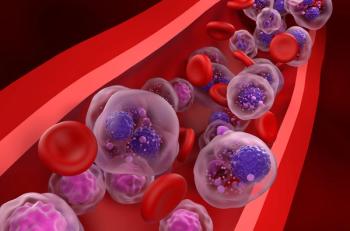
Ajai Chari, MD, discussed sequencing CAR T and bispecifics, fixed-duration therapy, emerging targets, and academic partnership in multiple myeloma.

At the 2026 Chemotherapy Foundation Symposium, Ajai Chari, MD, explained how disease pace and BCMA sequencing guide choosing CAR T or bispecifics.
Ralph V. Boccia, MD, FACP, details the home monitoring tools, prophylaxis, and grade-based approach his practice uses to manage CRS.
Ralph V. Boccia, MD, FACP, discussed educating hospital teams and using tocilizumab to manage bispecific toxicities when patients need admission.
Ralph V. Boccia, MD, FACP, noted how designated hospitals and a 24/7 on-call team support emergencies during bispecific step-up dosing.
Advertisement
Advertisement
Trending on CancerNetwork
1
Managing Toxicities of Bezuclastinib Plus Sunitinib in Advanced GIST
2
Clinical Scenario: CELMoD Therapy for High-Risk and Extramedullary Multiple Myeloma
3
Balancing Regionalized Complex Cancer Surgery With Local Access
4
VRd/Transplant Produces MRD-Negative Responses in Broadly Eligible NDMM
5