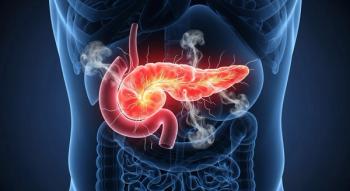
A prospective, multicenter study found that a blood-based miRNA assay combined with CA19-9 improved early detection of pancreatic ductal adenocarcinoma.
The phase 3 TALAPRO-3 study met its primary end point, showing a clinically meaningful reduction in the risk of progression or death in HRR-mutant HSPC.
The combination of talazoparib (Talzenna) plus enzalutamide (Xtandi) exhibited a significant improvement in radiographic progression-free survival (PFS) compared with placebo and enzalutamide as a treatment for patients with HRR-mutated metastatic hormone sensitive prostate cancer (HSPC), according to a news release from the developer, Pfizer.1
Specifically, the results from the phase 3 TALAPRO-3 study (NCT04821622), which compared the efficacy and safety of enzalutamide with talazoparib or placebo, revealed that the radiographic PFS exceeded the prespecified hazard ratio (HR) of 0.63, and most patients were free from progression at the time of analysis. Moreover, a strong trend displaying an improvement in overall survival (OS), a key secondary end point, was observed by investigators. Other notable secondary end points where the combination was advantageous included overall response rate (ORR), duration of response (DOR), and time to prostate-specific antigen (PSA) progression.
The safety of the talazoparib regimen was consistent with the known profiles of each individual agent, and no new safety signals were identified.
Results from the phase 3 study will be submitted by the developers for presentation at an upcoming medical conference and will be the subject of discussions with global health authorities for potential regulatory submissions. Currently, talazoparib/enzalutamide is approved in over 60 countries as a treatment for the HRR-mutated metastatic castration-resistant prostate cancer (CSPC) population.
“Current treatment approaches leave many patients with HRR gene-mutated metastatic castration-sensitive prostate cancer vulnerable to early disease progression,” said Neeraj Agarwal, MD, FASCO, professor and Presidential Endowed Chair of Cancer Research at Huntsman Cancer Institute at the University of Utah, and global lead investigator for TALAPRO-3, stated in the news release.1 “The TALAPRO-3 results demonstrate that treatment with talazoparib in combination with enzalutamide earlier in the disease course significantly extends the time patients can live without their cancer worsening.”
A total of 599 patients 18 years and older in the phase 3 study were randomly assigned to receive enzalutamide with talazoparib or placebo. Eligible patients received 3 or fewer months of androgen deprivation therapy, with or without an approved androgen receptor pathway inhibitor in the metastatic CSPC setting.
Enzalutamide was given at a dose of 160 mg daily open label.2 Talazoparib or matching placebo was given in combination with enzalutamide at 0.5 mg once daily. Those with moderate renal impairment at screening were treated with a placebo/talazoparib dose of 0.35 mg once daily.
The primary end point of the trial was radiographic PFS per RECIST v 1.1 in soft tissue, or per Prostate Cancer Working Group 3 (PCWG3) criteria by investigator assessment. In addition to OS, ORR, DOR, and time to PSA progression, patient-reported outcomes was also a secondary end point.
“Alterations in DNA damage repair genes, such as HRR genes, are found in approximately 25% of metastatic prostate cancers and associated with a worse prognosis and are less responsive to current standards of care, representing a group with a high unmet need,” Jeff Legos, chief oncology officer of Pfizer, explained in the release.1 “Talazoparib plus enzalutamide is already a standard of care in HRR gene-mutated metastatic CSPC, and these unprecedented results demonstrate the potential to deliver benefit earlier in the disease course.”
Patients with histologically or cytologically confirmed adenocarcinoma of the prostate without neuroendocrine, small cell, or signet cell features were eligible for trial enrollment. Additional inclusion criteria included confirmation of DDR gene mutation status by prospective or historical analysis of blood or de novo archival tumor tissue, an ECOG performance status of 0 or 1, or adequate organ function within 28 days of treatment start.